 comparison
Teen Acne vs Adult Acne: Treatment Differences
Table of Contents
- Teen Acne vs Adult Acne: Key Differences at a Glance
- Why Teen and Adult Breakouts Have Different Causes
- Hormonal Acne Treatment for Adults: What Changes After 25
- Skin Resilience, Cell Turnover, and Breakout Location
- Professional Acne Facial Benefits for Teens and Adults
- Skin Barrier Repair for Acne-Prone Skin: A Shared Priority
- Psychological Impact, Lifestyle, and Stress by Age Group
- Frequently Asked Questions
Last Updated: September 16, 2026
Teen Acne vs Adult Acne: Key Differences at a Glance
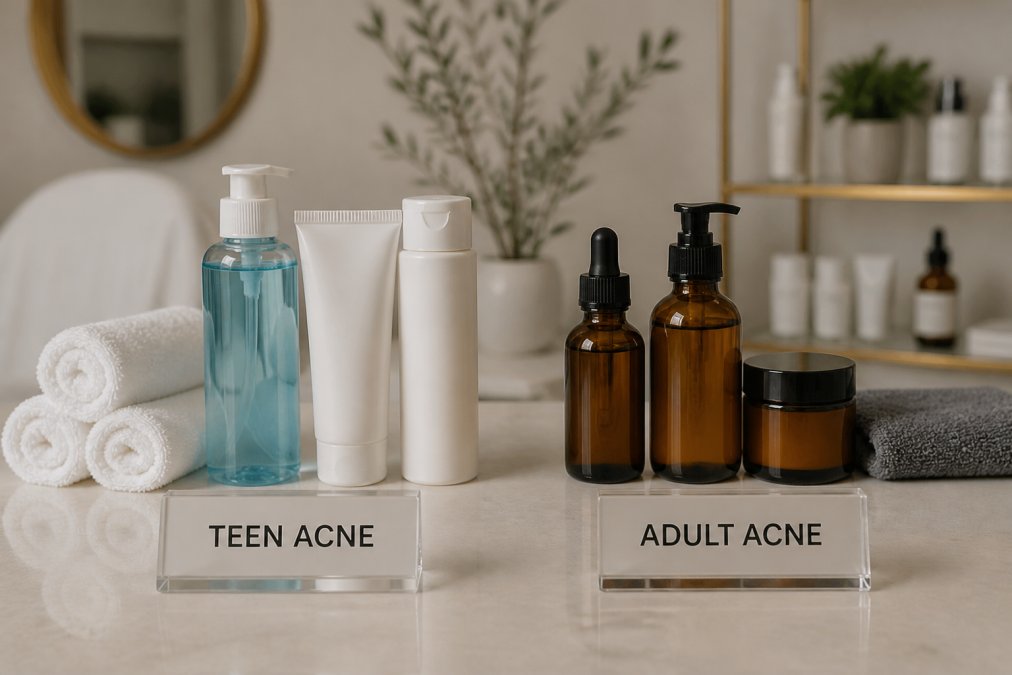
Teen acne vs adult acne treatment differences come down to one core fact: the same condition behaves differently on skin at 16 than at 36. Teen breakouts are driven by surging androgens and overactive sebaceous glands; adult breakouts tend to be inflammatory, hormonal, and slower to heal. At SKIN SOLUTIONS BY 2 DIVAS in Sebring, FL, this split shapes every corrective facial plan we build.
Why Teen and Adult Breakouts Have Different Causes
The causes diverge early: teen acne is largely a puberty event, adult acne largely a hormonal and inflammatory one.
Sebum Production and Hormonal Fluctuations in Teens
Teen skin produces more sebum than at any other life stage. That oil mixes with dead cells inside the follicle, creating the ideal environment for comedonal acne, the blackheads and whiteheads that define early teen breakouts.
Androgen Levels and Treatment Resistance in Adults
Adult acne is more often inflammatory from the start. Androgens have settled, but follicles are sensitized and the barrier has taken years of damage from sun, harsh products, and stress.
Hormonal Acne Treatment for Adults: What Changes After 25
Hormonal acne treatment for adults shifts from oil control to inflammation control and barrier support. After roughly 25, cell turnover slows, collagen declines, and skin recovers more slowly from every lesion.
Skin Resilience, Cell Turnover, and Breakout Location
Where acne appears tells you as much as how it looks: teens break out where oil is thickest, adults where hormones and inflammation concentrate.
Jawline Breakouts vs. T-Zone Congestion
Jawline breakouts are the signature of adult hormonal acne, deeper, more tender, and slower to surface than the surface-level congestion teens get across the forehead and nose.
Post-Inflammatory Hyperpigmentation Risk by Age
Post-inflammatory hyperpigmentation risk rises with age, even though teen skin heals faster overall. Adult skin produces melanin less evenly after injury, so a healed pimple can leave a mark that lingers for months.
| Factor | Teen Skin | Adult Skin |
|---|---|---|
| Primary trigger | Puberty androgens | Hormones, stress, barrier damage |
| Typical breakout zone | T-zone | Jawline and lower face |
| Cell turnover | Fast | Slower |
| Healing time | Days | Weeks |
| Pigment risk after breakout | Lower | Higher |
| Best first approach | Oil control | Inflammation and barrier support |
Professional Acne Facial Benefits for Teens and Adults
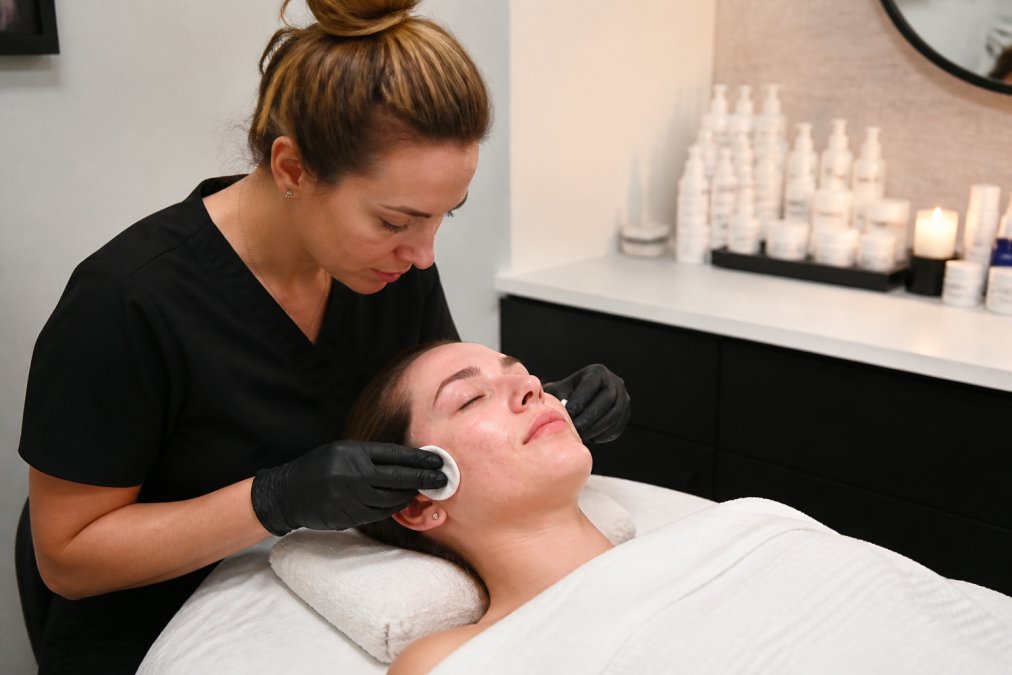
Professional acne facial benefits differ by age because the treatment room has to match the skin in front of it. A corrective facial for a 15-year-old focuses on decongesting active follicles without stripping the barrier; for a 40-year-old, it focuses on calming inflammation, supporting hydration, and fading existing marks. That difference is a direct response to how teen and adult skin tolerate the same active ingredients.
Why the Same Ingredient Behaves Differently by Age
This is where a professional facial earns its place. The active ingredients used for acne, salicylic acid, benzoyl peroxide, retinoids, azelaic acid, do not change. The skin they meet does.
- Salicylic acid. A beta-hydroxy acid that dissolves oil inside the pore. Teen skin, with thicker sebum and faster turnover, often tolerates a higher concentration and longer contact time. Adult skin, especially on the jawline and lower face, is thinner and more reactive, so the same strength can cause stinging, redness, and post-inflammatory hyperpigmentation instead of clearing.
- Benzoyl peroxide. Effective against the bacteria involved in inflammatory acne, but drying and potentially irritating. Teens with robust barriers often handle a 5% or 10% formulation; adults who used it successfully at 17 frequently find it drying at 40. Lower concentrations, shorter contact times, or a gentler alternative are common adjustments.
- Retinoids. The backbone of adult therapy, but starting strength matters. A low-concentration topical retinoid two nights a week is far more tolerable than a full-strength nightly formula. Teens can ramp faster because their barrier recovers quickly; adults need a slower on-ramp and a dedicated moisturizer.
- Azelaic acid. A useful middle ground for adults because it addresses both inflammation and post-inflammatory hyperpigmentation, which is a bigger concern after 25 than it is at 16.
What Changes in the Treatment Room
At SKIN SOLUTIONS BY 2 DIVAS, every appointment begins with a full skin analysis before any product touches the face. That step is what separates a corrective facial from a generic one, because the same salicylic acid peel that clears a teen's T-zone can trigger irritation on an adult's sensitized jawline.
For teen skin, the sequence typically runs:
- Gentle cleansing to remove surface oil without stripping.
- Steam or a soft enzyme prep to loosen comedones in the T-zone.
- Targeted exfoliation, often salicylic acid, with a contact time matched to the skin's tolerance.
- Extractions focused on the forehead, nose, and chin, where sebaceous glands are largest.
- A calming mask and a lightweight, non-comedogenic moisturizer.
For adult skin, the sequence shifts:
Book your appointment today! →
- Gentle cleansing with a barrier-friendly formula.
- Minimal or no steam, since adult skin is more prone to reactivity.
- Lower-strength exfoliation with a shorter contact time, often azelaic or a mild lactic acid rather than a strong salicylic peel.
- Extractions limited to what the skin can tolerate, with more time spent on inflammation control than on comedone removal.
- An anti-inflammatory mask, a hydrating serum, and a barrier-supporting moisturizer.
The Trade-Off Most People Miss
More aggressive is not more effective. A teen can handle a stronger treatment and recover within days; an adult receiving the same strength may leave flushed and irritated for a week, and that inflammation can trigger more pigment and breakouts. The goal is not the strongest possible session, but the strongest session the skin in front of you can recover from cleanly.
Skin Barrier Repair for Acne-Prone Skin: A Shared Priority
Skin barrier repair for acne-prone skin matters at every age, and it is the step most people skip. A compromised barrier lets irritants in, triggers inflammation, and makes every active feel harsher than it is.
Stopping moisturizer because your skin is "already oily" is the single most common mistake we see. It usually backfires within two weeks, with more congestion and more sensitivity, not less.
Psychological Impact, Lifestyle, and Stress by Age Group
The emotional weight of acne changes with age, and that shift changes how treatment should be framed. Teens face acne where appearance is under near-constant scrutiny, school, sports, social media, and it can shape self-esteem in ways that outlast the breakouts. Adults face it as an unwelcome return of a problem they thought they had outgrown, with the frustration of doing everything "right" and still breaking out.
How Stress Actually Drives Adult Breakouts
Stress plays a larger role in adult acne than most people realize. Sustained stress releases cortisol, which signals the sebaceous glands to produce more oil and amplifies the inflammatory response, which is why adult breakouts arrive as deep, tender, inflammatory lesions rather than the surface-level congestion teens get. Flare-ups that track with deadlines, travel, or poor sleep are a cortisol pattern, not a coincidence.
Lifestyle Differences That Change the Treatment Plan
Lifestyle factors diverge in ways that matter for routine design:
- Diet. Teens are more likely to eat high-glycemic foods, sugary drinks, refined carbs, snacks, which spike insulin and androgen activity. Adults more often skip meals during busy weeks, disrupting the same hormonal balance from the other direction.
- Sleep. Teens sleep irregularly around school schedules; adults sleep too little. Both raise cortisol, but the adult version tends to be chronic rather than episodic.
- Routine adherence. Teens stay consistent when a parent or practitioner sets the routine. Adults stay consistent only when it is short enough to survive a busy week, which is why a three-step plan usually outperforms a seven-step one.
- Product history. Adults carry years of accumulated product use, including harsh teen-era products their skin no longer tolerates. Teens start fresh, which is an advantage.
The Transitioning Routine: Why Teen Products Stop Working
This is where a transitioning routine matters. Moving from teen acne care into adult care means swapping oil-stripping products for anti-inflammatory, barrier-supporting ones gradually, not all at once. A sudden switch can trigger a purge that looks like a new breakout, prompting more aggressive treatment that damages the barrier further.
A practical sequence most practitioners recommend:
- Drop the harshest active first. If the teen routine included a high-strength benzoyl peroxide or strong salicylic acid wash used twice daily, cut it to once daily, then every other day, over two to three weeks.
- Add a barrier moisturizer before anything new. Niacinamide, ceramides, and glycerin support the barrier without clogging pores.
- Introduce one adult-appropriate active at a time. A low-concentration topical retinoid, two nights a week, is a common start. Do not stack it with the old acids.
- Give each change two to four weeks. Adult skin turnover is slower, so results take longer to appear and irritation longer to resolve. Judging a product after five days invites over-correcting.
Acne at any age is not just a skin problem, it is a stress problem, a sleep problem, and a routine-adherence problem. Treating only the surface misses the drivers that keep it coming back.
Frequently Asked Questions
What are the key differences between teenage acne and adult acne?
Teen acne is driven largely by surging androgen levels that ramp up sebum production, leading to comedonal acne and inflammatory lesions across the T-zone. Adult acne, especially after 25, tends to appear along the jawline and chin, moves more slowly, and is more resistant to standard treatments. Adult skin also has lower collagen production and slower cell turnover, so the same active ingredient that clears a teen's skin can irritate an adult's.
Why do adult acne treatments often require more hydration than teen treatments?
Adult skin produces less sebum and has a thinner, less resilient barrier than teen skin. Harsh actives like high-percentage benzoyl peroxide or salicylic acid can strip that barrier, triggering more inflammation and rebound breakouts. Adult-focused formulas pair acne actives with hydrating ingredients like niacinamide and ceramides to support skin barrier function. This is why skin barrier repair for acne-prone skin matters more in adult routines than in teen ones, where oil levels are naturally higher.
Can hormonal fluctuations cause acne in both teens and adults?
Yes. In teens, the pubertal rise in androgens drives sebaceous glands into overdrive. In adults, hormonal fluctuations from menstrual cycles, perimenopause, stress, or conditions like PCOS can trigger jawline breakouts and deep inflammatory lesions. The difference is that teen acne usually responds well to topical therapy, while adult hormonal acne often needs a combined approach, including professional treatments.
How does skin cell turnover rate change from adolescence to adulthood?
Teen skin turns over roughly every 28 days, which helps acne lesions heal faster and reduces the risk of lingering marks. By the late 20s and 30s, cell turnover slows, sometimes to 40 days or more. That slower pace means dead skin cells and sebum stay trapped longer, feeding comedonal acne and increasing the chance of post-inflammatory hyperpigmentation. Retinoids and professional exfoliating facials help speed turnover back up at any age.