 comparison
Natural Alternatives to Chemical Peels for Face: 2026 Guide
Table of Contents
- What Are Natural Alternatives to Chemical Peels?
- Enzyme-Based Exfoliation: How Fruit Enzymes Transform Skin
- The Benefits of Professional Corrective Facials
- How to Treat Hyperpigmentation Naturally
- Skin Analysis for Facial Treatments: Why It Matters
- DIY Natural Face Peel Recipes and Safety Precautions
- Choosing the Right Natural Exfoliant for Your Skin Type
- Conclusion: Your Path to Natural Skin Rejuvenation
- Frequently Asked Questions
Last Updated: September 14, 2026
What Are Natural Alternatives to Chemical Peels?
Natural alternatives to chemical peels for face are treatments that resurface and brighten skin using enzymes, gentle organic acids, and botanical ingredients instead of harsh synthetic acids. They work with your skin barrier rather than stripping it.
This guide from SKIN SOLUTIONS BY 2 DIVAS covers how these options compare, who they suit, and how to use them safely. Below, we break down enzyme exfoliation, professional corrective facials, and at-home recipes so you can pick the right path for your skin type.
Enzyme-Based Exfoliation: How Fruit Enzymes Transform Skin
Enzyme-based exfoliation uses fruit enzymes such as papaya, pumpkin, and pineapple to dissolve dead skin cells without scrubbing or burning (pubmed.ncbi.nlm.nih.gov). Unlike acids that penetrate and loosen bonds chemically, enzymes digest keratin on the surface, which makes them gentler for reactive skin.
This matters because cell turnover slows with age, leaving dullness and uneven texture behind. Enzyme masks lift that buildup gradually, encouraging a smoother surface over several sessions rather than one aggressive peel. For anyone who has reacted badly to alpha hydroxy acids, this is often the smarter starting point. The trade-off is speed: results build over weeks, not overnight.
The Benefits of Professional Corrective Facials
The main benefit of professional corrective facials is that a trained specialist analyzes your skin first, then builds a plan around your actual concerns instead of a one-size-fits-all protocol. That analysis step is what separates a targeted treatment from a generic spa facial.
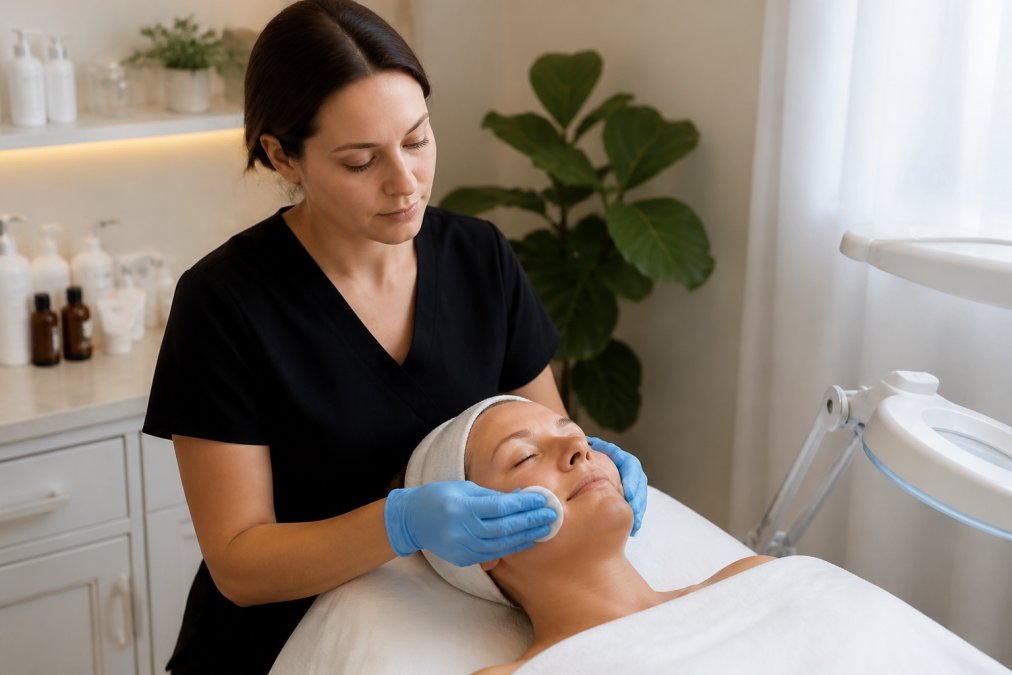
At SKIN SOLUTIONS BY 2 DIVAS in Sebring, FL, every corrective facial begins with a thorough skin analysis. That means acne, hyperpigmentation, and fine lines each get addressed with the right ingredients and technique. For residents dealing with sun damage or hormonal breakouts, this personalized approach targets the cause rather than masking it. Clients preparing for a wedding or event often find a series of sessions delivers a healthier glow than a single harsh peel ever could.
How to Treat Hyperpigmentation Naturally
Treating hyperpigmentation naturally means slowing excess pigment production while gently encouraging cell turnover, and doing it consistently enough to see change. No single treatment erases dark spots overnight.
The most effective at-home approach combines three habits:
- Daily broad-spectrum sunscreen, since UV exposure is what drives most pigmentation to return (the American Academy of Dermatology)
- Gentle exfoliation two to three times a week with lactic or mandelic acid
- Brightening ingredients such as vitamin C or niacinamide applied consistently
Lactic acid suits drier, more sensitive skin because its larger molecules sit closer to the surface (pubmed.ncbi.nlm.nih.gov). Mandelic acid, derived from almonds, is often the better pick for acne-prone or deeper skin tones since it clears pores with less irritation risk. What most guides miss is that patience matters more than strength: a mild acid used regularly outperforms a strong one used occasionally and abandoned after a reaction.
Skin Analysis for Facial Treatments: Why It Matters
Skin analysis for facial treatments is the diagnostic step where a specialist examines your skin's hydration, oil balance, sensitivity, and pigmentation to decide which ingredients and strengths are safe. Skipping it is the single most common reason at-home peels go wrong.
A proper analysis looks at:
- Skin type and current barrier condition
- Active concerns such as acne, scarring, or melasma
- Known sensitivities and past reactions
- Your realistic aftercare capacity at home
This is where a professional setting beats a DIY kit. An esthetician can see what you cannot easily judge in a mirror, like early congestion or a compromised barrier. For anyone unsure whether their skin can handle acids at all, that assessment prevents weeks of unnecessary irritation.
DIY Natural Face Peel Recipes and Safety Precautions
DIY natural face peels can work, but only if you respect a few hard rules. The biggest mistake is leaving a homemade acid or enzyme mask on far longer than intended, which causes burns and rebound pigmentation, the opposite of the glow you were chasing.
Why DIY Peels Go Wrong
Three failure modes account for most at-home peel injuries:
- Unknown concentration. A squeeze of lemon or a splash of apple cider vinegar delivers an acid load you cannot measure. Commercial peels are buffered to a known pH; your kitchen is not.
- Unknown contact time. "Leave it on until it tingles" is not a protocol. Tingling that escalates to burning is your skin telling you the barrier is already compromised.
- Stacking actives. Using a DIY mask the same week as a retinol, a salicylic cleanser, or a professional treatment multiplies the exfoliation load and strips the barrier.
Low-Risk DIY Recipes Worth Trying
These are the formulas most estheticians consider reasonable starting points for healthy, non-reactive skin. Patch test every one of them on your inner forearm 24 hours before your face.
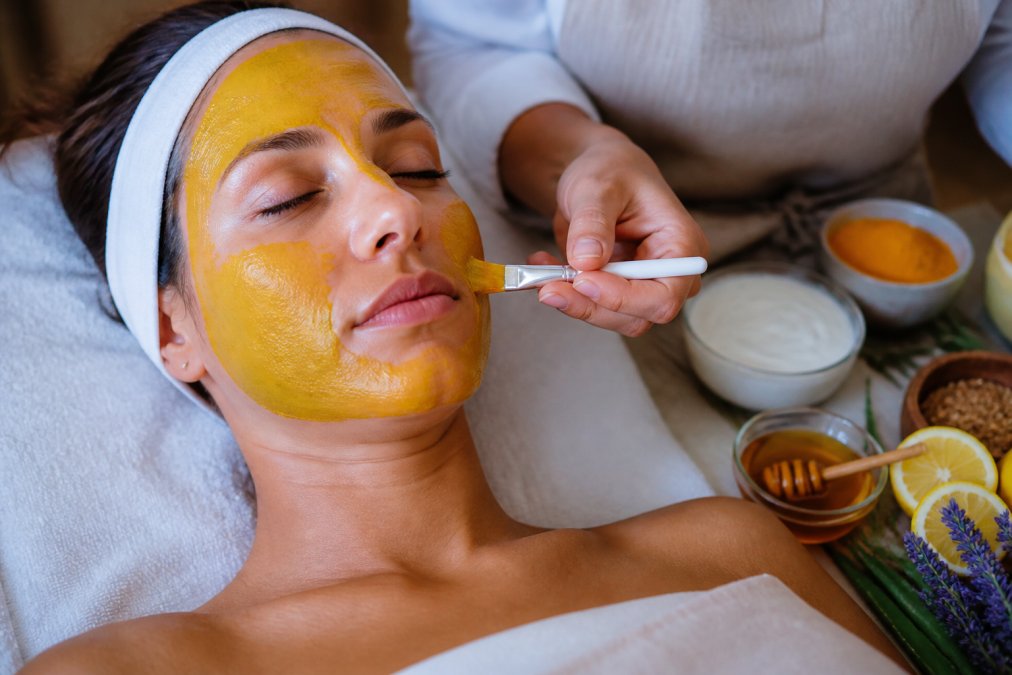
- Plain yogurt and honey mask. The lactic acid in yogurt offers mild surface exfoliation while honey pulls water into the skin. Use plain, unsweetened yogurt, flavored varieties add sugar and preservatives you do not need. Start with 10 minutes.
- Papaya or pumpkin puree mask. Both contain enzymes (papain in papaya, a mix of proteolytic enzymes in pumpkin) that digest dead keratin on the surface. Canned puree works; just confirm the only ingredient is the fruit. Start with 10 minutes.
- Oatmeal and milk paste. Finely ground oats provide gentle physical buffing while the lactic acid in milk adds a mild chemical component. Good for dry or mature skin. Start with 10 minutes.
Recipes to Avoid Entirely
- Lemon juice. Its pH sits far below what skin tolerates, and it is phototoxic, meaning it makes you more likely to burn and blotch in the sun. This is the single most common cause of DIY peel burns.
- Baking soda. Highly alkaline, it disrupts the skin's acid mantle and leaves the barrier more vulnerable to irritation and infection.
- Apple cider vinegar, undiluted. Same pH problem as lemon, with the added risk of chemical burn if left on too long.
- Toothpaste on spots. Abrasive, alkaline, and formulated for enamel, not skin.
The Safety Checklist
- Patch test on your inner forearm 24 hours before your face
- Never mix multiple acids or enzymes in one session
- Start with a five- to ten-minute contact time, then build slowly over weeks
- Skip exfoliation entirely if your barrier is already irritated, red, or stinging
- Wear broad-spectrum sunscreen daily afterward, since freshly exfoliated skin is more photosensitive
- Stop immediately if you feel burning rather than tingling, rinse with cool water, not more product
How Often Is Too Often
A common pattern among people who damage their barrier is exfoliating three or more times a week because results felt slow. For most skin types, once or twice weekly with a gentle enzyme or lactic-acid mask is the ceiling. If your skin stings when you apply a basic moisturizer, you have already crossed the line, back off for two weeks before resuming.
If you are unsure whether a recipe suits your skin, a professional consultation removes the guesswork. At SKIN SOLUTIONS BY 2 DIVAS in Sebring, FL, a skin analysis can tell you whether your barrier is strong enough for at-home exfoliation at all, or whether a professional corrective facial is the safer starting point.
Book your appointment today! →
Choosing the Right Natural Exfoliant for Your Skin Type
Choosing the right natural exfoliant comes down to matching acid strength and enzyme type to how your skin behaves, not to what is trending. The wrong match causes more harm than doing nothing.
Match the Molecule, Not the Marketing
The single most useful thing to understand is that "natural acid" is not one thing. The molecules differ in size, and size determines how deep they travel:
- Glycolic acid (from sugarcane) has the smallest molecule and penetrates deepest. Effective, but the most likely to sting on sensitive or compromised skin.
- Lactic acid (from fermented milk) is larger, so it works closer to the surface. Gentler, and it also acts as a humectant, drawing water into the skin.
- Mandelic acid (from almonds) is larger still, which is why it is often recommended for acne-prone and deeper skin tones, it clears pores with a lower irritation risk and less post-inflammatory hyperpigmentation.
- Enzymes (papain, bromelain, pumpkin) do not penetrate at all. They digest dead keratin on the surface, which is why they are the safest entry point for reactive skin.
| Skin Type | Best Natural Option | Avoid |
|---|---|---|
| Dry or sensitive | Lactic acid, yogurt masks | Strong glycolic acid |
| Oily or acne-prone | Mandelic acid, pineapple enzymes | Heavy oil-based scrubs |
| Combination | Papaya enzyme masks | Over-exfoliating |
| Hyperpigmentation-prone | Lactic acid, vitamin C | Lemon juice, harsh scrubs |
| Mature skin | Pumpkin enzymes, gentle AHAs | Abrasive physical scrubs |
The Microbiome Angle Most Guides Skip
Your skin hosts a community of bacteria, fungi, and yeasts that help maintain its acid mantle and keep harmful organisms in check. Aggressive exfoliation, even with natural acids, strips that community along with the dead cells, which is why some people find their skin becomes more reactive the more they exfoliate.
Microbiome-friendly exfoliation means three things in practice:
- Lower frequency. Once or twice weekly, not daily.
- Lower strength. A mild lactic or mandelic acid used consistently beats a strong glycolic acid used occasionally.
- Support afterward. A fragrance-free moisturizer and, if your skin tolerates it, a prebiotic or postbiotic serum help the barrier recover between sessions.
If you exfoliate often and your skin feels tight, itchy, or newly sensitive to products it used to tolerate, the microbiome is the likely culprit, not the product itself.
Sustainability and Sourcing
Most guides compare "natural" to "synthetic" without asking where the ingredients come from. It is worth knowing:
- Glycolic acid is typically synthesized industrially, though it is chemically identical to the acid found in sugarcane. Its footprint depends on the manufacturing process, not the plant.
- Fruit-derived enzymes require farming, harvesting, and cold-pressing to retain activity, a longer supply chain, but one that supports agricultural producers when sourced responsibly.
- Cold-pressed botanical oils retain more beneficial compounds than heat- or solvent-extracted versions, though they cost more and have shorter shelf lives.
- Packaging matters as much as the ingredient. Refillable and recyclable formats reduce the waste that single-use peel kits generate.
There is no universally "greenest" choice. The honest answer is that a product you use consistently and finish is more sustainable than one you abandon after a reaction.
Long-Term Efficacy: What Natural Peels Can and Cannot Do
This is the question most articles dodge. Clinical peels, particularly medium-depth TCA peels, are documented to stimulate collagen remodeling over weeks to months, which is why they are used for scarring and deeper texture concerns. Natural alternatives work primarily on the surface: they improve tone, texture, and brightness, and they support the barrier when used correctly.
What that means in practice:
- For dullness, mild unevenness, and surface texture, a consistent natural exfoliation routine can deliver visible improvement over eight to twelve weeks.
- For deep scarring, significant laxity, or advanced photodamage, natural exfoliants alone are unlikely to produce the same structural change a clinical peel can.
- The honest middle ground is that natural exfoliation maintains and enhances results between professional treatments, rather than replacing them outright.
At SKIN SOLUTIONS BY 2 DIVAS in Sebring, FL, every corrective facial begins with a skin analysis that identifies your barrier condition, your microbiome stress level, and whether your concern is surface-level or structural, so the plan you leave with actually matches your skin.
Conclusion: Your Path to Natural Skin Rejuvenation
Lasting skin change rarely comes from one aggressive treatment. It comes from understanding your skin, choosing gentle actives that respect your barrier, and staying consistent over months rather than days.
If you would rather skip the trial and error of DIY peels, SKIN SOLUTIONS BY 2 DIVAS in Sebring, FL offers custom corrective facials built around a thorough skin analysis. Every plan targets your specific concerns, whether that is acne, hyperpigmentation, or early aging, using high-quality ingredients and a results-driven approach. Appointments are by request for personalized, one-on-one care.
Book your appointment today and get a plan built for your skin.
Frequently Asked Questions
What is a natural alternative to a chemical peel?
Natural alternatives to chemical peels include enzyme-based exfoliants derived from papaya, pumpkin, and pineapple, which dissolve dead skin cells without synthetic acids. Professional corrective facials at Skin Solutions by 2 Divas in Sebring, FL, use gentle exfoliation and customized serums to achieve similar skin rejuvenation results. These options suit those seeking glowing skin with less irritation.
Can natural face peels effectively treat hyperpigmentation?
Yes, natural face peels can help treat hyperpigmentation by promoting cell turnover and reducing melanin buildup. Ingredients like lactic acid from milk or mandelic acid from almonds gently fade dark spots over time. For persistent hyperpigmentation, a skin analysis for facial treatments helps determine the best approach. Professional guidance ensures safe, gradual improvement.
Is it safe to use homemade peels on sensitive skin?
Homemade peels can be safe for sensitive skin if you patch test first and use gentle ingredients like yogurt or oatmeal. Avoid strong acids or abrasive scrubs that damage the skin barrier. For reactive skin, a professional corrective facial provides controlled exfoliation. Always consult a specialist before trying new at-home treatments.
How do professional corrective facials compare to at-home natural peels?
Professional corrective facials offer deeper customization and stronger results than at-home peels. A trained esthetician performs a thorough skin analysis to select appropriate enzymes and serums for your concerns. At-home peels are convenient but limited in strength. For significant improvements in texture or hyperpigmentation, professional treatments deliver more consistent outcomes.