 listicle
Natural Ingredients for Bridal Skincare Routine
Table of Contents
- Why Natural Ingredients Work for Bridal Skincare
- Your Bridal Skincare Timeline: 6 Months to Wedding Day
- Top Natural Ingredients for Glowing Bridal Skin
- DIY Face Masks and Body Scrubs for Brides
- How to Treat Hyperpigmentation Before Your Wedding
- Professional Corrective Facials for Brides: When and Why
- Patch Testing and Ingredient Safety for Sensitive Skin
- Conclusion: Your Natural Bridal Glow Starts Now
- Frequently Asked Questions
Last Updated: October 2, 2026
Why Natural Ingredients Work for Bridal Skincare
At SKIN SOLUTIONS BY 2 DIVAS in Sebring, FL, we see the difference a structured, ingredient-aware routine makes for brides.
Below, we'll show you exactly how to build that routine, which ingredients earn their place, and what most brides get wrong about timing.
Natural ingredients for bridal skincare is not about raiding your kitchen the week before the wedding. It is a months-long plan.
How Natural Ingredients Support a Radiant Complexion
A radiant complexion comes from a skin barrier that holds moisture and turns over cells efficiently. Natural ingredients support both jobs. Yogurt and papaya supply lactic acid and fruit enzymes that dissolve dead cells gently. Turmeric and neem calm redness. Jojoba and almond oil mimic the skin's own lipids, so they moisturize without clogging pores.
What most guides miss is that "natural" does not automatically mean "gentle." Essential oils and botanical extracts can irritate reactive skin. The American Academy of Dermatology's guidance on patch testing recommends testing any new product on a small area first, and that applies to kitchen staples too.
Your Bridal Skincare Timeline: 6 Months to Wedding Day
A bridal skincare timeline maps treatments and ingredients across six months so your skin peaks on the wedding day, not the week before. Rushing the plan is the single biggest mistake we see. Skin cell turnover takes weeks, and hyperpigmentation fades slowly.
Here is how to pace it.
| Stage | Focus | Frequency |
|---|---|---|
| 6 months out | Patch tests, gentle cleanse, hydration | Daily |
| 4 months out | Add exfoliation and brightening masks | 2x per week |
| 2 months out | Professional corrective facials | Every 3-4 weeks |
| 2 weeks out | Stop new products, maintain only | Daily |
| Wedding week | Hydrate, sleep, no experiments | Daily |
What to Do at Each Stage
Start with a patch test on every new ingredient, even the ones from your kitchen. Once you know what your skin tolerates, build a simple cleanse-treat-moisturize routine and hold it steady.
At the four-month mark, add exfoliation and brightening masks twice a week. By two months out, book professional corrective facials for brides to target stubborn texture and pigment.
Top Natural Ingredients for Glowing Bridal Skin
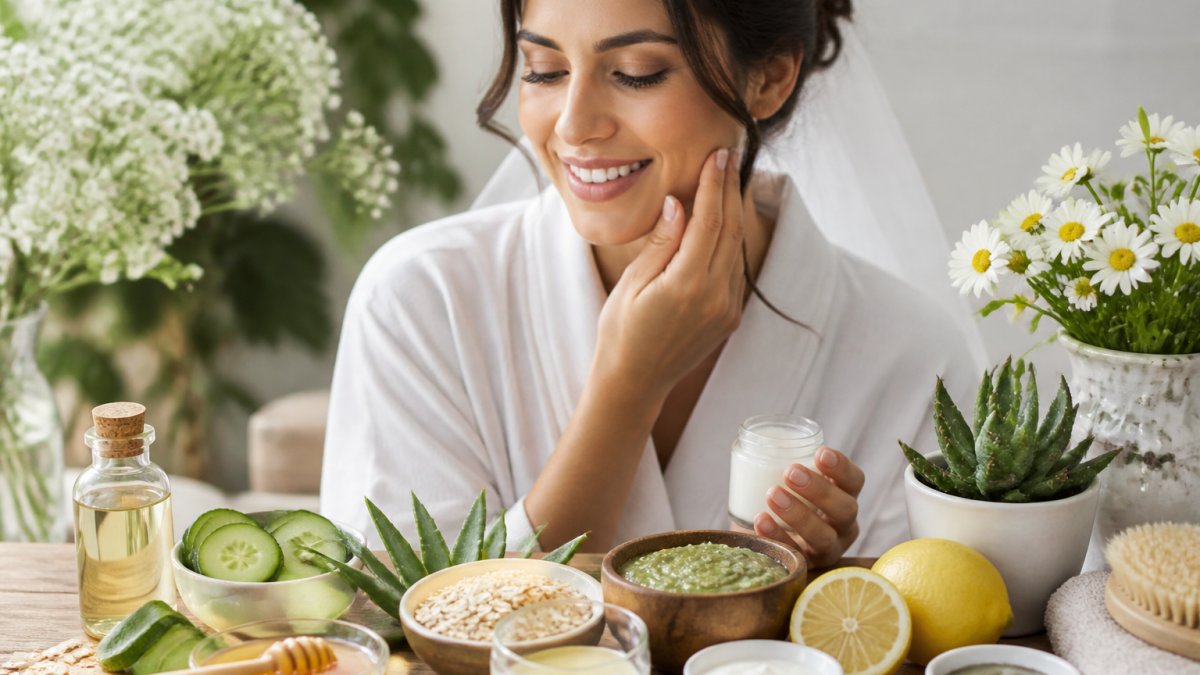
The best natural ingredients for glowing skin are the ones your skin type actually tolerates. Gram flour, yogurt, turmeric, papaya, saffron, red sandalwood, neem, jojoba oil, and almond oil all earn a place, but each suits a different concern.
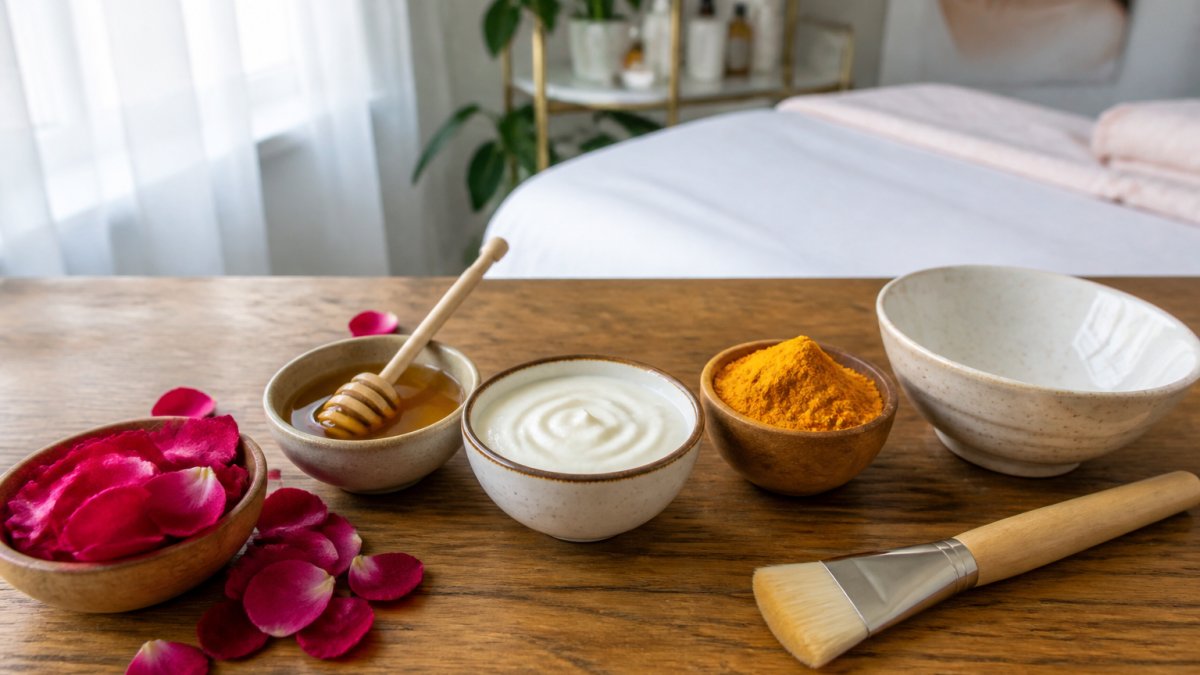
Kitchen Staples and Their Benefits
- Gram flour: Gentle cleanser and exfoliant for oily skin
- Yogurt: Lactic acid for soft, bright texture
- Turmeric: Calms redness and brightens tone
- Papaya: Fruit enzymes that dissolve dead cells
- Saffron: Traditional brightening agent for dull skin
- Red sandalwood: Soothes irritation and evens tone
- Neem: Antibacterial support for congestion
- Jojoba and almond oil: Lightweight hydration for dry skin
For hydration serums, The Ordinary's Hyaluronic Acid 2% + B5 pairs well with these ingredients and suits most skin types. For a soothing toner, Kiehl's Calendula Herbal-Extract Toner calms sensitive and combination skin.
DIY Face Masks and Body Scrubs for Brides
DIY facial masks and body scrubs work best as a supplement to professional care, not a replacement. Use them two to three times a week, and always patch test first.
Masks by Skin Type
Oily and congested skin: Mix two tablespoons of gram flour, one tablespoon of plain yogurt, and a pinch of turmeric.
Dry and dehydrated skin: Mash a quarter of a ripe avocado with one teaspoon of honey and a few drops of almond oil.
Sensitive and reactive skin: Use plain full-fat yogurt alone, or yogurt with a teaspoon of colloidal oatmeal.
Body Scrubs for Full-Body Glow
For the body, mix gram flour with a little yogurt and a few drops of almond oil. Scrub in gentle circles on damp skin, then rinse.
Avoid harsh sugar or salt scrubs on the face; the granules are too abrasive and can micro-tear the skin barrier. On the body, a fine sugar scrub is acceptable once a week, but never on freshly shaved or waxed skin.
Ingredient Combinations to Avoid
This is the part most DIY guides skip, and it is where brides get hurt.
- Citrus juices and sun exposure: Lemon, lime, and bergamot contain photosensitizing compounds. Applying them before sun exposure can cause phytophotodermatitis, a chemical burn that leaves dark marks lasting months. Never put citrus on your face, and never before a fitting, shower, or outdoor event.
- Baking soda and apple cider vinegar: Both disrupt the skin's acid mantle. Baking soda is alkaline and strips the barrier; undiluted vinegar can cause chemical burns. Skip both.
- Turmeric and fair skin: Turmeric can temporarily stain pale skin yellow. Use a pinch, not a spoonful, and rinse thoroughly.
- Essential oils and retinoids: If you use a prescription retinoid, do not layer essential oils on top. The combination increases irritation risk.
How Often to Use Them
Two to three times a week is the ceiling for DIY masks. More frequent use, especially with exfoliating ingredients like yogurt or papaya, can over-strip the barrier and cause the exact dullness you are trying to fix.
Book your appointment today! →
At SKIN SOLUTIONS BY 2 DIVAS in Sebring, FL, we review every bride's at-home routine alongside her professional treatments so the two reinforce each other instead of working against each other.
How to Treat Hyperpigmentation Before Your Wedding
Treating hyperpigmentation before a wedding requires patience and consistency, not aggressive scrubbing. Sun damage and melasma fade slowly, so start at least four to six months out.
Layer a vitamin C or rose hip oil in the morning and a gentle exfoliant at night. For deeper pigment, professional corrective facials for brides can target specific areas with controlled, clinical-grade treatments.
Professional Corrective Facials for Brides: When and Why
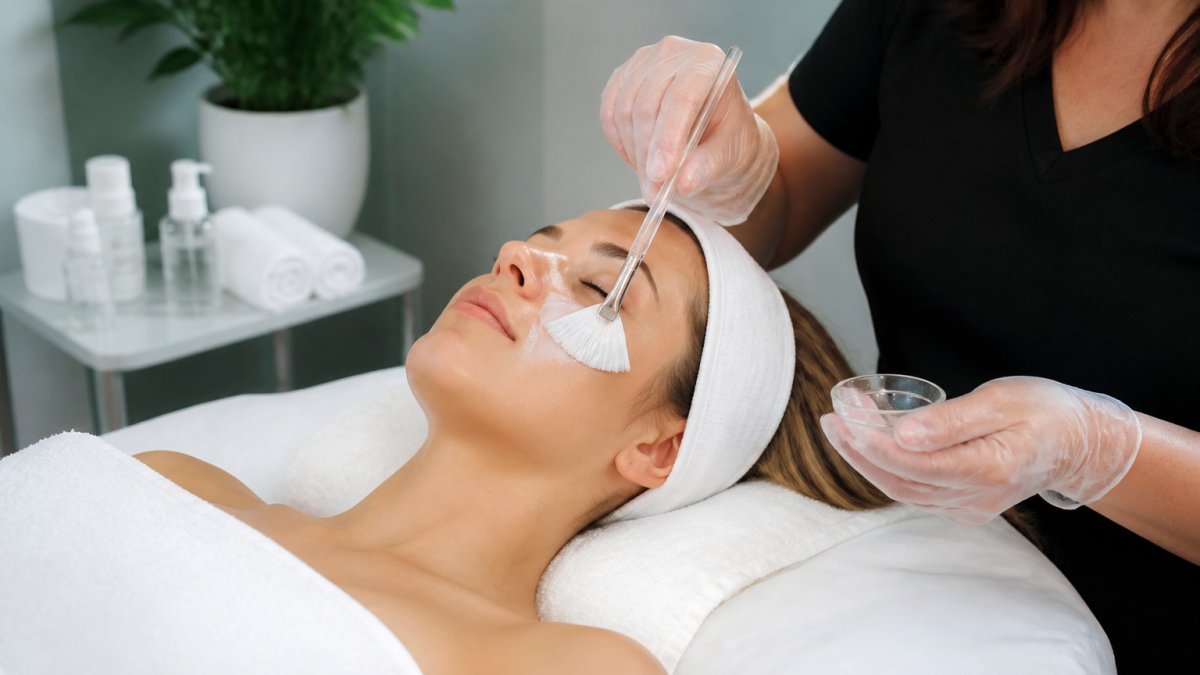
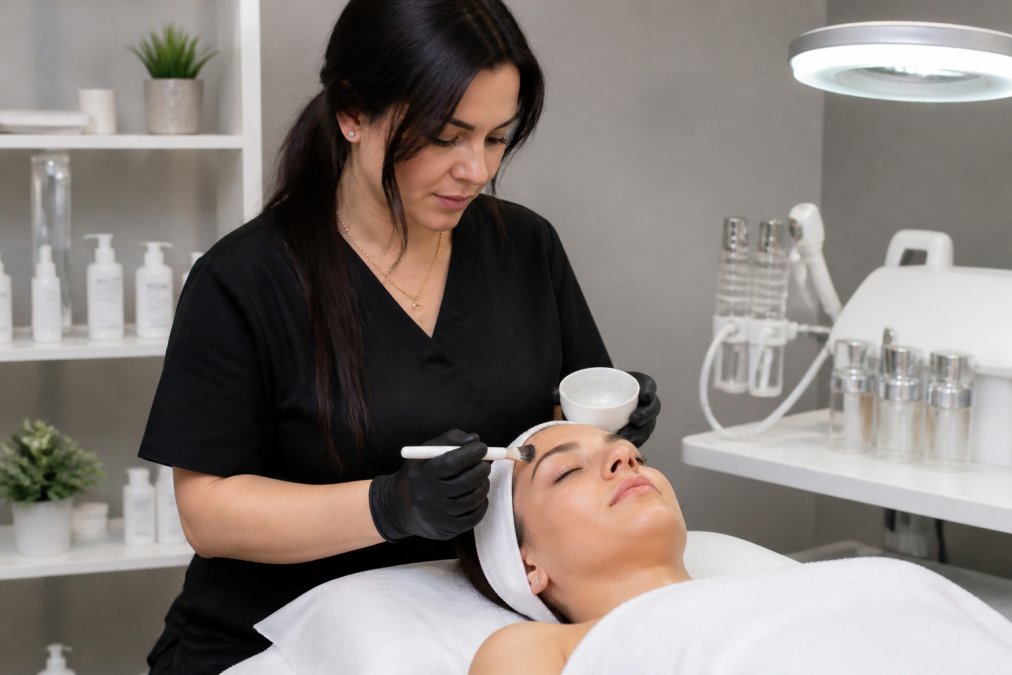
Professional corrective facials for brides are worth booking two to three months before the wedding, spaced three to four weeks apart. These treatments go deeper than home care.
At SKIN SOLUTIONS BY 2 DIVAS, every client gets a thorough skin analysis before treatment. That step matters. It is how we tell the difference between hormonal acne and congestion, or between true hyperpigmentation and post-inflammatory marks, because each needs a different approach.
Patch Testing and Ingredient Safety for Sensitive Skin
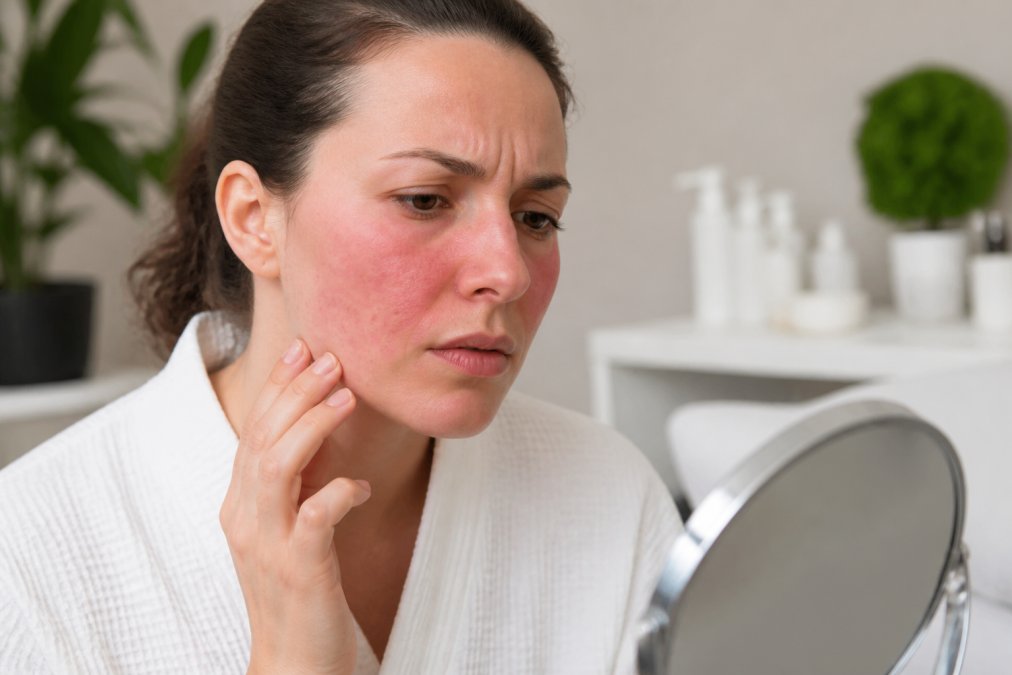
Patch testing is the step most brides skip, and it is the one that prevents disasters. Sensitive skin reacts to essential oils, fragrances, and even "gentle" botanicals. The American Academy of Dermatology's guidance on patch testing recommends testing any new product on a small area first, and that applies to kitchen staples too.
How to Patch Test Correctly
A proper patch test takes 48 hours, not five minutes.
- Choose the site. Apply a small amount to the inner forearm or behind the ear, thin skin that reacts like the face.
- Apply and wait. Leave it uncovered for 24 hours. Do not wash the area.
- Check at 24 hours. Look for redness, itching, swelling, or small bumps. If any appear, stop, the ingredient is not for you.
- Check again at 48 hours. Some reactions are delayed. A product that looks fine at hour two can flare at hour 36.
- Test one new ingredient at a time. If you test three things at once and react, you will never know which one caused it.
A common pattern is that brides test a mask on their jaw the night before an event, react, and have no time to recover. Test at least two weeks before any event where your skin will be photographed.
Ingredients That Should Never Be Mixed
Ingredient synergy matters as much as individual safety. Some combinations cancel each other out; others cause harm.
- Retinoids and strong acids: Prescription retinoids plus glycolic, salicylic, or lactic acid at the same time over-exfoliates the barrier. Use one in the morning and one at night, or alternate days.
- Vitamin C and retinoids: Both are active, and layering them can irritate. Vitamin C suits morning; retinoids suit night.
- Citrus and sun: As noted above, photosensitizing compounds plus UV equals burns and dark marks. This is the single most common DIY injury before weddings.
- Essential oils and prescription actives: Do not layer undiluted essential oils over prescription treatments. Dilute essential oils in a carrier oil at no more than a 1-2% concentration for facial use.
- Multiple new products at once: Introducing three new products in the same week makes it impossible to identify the culprit if something goes wrong.
Sensitive-Skin Routine Rules
If your skin is reactive, keep the routine simple: a mild cleanser, one treatment, and a moisturizer. Add nothing new in the final month. Fragrance-free and essential-oil-free formulas are safer than "natural" ones, because natural does not mean non-irritating.
When to See a Professional
If a patch test produces a reaction, spreading redness, swelling, blistering, or itching that lasts more than a day, stop all products and see a professional. At SKIN SOLUTIONS BY 2 DIVAS in Sebring, FL, we perform thorough skin analysis before treatment, which is how we tell the difference between hormonal acne and congestion, or between true hyperpigmentation and post-inflammatory marks, because each needs a different approach.
Conclusion: Your Natural Bridal Glow Starts Now
Building a glow that lasts takes months, not days, and the brides who plan ahead see the best results. If you are in Sebring and want a personalized plan, SKIN SOLUTIONS BY 2 DIVAS offers custom corrective facials, thorough skin analysis, and a results-driven approach tailored to your skin. We are by appointment only, so every visit is focused entirely on you.
Frequently Asked Questions
What is the best natural skincare routine for brides before their wedding?
A consistent routine with gentle cleansing, exfoliation, hydration, and sun protection works best. Start with a patch test, then use ingredients like yogurt, turmeric, and almond oil. For personalized guidance, consider a professional skin analysis. Skin Solutions by 2 Divas in Sebring, FL, offers custom corrective facials to address your specific concerns and help you achieve a radiant complexion.
How far in advance should a bride start a natural skincare routine?
Begin at least six months before the wedding. This allows time to patch test ingredients, see results from exfoliation and hydration, and adjust as needed. If you have hyperpigmentation or acne, starting earlier gives you more time to treat those concerns. A bridal skincare timeline helps you stay consistent without last-minute stress.
Which natural ingredients are best for bridal acne and hyperpigmentation?
For acne, try neem. For hyperpigmentation, ingredients like papaya can help brighten skin. Always patch test first. A professional corrective facial can combine these ingredients safely and effectively, especially if you have sensitive skin.
Can professional facials complement a natural at-home bridal skincare routine?
Yes. Professional facials provide deep exfoliation and targeted treatments that enhance your at-home efforts. They can address issues like hyperpigmentation and acne more intensively. Skin Solutions by 2 Divas in Sebring, FL, offers custom corrective facials tailored to your skin, ensuring your natural routine and professional care work together for the best results.
What are the safest natural ingredients for sensitive skin before a wedding?
Oatmeal, calendula, aloe vera, and rose water are gentle options for sensitive skin. Avoid essential oils and strong exfoliants unless patch tested. A professional skin analysis can identify safe ingredients for your skin type. Always perform a patch test 24-48 hours before using any new ingredient, especially on your face.
Your wedding photos will last a lifetime, and your skin deserves the same care you put into every other detail. At SKIN SOLUTIONS BY 2 DIVAS, our custom corrective facials target acne, aging, and hyperpigmentation with a personalized plan built from a thorough skin analysis. Book your appointment today and start your natural bridal glow with expert, results-driven care.