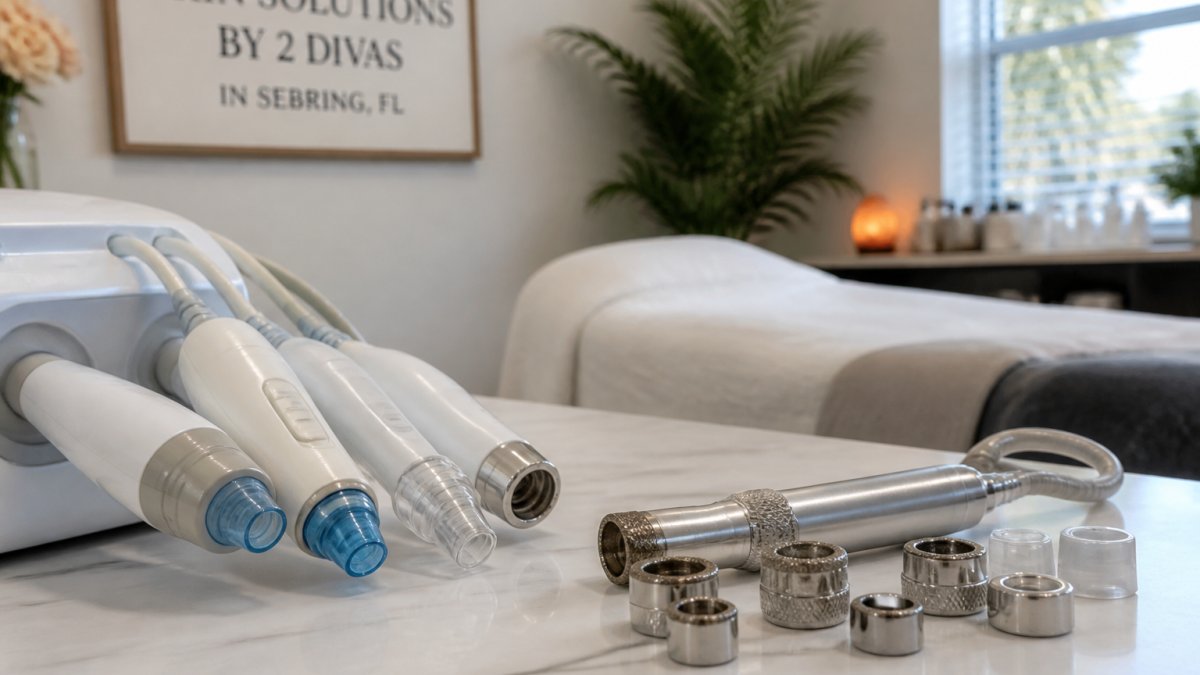
 comparison
Manual Extraction vs Ultrasonic Facial: Which Works?
Table of Contents
- Manual Extraction vs Ultrasonic Facial: A Quick Comparison
- What Is Manual Extraction?
- How Ultrasonic Skin Scrubbing Works
- Benefits of Ultrasonic Facial for Blackheads and Whiteheads
- Risks and Side Effects of Manual Extractions
- How to Prepare for Facial Extractions
- Post-Extraction Skin Care Routine
- Corrective Facial Treatment Frequency
- Which Method Is Right for Your Skin Type?
- Frequently Asked Questions
Last Updated: September 11, 2026
Manual Extraction vs Ultrasonic Facial: A Quick Comparison
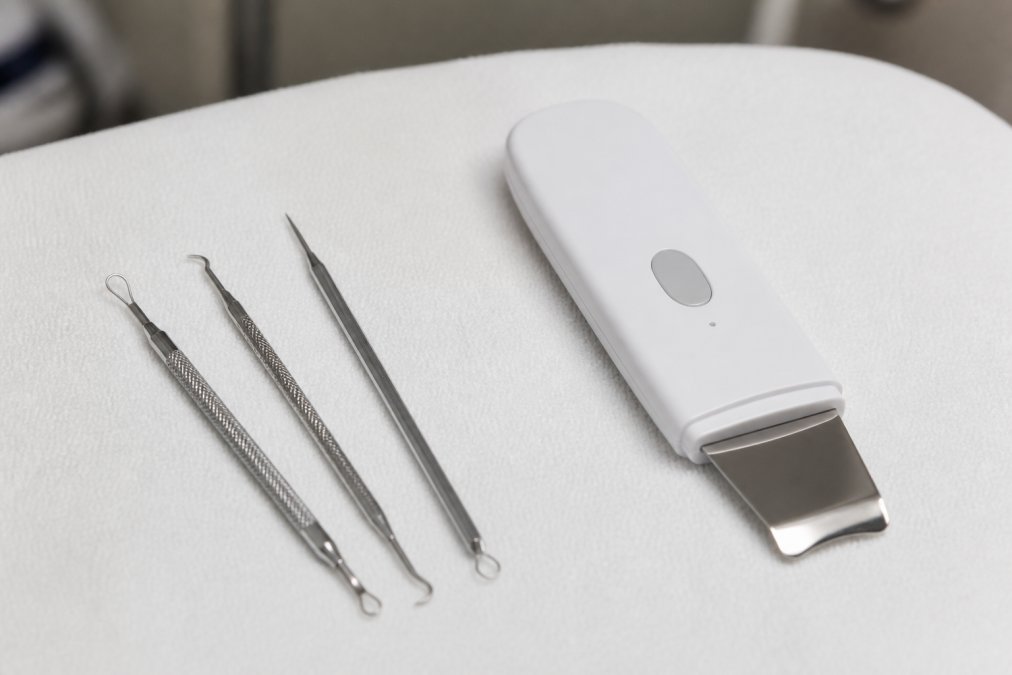
Choosing between manual extraction and an ultrasonic facial comes down to one question: how much control do you want over the result? Manual extraction is the traditional method estheticians use to physically press comedones out of congested pores. An ultrasonic facial is a device-based treatment that uses high-frequency sound vibrations to loosen and lift debris from the skin without pressure. The right pick depends on your skin type, your tolerance for downtime, and how stubborn your congestion is.
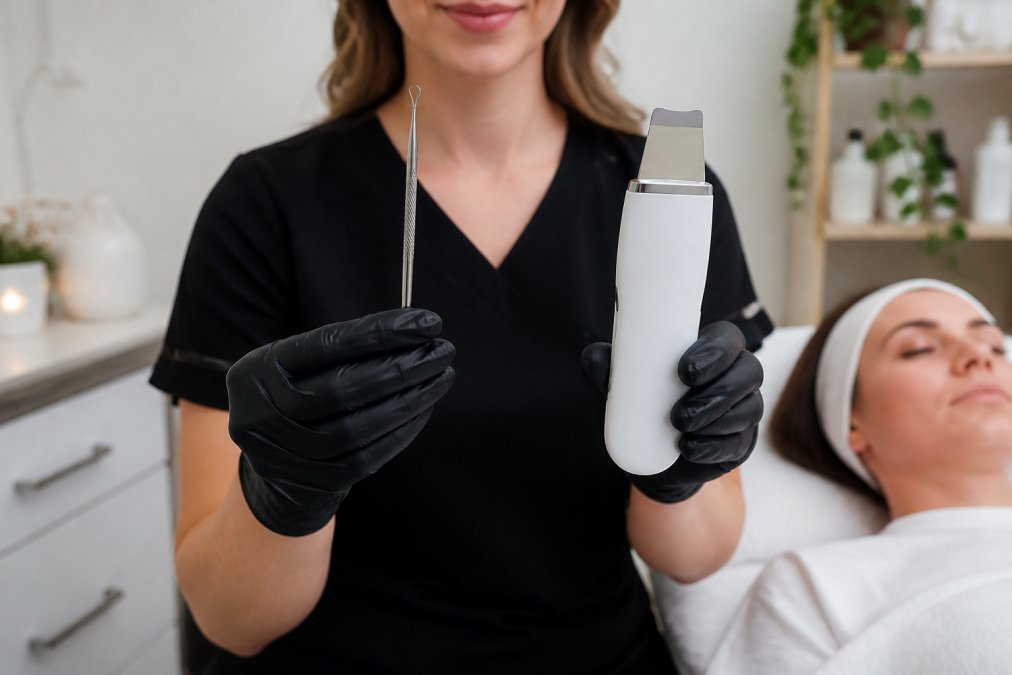
Here's the short version. Manual extraction delivers immediate, visible results on deep impactions but carries more risk of trauma and inflammation. Ultrasonic skin scrubbing is gentler on the skin barrier and better suited to sensitive or reactive skin, though it struggles with firmly lodged blackheads.
| Factor | Manual Extraction | Ultrasonic Facial |
|---|---|---|
| Method | Physical pressure with a tool | Sound vibrations |
| Best for | Stubborn, deep comedones | Sensitive, reactive skin |
| Downtime | Possible redness, tenderness | Minimal |
| Skill required | High | Moderate |
| Results speed | Immediate | Gradual, cumulative |
What Is Manual Extraction?
Manual extraction is a professional technique in which an esthetician uses a comedone extractor or gloved fingertips to apply controlled pressure around a clogged pore and remove sebum, blackheads, and whiteheads. It is the oldest method in the esthetician's toolkit and still the most direct way to clear a single stubborn impaction.
How Manual Extraction Works
The esthetician positions a looped or flat tool against the skin, then applies steady pressure at the base of the comedone. The goal is to lift the plug upward without tearing the surrounding tissue. When done correctly, the pore empties and the skin returns to a flat surface within minutes.
What most guides miss is how much technique matters here. Too little pressure does nothing. Too much pressure bruises the skin and can push debris deeper, which is exactly how a simple blackhead becomes an inflamed lesion. That is why this method belongs in trained hands, not a bathroom mirror.
How Ultrasonic Skin Scrubbing Works
An ultrasonic skin scrubber is a handheld device with a flat metal spatula that vibrates at high frequency, typically in the range used for professional deep cleansing. The vibrations create a gentle micro-massage that loosens pore congestion and lifts debris onto the spatula's edge with minimal manual pressure.
The Role of Sound Vibrations in Skin Cleansing
The sound vibrations do two things at once. First, they break the bond between sebum and the pore wall, which makes debris easier to remove. Second, the rapid oscillation creates a mild exfoliation effect that sweeps away dead cells sitting on the surface of the epidermis.
Benefits of Ultrasonic Facial for Blackheads and Whiteheads
The main benefit of an ultrasonic facial for blackheads and whiteheads is that it clears congestion without the mechanical trauma of pressing. For acne-prone and sensitive skin, that difference matters. The treatment supports deep cleansing while leaving the skin barrier largely intact.
Other benefits of ultrasonic facial treatment include:
- Reduced redness and tenderness compared with manual pressure
- Gentle exfoliation that improves skin texture over time
- Better absorption of serums applied afterward
- No downtime, so you can return to normal activity immediately
- Suitable for most skin types, including reactive skin
The trade-off is depth. Ultrasonic scrubbing handles surface congestion well. A firmly lodged comedone that has been sitting in a pore for months may need manual help.
Risks and Side Effects of Manual Extractions
The risks of manual extractions are real and worth understanding before you book. The biggest is skin trauma. Aggressive pressure can rupture the pore wall, cause inflammation, and in the worst cases leave a small scar or a dark mark that lingers for weeks.
Other common side effects include:
- Redness and tenderness that can last a day or more
- Swelling around the treated area
- Post-extraction breakouts when bacteria spread to nearby pores
- Increased sensitivity in the days that follow
The Long-Term Cost: Barrier and Elasticity
Most guides stop at the immediate aftermath. The cumulative picture matters more. Every extraction applies mechanical stress to the pore wall and the surrounding dermis. When pressure is repeated on the same areas over months or years, the tissue can lose some of its rebound. A common pattern is enlarged-looking pores and a slightly crepey texture in clients who have had aggressive extractions on the same zones for years.
The skin barrier takes a hit too. Each session creates micro-disruption at the surface, and if sessions are spaced too close together, the barrier does not fully recover before the next round. That leaves skin more reactive, more prone to redness, and slower to heal. This is why spacing matters as much as technique. A predictable interval between appointments gives the barrier time to rebuild.
When to Avoid Manual Extraction Entirely
This is where most articles stay vague. Here is the specific guidance.
Skip manual extraction if you have:
- Active cystic acne. Pressing a cyst pushes inflammation deeper and can spread infection to adjacent follicles. Cysts need anti-inflammatory treatment, not extraction.
- Rosacea or a flushed, reactive baseline. Mechanical pressure can trigger a flare and worsen persistent redness.
- Active sunburn, windburn, or a compromised barrier. Extracting over damaged skin increases the risk of infection and post-inflammatory hyperpigmentation.
- Thin, fragile, or steroid-thinned skin. The tissue cannot withstand pressure without tearing.
- An active cold sore or any open lesion in the treatment area. Extraction can spread the infection.
- A history of keloid scarring. Any trauma carries a higher risk of raised scar formation.
- Recent isotretinoin use (PubMed). Skin is thinner and slower to heal during and after a course; most practitioners wait before performing extractions.
Proceed with caution if you have:
- Melasma or a tendency toward post-inflammatory hyperpigmentation. Even gentle pressure can darken treated areas.
- Diabetes or a condition that slows wound healing. Healing timelines are longer and infection risk is higher.
- A bleeding disorder or current use of blood thinners. Bruising and prolonged redness are more likely.
How to Prepare for Facial Extractions
Preparing for facial extractions properly is the difference between a smooth session and a reactive one. The goal is to soften pore congestion and calm the skin before any tool touches it.
A simple prep checklist:
Book your appointment today! →
- Stop retinoids and exfoliating acids for 3-5 days before your appointment (the American Academy of Dermatology)
- Avoid sun exposure and waxing on the treatment area for at least 48 hours (the American Academy of Dermatology)
- Skip heavy makeup on the day of your visit
- Arrive with clean skin and note any products you currently use
- Tell your esthetician about any prescriptions or recent procedures
Post-Extraction Skin Care Routine
A post-extraction skin care routine should calm inflammation first and rebuild the barrier second. The 48 hours after extraction are when the skin is most vulnerable, so keep it simple.
For the first two days, cleanse with a gentle, non-foaming cleanser and skip actives like retinol, vitamin C, and strong acids. Apply a soothing moisturizer and a broad-spectrum sunscreen every morning. Avoid picking at the treated areas even if they feel textured, and hold off on makeup for at least 12 hours.
Once redness fades, usually within two to three days, you can reintroduce your normal routine one product at a time. If you had an ultrasonic facial rather than manual extraction, your skin typically tolerates products sooner because there is less surface disruption.
Corrective Facial Treatment Frequency
Corrective facial treatment frequency depends on your skin concern and how your skin responds. For active acne or significant congestion, most people benefit from a session every two to four weeks until the skin stabilizes. Once results hold, maintenance every four to six weeks keeps pores clear and supports skin elasticity.
For hyperpigmentation and aging concerns, spacing treatments closer together early on tends to produce faster visible change, with the interval widening as the skin improves. A professional skin analysis at your first visit sets a realistic schedule based on your skin, not a generic calendar.
Which Method Is Right for Your Skin Type?
The choice comes down to your skin's tolerance and the type of congestion you have. Sensitive, reactive, or acne-prone skin usually does better with ultrasonic deep cleansing. Thick, resilient skin with deep, stubborn comedones often sees the fastest result from professional manual extraction.
Here is a more specific framework:
| Your Skin Profile | Better First Choice | Why |
|---|---|---|
| Sensitive or reactive | Ultrasonic | No mechanical pressure, minimal barrier disruption |
| Acne-prone with surface congestion | Ultrasonic | Clears debris without spreading bacteria |
| Thick skin with deep, lodged comedones | Manual extraction | Ultrasonic often cannot reach firmly impacted plugs |
| Rosacea or persistent redness | Ultrasonic, with caution | Manual pressure can trigger a flare |
| Active cystic acne | Neither | Both can worsen inflammation; treat the acne first |
| Mature skin with fragile texture | Ultrasonic | Lower risk of tearing and post-inflammatory marks |
| Combination skin with mixed congestion | Both, staged | Ultrasonic for the surface, targeted manual for stubborn spots |
The Home Device vs. Professional Treatment Question
This is the decision most people are actually weighing, and most articles skip it. A handheld ultrasonic spatula is widely available for home use, and the upfront cost looks attractive next to a series of appointments. The trade-off is not just money.
What a home device cannot do:
- Assess your skin and identify a contraindication before treating
- Adjust technique mid-session based on how your skin responds
- Sterilize and maintain the tool to professional standards
- Combine modalities, steam, enzyme prep, extractions, and post-care, in one session
- Recognize when to stop
What a home device can do:
- Maintain results between professional visits
- Provide gentle surface cleansing on low-congestion days
- Support product absorption when used correctly
A common pattern is that people buy a home device, use it too aggressively, and end up with irritation that a professional would have avoided. The device is not the problem; the missing assessment is.
The Long-Term View
If your goal is a single stubborn blackhead, a professional manual extraction is the most direct path. If your goal is ongoing skin health, the method matters less than the plan behind it. Repeated aggressive manual extraction on the same zones can gradually affect pore appearance and skin elasticity, while consistent, appropriately spaced ultrasonic sessions tend to support the barrier over time. Neither is a one-time fix.
Cost is the other factor worth weighing. A one-time home device purchase looks cheaper than a series of professional appointments, but home tools cannot assess your skin, adjust technique mid-treatment, or spot a contraindication. Professional care delivers safer, more consistent results because a trained specialist decides what your skin actually needs that day.
That is the core of the manual extraction vs ultrasonic facial decision. Neither method wins outright. The right one is the one matched to your skin, and often, the best answer is a staged combination of both, guided by a professional who can see what you cannot.
Frequently Asked Questions
Does an ultrasonic facial really work for blackheads?
Yes, an ultrasonic facial uses high-frequency sound vibrations to loosen sebum and debris from pores, making it effective for blackheads and whiteheads. The vibrating spatula gently pushes out congestion without the pressure of manual tools. However, for deep, stubborn impactions, a professional may combine ultrasonic cleansing with targeted manual extraction. At-home ultrasonic devices offer a gentler option.
Is it necessary to get manual extractions during a professional facial?
Not always. Manual extractions are necessary when pores are deeply clogged with hardened sebum or comedones that ultrasonic vibration alone cannot dislodge. A skilled esthetician will assess your skin and decide if manual extraction is needed for specific blemishes. For sensitive or acne-prone skin, ultrasonic methods may be preferred to avoid trauma. Many corrective facials combine both techniques for the best outcome, using ultrasonic for general decongestion and manual extraction only where required.
Which facial method is better for sensitive skin types?
Ultrasonic facials are generally better for sensitive skin because they rely on gentle sound vibrations rather than physical pressure. Manual extraction can cause redness, tenderness, and inflammation, especially on reactive skin. If you have sensitive skin, look for a provider who uses ultrasonic cleansing as the primary method and reserves manual extraction for only the most stubborn spots. Always communicate your skin sensitivity during your consultation so the esthetician can adjust the treatment.
How often should you schedule an ultrasonic facial for maintenance?
For most skin types, an ultrasonic facial every 4 to 6 weeks aligns with the skin's natural renewal cycle. If you are actively managing acne or congestion, your esthetician may recommend more frequent sessions initially, then taper to maintenance. Corrective facial treatment frequency depends on your skin's response and goals. Consistent professional care, combined with a tailored post-extraction skin care routine, helps maintain clear pores and healthy skin texture.
Can I do manual extraction at home safely?
Manual extraction at home carries a high risk of skin trauma, scarring, and infection if done incorrectly. Over-the-counter comedone extractor kits are available, but without professional training, you may push debris deeper or damage the skin barrier. Ultrasonic at-home devices are gentler but less effective for deep impactions. For safe, effective extractions, especially on acne-prone or sensitive skin, professional treatment is recommended.