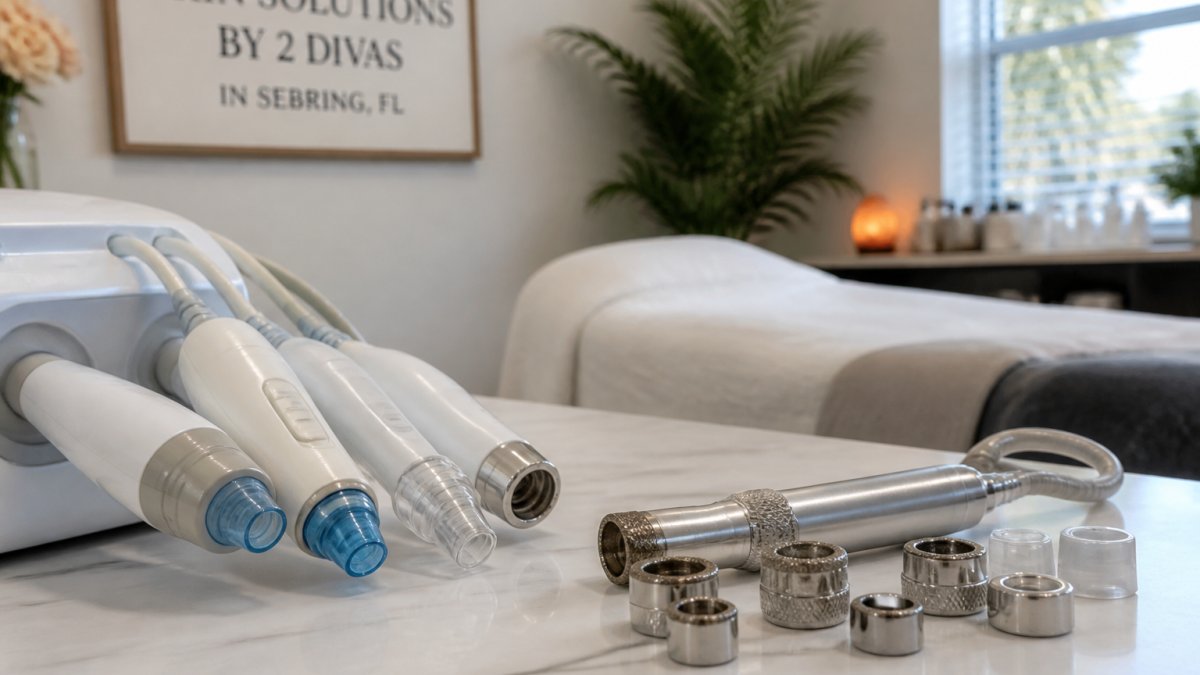
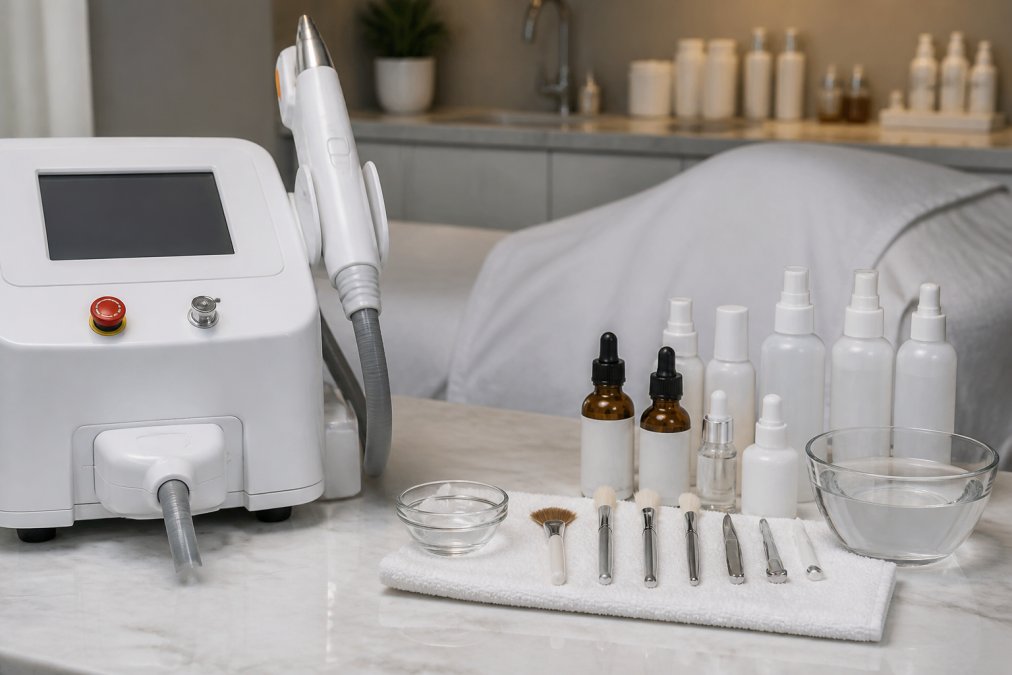
 comparison
Laser Treatments vs Corrective Facials: Which Wins?
Table of Contents
- Laser Treatments vs Corrective Facials: What's the Real Difference?
- Quick Comparison: Lasers vs. Corrective Facials at a Glance
- How Laser Skin Resurfacing Works on Your Skin
- Benefits of Professional Corrective Facials
- How Often Should You Get a Corrective Facial for Real Results?
- Is Professional Microneedling Worth It Compared to Lasers?
- Choosing Between Laser Treatments and Corrective Facials
- Conclusion: Your Path to Healthier Skin
- Frequently Asked Questions
Last Updated: September 6, 2026
When persistent acne, sun damage, or fine lines stop responding to over-the-counter products, the next step usually means choosing between laser treatments vs corrective facials. A laser is an energy-based device that targets specific layers of the skin, while a corrective facial is a customized, professional-grade topical treatment. Both promise real results, but they work on completely different principles, timelines, and budgets.
Laser Treatments vs Corrective Facials: What's the Real Difference?
The core difference comes down to mechanism: lasers use targeted light energy to vaporize or heat tissue, while corrective facials use topical active ingredients to retexture and rebalance the skin. Laser resurfacing creates controlled injury to trigger collagen remodeling; corrective facials layer professional-strength serums, exfoliants, and masks to address congestion, hyperpigmentation, and tone without breaking the skin's surface.
Lasers excel at structural issues like deep scarring, static wrinkles, and significant laxity. Corrective facials improve barrier health, manage active breakouts, and refine texture with zero tissue evaporation. A laser session might take 30 minutes, but recovery can stretch for days; a corrective facial takes about an hour and leaves you with a glow you can wear out the door.
Quick Comparison: Lasers vs. Corrective Facials at a Glance
| Factor | Laser Treatments | Corrective Facials |
|---|---|---|
| Mechanism | Light energy (ablative or non-ablative) | Professional topical ingredients |
| Targets | Scarring, laxity, deep wrinkles | Acne, congestion, tone, surface texture |
| Downtime | 3-14 days depending on depth | Minimal to none |
| Skin tone risk | Higher for deeper skin tones | Safe for all skin types and tones |
| Session cost | Higher per session | Lower per session |
| Results timeline | Dramatic after 1-3 sessions | Gradual, cumulative over 4-6 sessions |
| Best for | Structural correction | Maintenance and barrier health |
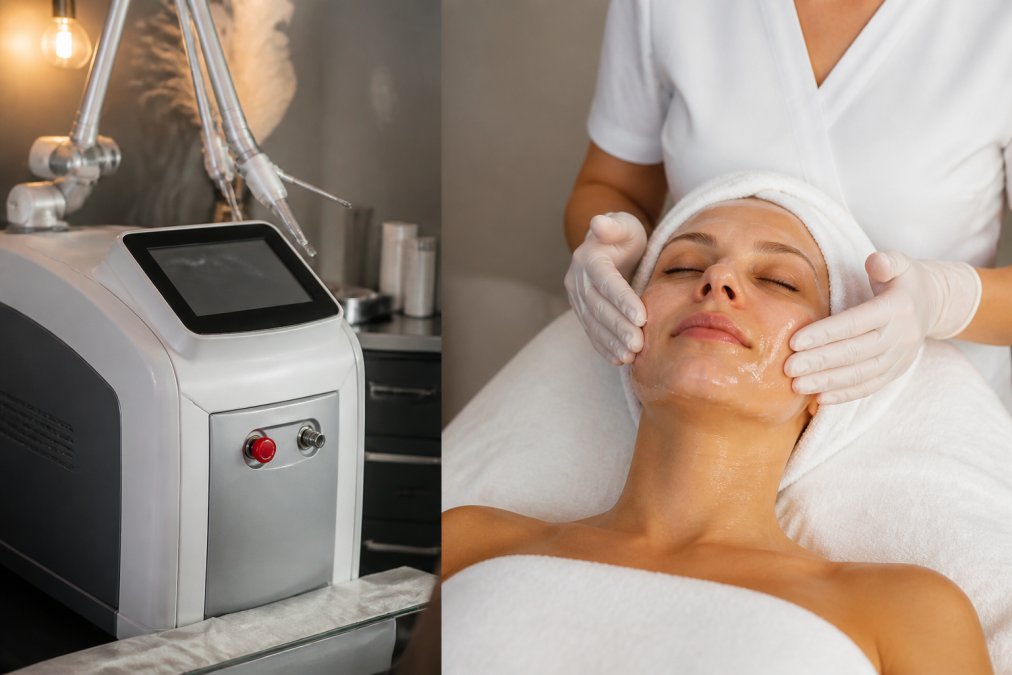
The real decision hinges on your skin's condition and downtime tolerance. Deep acne scars or significant laxity point to a laser; active breakouts, sensitivity, or uneven tone point to a corrective facial as the safer, often more effective starting point.
How Laser Skin Resurfacing Works on Your Skin
Laser resurfacing delivers controlled thermal energy to the epidermis and dermis, triggering a wound-healing response that forces the skin to produce fresh collagen and replace damaged cells. The result is smoother texture, reduced hyperpigmentation, and firmer skin, but intensity depends on the laser's depth, wavelength, and pulse duration.
The Physics Behind the Results
All medical lasers operate on selective photothermolysis: a specific wavelength is absorbed by a specific chromophore (water, hemoglobin, or melanin), converting light into heat (peer-reviewed research). When heat reaches a critical threshold, it denatures proteins or vaporizes tissue, triggering the body's repair cascade. The three most relevant chromophores are:
- Water, absorbs infrared wavelengths (10,600 nm for CO2 lasers, 2,940 nm for Erbium:YAG), which is how ablative lasers vaporize the epidermis.
- Hemoglobin, absorbs visible yellow/green light (532-595 nm), which is why vascular lasers like the Vbeam target redness and broken capillaries.
- Melanin, absorbs a broad spectrum from UV through near-infrared, which is why all laser resurfacing carries some risk of pigment alteration, especially in darker skin.
Ablative vs. Non-Ablative Lasers: What to Expect
Ablative lasers remove the outer skin layer via vaporization (the FDA). The two dominant platforms are the CO2 laser (10,600 nm) and the Erbium:YAG laser (2,940 nm). CO2 penetrates deeper and produces the most dramatic collagen remodeling but requires 7-14 days of crusting, oozing, and erythema. Erbium:YAG is more precise with less thermal damage, translating to roughly 4-7 days of recovery, but is less effective for deep wrinkles and significant laxity.
Non-ablative lasers heat the dermis without removing the epidermis. Common platforms include:
- Nd:YAG (1,064 nm), penetrates deeply and is often used for skin tightening and vascular lesions.
- Diode (800-980 nm), targets hair follicles and, in resurfacing mode, stimulates dermal collagen.
- Intense Pulsed Light (IPL), technically not a laser, but often grouped with them; it emits a broad spectrum of light and is effective for pigment and redness but does not address texture or laxity.
Hybrid options like the Halo Laser combine both wavelengths in a single pass: a non-ablative 1,470 nm wavelength penetrates the dermis for collagen stimulation, while an ablative 2,940 nm wavelength treats the epidermis for pigment and texture. This fractional approach leaves islands of untreated tissue that accelerate healing, positioning hybrids as a middle ground for visible improvement without a week of social isolation.
Fractional vs. Full-Field: The Downtime Trade-Off
Fractional lasers create microscopic columns of thermal injury surrounded by healthy tissue, dramatically reducing recovery compared to full-field resurfacing, which treats 100% of the surface. Full-field CO2 is reserved for severe photoaging and requires up to two weeks of recovery; fractional CO2 might require only 5-7 days. The trade-off is that fractional treatments often require 3-5 sessions to match a single full-field pass.
What Happens in the Weeks After Treatment
The immediate post-laser phase involves inflammation, oozing (for ablative), and new epidermis formation. By day 3-5, the skin peels to reveal fresh, pink tissue. Collagen remodeling continues for 3-6 months, so results improve progressively. Most practitioners recommend 1-3 non-ablative treatments spaced 4-6 weeks apart, while ablative resurfacing is often a single procedure repeated only after 6-12 months.
The key variables are energy density (millijoules per microspot) and treatment grid density, which your provider adjusts based on your skin thickness, concern, and tolerance.
Benefits of Professional Corrective Facials
Professional corrective facials are safe for all skin types and tones and carry minimal downtime. A corrective facial is a customized clinical treatment that begins with a thorough skin analysis, not a one-size-fits-all menu. The esthetician identifies your specific concerns, whether that is hormonal acne, post-inflammatory hyperpigmentation, or early signs of aging, and builds a protocol using professional-strength ingredients to correct them.
This approach is particularly effective for sensitive or reactive skin. A true corrective facial respects your skin barrier, using calming and repairing ingredients alongside active exfoliants so you leave with a glow, not a flare-up. Results are cumulative, so consistency matters more than a single dramatic session.
How Often Should You Get a Corrective Facial for Real Results?
Most professionals recommend a corrective facial every three to four weeks to align with your skin's natural cellular turnover cycle, allowing active ingredients to build on each other (the American Academy of Dermatology). A common schedule is a series of four to six treatments over three to four months to address a specific concern, followed by a maintenance facial every six to eight weeks.
The answer also depends on your goals. For a wedding or major event, start two to three months ahead to allow time for purging and renewal. To maintain results after a course of laser treatments, a monthly facial supports the skin barrier and prolongs the laser's effects.
Is Professional Microneedling Worth It Compared to Lasers?
Professional microneedling is worth it for patients seeking collagen induction and scar revision without the thermal risks of lasers. Instead of light energy, microneedling uses fine needles to create micro-injuries in the dermis, triggering collagen production and remodeling. When combined with radiofrequency, as in devices like Morpheus8, the energy tightens tissue at adjustable depths, making it highly effective for deep wrinkles, acne scarring, and skin laxity.
For structural concerns, yes, it often delivers results comparable to non-ablative lasers with a different risk profile. It involves more discomfort than a corrective facial and requires a few days of redness and sensitivity for recovery. However, because it does not rely on light, it is generally safer for deeper skin tones, where laser energy carries a higher risk of post-inflammatory hyperpigmentation.
Book your appointment today! →
Choosing Between Laser Treatments and Corrective Facials
Choosing between laser treatments and corrective facials starts with an honest assessment of your skin concern, budget, and downtime tolerance. But the real question is rarely "which one?", it is "in what order and at what interval?" The most effective long-term strategy is a structured combination protocol that uses each modality where it performs best.
The Skin Barrier First Rule
A critical principle most comparison articles miss is that laser energy is only as safe as the barrier it passes through. If your barrier is compromised, indicated by persistent redness, stinging, flaking, or dehydration, a laser will amplify inflammation and increase the risk of post-inflammatory hyperpigmentation (PIH), especially in Fitzpatrick types III-VI. Corrective facials formulated with ceramides, niacinamide, and gentle exfoliants are designed to repair that barrier.
You cannot remodel collagen in skin that is actively inflamed. A common pattern among dermatologists is to require 4-6 weeks of barrier-supportive corrective facials before clearing a patient for an ablative or even a non-ablative laser. This "pre-conditioning" phase reduces complication risk and often improves the laser's final result because the skin can mount a healthier healing response.
A Staged Combination Protocol That Works
Rather than choosing one modality exclusively, consider this three-phase approach that many advanced practices use:
Phase 1: Stabilize (Weeks 1-6)
- Schedule corrective facials every 3-4 weeks.
- Goal: Clear active acne, reduce inflammation, repair barrier function, and even out surface tone.
- Avoid any energy-based device during this phase if you have active breakouts or visible sensitivity.
Phase 2: Correct (Weeks 6-14)
- Begin laser treatments (fractional non-ablative or hybrid) spaced 4-6 weeks apart.
- Continue corrective facials in the off-weeks, but switch to a gentler, hydrating formulation, no aggressive exfoliation within 7 days of a laser session.
- Goal: Trigger collagen remodeling and address structural concerns like scarring or laxity.
Phase 3: Maintain (Ongoing)
- Transition to a corrective facial every 6-8 weeks.
- Consider one touch-up laser session per year to sustain collagen production.
- Goal: Preserve results and prevent the gradual return of fine lines and laxity.
Skin Tone and Ethnicity: The Non-Negotiable Variable
The single most important factor in choosing between lasers and facials is your Fitzpatrick skin type. Types I-III (fair to light brown) tolerate most laser wavelengths with a relatively low risk of pigment complications. Types IV-VI (medium brown to deep) carry a significantly higher risk of PIH and paradoxical hypopigmentation, particularly with ablative CO2 lasers and IPL.
For deeper skin tones, the safest laser options are typically:
- Nd:YAG (1,064 nm), the longer wavelength is less absorbed by melanin, making it the standard choice for skin tightening and hair removal in darker skin.
- Fractional non-ablative lasers, when used at conservative settings, these carry a lower PIH risk than ablative devices.
- Erbium:YAG, preferred over CO2 when ablative resurfacing is necessary, due to its more precise vaporization and less thermal spread.
Corrective facials, by contrast, are universally safe across all Fitzpatrick types when formulated correctly. The active ingredients, alpha hydroxy acids, beta hydroxy acids, retinoids, vitamin C, and azelaic acid, do not carry the same thermal risk, though they still require careful titration to avoid irritation in deeper skin tones prone to PIH.
The Maintenance Commitment Nobody Talks About
If you are considering laser treatments, be honest about your maintenance commitment. Collagen remodeling peaks at 3-6 months post-treatment, and without ongoing support, sunscreen, medical-grade skincare, and periodic corrective facials, results will fade faster than most clinics disclose. Clients who pair laser sessions with regular corrective facials report better, longer-lasting outcomes because the facial keeps the barrier resilient enough to hold onto collagen gains.
Conclusion: Your Path to Healthier Skin
The choice between laser treatments and corrective facials does not have to be permanent, and for most people, it should not be. Lasers offer powerful, targeted correction for structural damage, while corrective facials provide the personalized, ongoing care that keeps your skin barrier healthy and resilient. The real question is where to start, and that answer depends on a professional skin analysis, not a guess.
At SKIN SOLUTIONS BY 2 DIVAS, we build every corrective facial around a thorough analysis of your skin, targeting aging, acne, and hyperpigmentation with high-quality ingredients chosen for your specific needs. Our results-driven approach prioritizes your long-term skin health, not just a temporary glow. If you are ready to see what a truly customized treatment plan can do, book your appointment today and let our specialists guide you toward the healthiest skin of your life.
Frequently Asked Questions
What are the primary differences between laser treatments and corrective facials?
Laser treatments use energy-based devices to penetrate the skin and stimulate collagen remodeling or remove the outer layer to correct texture and tone. Corrective facials use professional-grade topical products, exfoliation, and manual techniques to address concerns like acne and congestion. Lasers generally offer faster, more dramatic results for deep wrinkles or pigment but involve downtime. Corrective facials are gentler, require no recovery period, and improve skin health gradually with regular sessions.
Are corrective facials suitable for sensitive skin types?
Yes, corrective facials are often the safer choice for sensitive or reactive skin. A thorough skin analysis allows the esthetician to select calming ingredients and avoid harsh exfoliants that could trigger redness or breakouts. Unlike aggressive laser resurfacing, which can cause temporary inflammation, corrective facials focus on strengthening the skin barrier. This makes them a good option if you have conditions like rosacea or easily irritated skin that might not tolerate the heat or downtime of a laser procedure.
How long do laser facial results last compared to corrective facials?
A single laser session can yield visible improvements in tone and texture that last for months, since it triggers deeper collagen production. However, you may still need annual touch-ups. Corrective facial results are cumulative and typically last a few weeks to a month, which is why maintenance sessions are recommended. For long-term skin health and prevention, corrective facials offer consistent benefits. Many people combine both: an occasional laser for deeper issues and regular corrective facials for maintenance.
Which skin concerns are best addressed by corrective facials?
Corrective facials excel at treating active acne, congestion, dehydration, and mild hyperpigmentation. They are customized to your skin's current state, using professional-strength serums and peels to calm breakouts and brighten dullness without irritation. They also help maintain the results of stronger procedures like lasers by keeping the skin barrier healthy. If you are dealing with deep wrinkles, significant skin laxity, or severe textural scars, you will likely see faster results from laser treatments or microneedling.
How do I know if I need a laser or a corrective facial?
Start with a professional skin analysis. During your consultation, your esthetician will examine your skin to identify your primary concerns. If you have active acne or sensitivity, a corrective facial is often the first step to calm the skin. If your main issues are deep wrinkles, sun damage, or acne scars, they may recommend a laser treatment plan. Your skin type, tolerance for downtime, and budget all factor into the decision. A qualified specialist will help you choose what fits your skin and your goals.