 ultimate-guide
What Is the Cause of Hormonal Acne? A 2026 Guide
Table of Contents
- What Is Hormonal Acne? How It Differs From Occasional Breakouts
- The Real Cause of Hormonal Acne: Androgens, Sebum, and the Endocrine System
- Signs of Hormonal Acne vs Regular Acne: Jawline, Chin, and Cycle Timing
- Life Stages and Lifestyle Triggers: Menstrual Cycle, Stress, Perimenopause, and Postpartum
- How to Get Rid of Hormonal Acne: Treatments That Address the Cause
- Professional Facial Treatments for Acne: What a Custom Corrective Facial Can Do
- Conclusion
- Frequently Asked Questions
Last Updated: September 15, 2026
What Is Hormonal Acne? How It Differs From Occasional Breakouts
Hormonal acne is a form of acne driven by fluctuations in androgen hormones that increase sebum production and clog pores (Profiling and Hormonal Therapy for Acne in Women). It appears most often along the jawline, chin, and lower cheeks, and it tends to recur on a predictable schedule rather than randomly.
Occasional breakouts happen to almost everyone: a pimple after a stressful week, then it heals. Hormonal acne returns in the same locations, often at the same point in your cycle, and resists the over-the-counter products that work on surface-level congestion.
At SKIN SOLUTIONS BY 2 DIVAS in Sebring, FL, we see this constantly in adults who assumed acne would end with their teenage years. It didn't, because the driver was never surface bacteria. It was internal.
Below: the actual cause, the signs that separate hormonal acne from regular breakouts, and treatments that address the root rather than the symptom.
The Real Cause of Hormonal Acne: Androgens, Sebum, and the Endocrine System
The cause of hormonal acne is an overproduction of androgens, the hormones that signal your oil glands to produce sebum. When androgen levels rise or your skin becomes unusually sensitive to them, sebum output increases, dead skin cells stick together inside the pore, and acne bacteria multiply in the blockage.
That chain has three links: the endocrine system sends the signal, the oil glands respond, and the pore becomes a closed environment where inflammation builds. Break any link and the breakout stops. This is why a topical cream alone rarely solves hormonal acne, it addresses the pore but leaves the signal intact.
How Androgens and Testosterone Drive Sebum Production
Testosterone and its more active form, DHT, bind to receptors in the sebaceous glands. Due to genetic predisposition, some people's glands respond to normal hormone levels as if they were elevated. Your lab work can come back "normal" while your skin behaves like your hormones are surging.
That mismatch is the most misunderstood part of hormonal acne: a standard blood panel measures circulating hormones, not how sensitively your oil glands react to them.
Endocrine Disorders and Adrenal Abnormalities That Cause Hormonal Imbalance
Some cases trace back to a diagnosable endocrine disorder rather than ordinary fluctuation. Polycystic ovary syndrome (PCOS) is the most common, raising androgen levels enough to drive persistent jawline and chin acne (Eunice Kennedy Shriver National Institute of Child Health and Human Development). Adrenal abnormalities and, rarely, hormone-secreting tumors can do the same.
If your acne arrived suddenly, came with irregular periods or excess facial hair, or resisted every treatment you've tried, that pattern deserves a medical workup rather than another serum. A dermatologist or endocrinologist can order the right testing.
Signs of Hormonal Acne vs Regular Acne: Jawline, Chin, and Cycle Timing
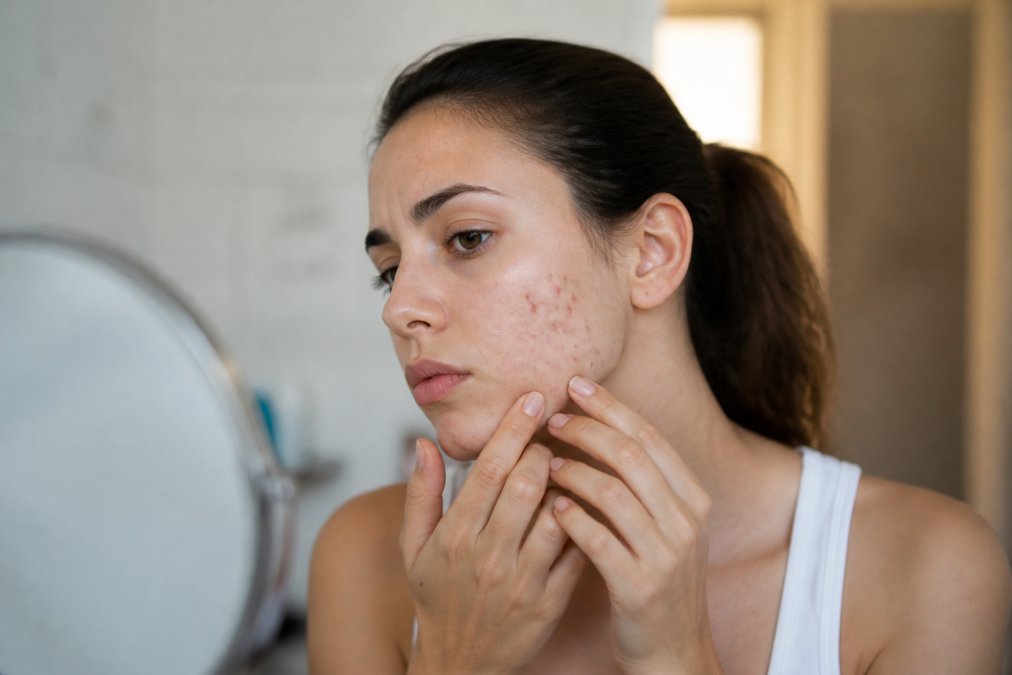
The clearest signs of hormonal acne versus regular acne are location and timing. Hormonal breakouts cluster on the jawline, chin, and lower face, and they flare in the week before your period when estrogen drops and androgens go relatively unopposed.
Regular acne shows up more randomly, often on the forehead, nose, and T-zone, and responds to standard cleansing routines. Hormonal acne produces deeper, tender bumps and cystic acne that never come to a head, and frequently leaves post-inflammatory marks behind.
Watch for these markers:
- Breakouts that repeat in the same lower-face locations
- Flares timed to your menstrual cycle
- Deep, painful nodules rather than surface whiteheads
- Little improvement from drugstore cleansers and spot treatments
- Dark marks that linger for months after a lesion heals
The Psychological Toll That Most Guides Ignore
There is a second set of signs that does not show up on your face, and most articles about hormonal acne leave it out entirely. Chronic adult acne carries a documented psychological burden beyond the passing frustration of a bad skin week.
Book your appointment today! →
A common pattern is avoidance: skipping photos, social events, or plans on flare days. Some scan every reflective surface or reapply makeup in a way that damages the barrier and worsens the acne. Others describe doing everything right and still waking up to new cysts.
Research consistently finds higher rates of anxiety, depression, and social withdrawal among people with persistent acne than among those with clear skin (pubmed.ncbi.nlm.nih.gov). The relationship runs both directions: stress and poor sleep worsen hormonal acne, and the acne itself becomes a source of stress, feeding the cycle.
This matters for treatment because the psychological piece is not separate from the skin piece. If you are avoiding appointments, canceling plans, or feeling low-grade dread about your skin every morning, mention it to whoever treats you, dermatologist, primary care provider, or skin specialist. It is not vanity, and not something to push through silently.
A few practical steps help break the cycle:
- Track flares without obsessing over them. A simple calendar note is enough.
- Set a limit on mirror checks. Constant checking amplifies perceived severity.
- Tell one person you trust what you are dealing with. Isolation makes it worse.
- Ask about mental health support if the burden feels heavy. Many dermatology practices now screen for this.
At SKIN SOLUTIONS BY 2 DIVAS in Sebring, FL, we hear this often. Clients come in frustrated not just by the breakouts but by how much mental space they take up. Our skin analysis includes a conversation about what you have tried, what has worked, and what the acne has cost you beyond the surface, context that shapes the treatment plan as much as the clinical findings do.
Life Stages and Lifestyle Triggers: Menstrual Cycle, Stress, Perimenopause, and Postpartum
Hormone shifts at predictable life stages create predictable acne. The menstrual cycle causes a mid-cycle and premenstrual flare. Perimenopause brings erratic estrogen alongside relatively stable androgens, triggering acne in people who never had it before. Postpartum, the sharp drop in estrogen and progesterone leaves androgens unopposed, and breakouts often appear within the first few months.
Lifestyle triggers stack on top of these stages. High-glycemic diets, poor sleep, and chronic stress all push the same hormonal levers.
Cortisol, Stress, and the Gut-Skin Axis
Cortisol connects stress to your skin. Under sustained stress, cortisol rises, indirectly increasing oil production while slowing the skin's ability to repair itself, so breakouts heal more slowly and marks linger longer.
The gut-skin axis adds a second layer most acne guides skip. Gut bacteria influence systemic inflammation, and inflammation is what turns a clogged pore into a red, painful lesion. An imbalanced gut tends to show up as more reactive, more inflamed breakouts, which is why some clients improve when they address diet and digestion alongside their topical routine, not instead of it.
How to Get Rid of Hormonal Acne: Treatments That Address the Cause
Getting rid of hormonal acne requires treating the hormonal driver, not just the visible blemish.
Topical Treatments, Retinoids, and Oral Options Including Spironolactone
How Non-Hormonal Acne Medications Interact With Hormonal Birth Control
| Treatment Type | What It Targets | Best For | Watch For |
|---|---|---|---|
| Retinoids | Cell turnover, clogged pores | Mild to moderate acne | Purging, sun sensitivity |
| Benzoyl peroxide | Bacterial growth | Inflammatory lesions | Dryness, bleaching fabric |
| Azelaic acid | Bacteria and hyperpigmentation | Acne with dark marks | Mild tingling |
| Oral antibiotics | Bacterial growth, inflammation | Inflammatory acne | Possible birth control interaction |
| Oral contraceptives | Androgen levels | Cycle-linked acne | Cardiovascular risks |
| Spironolactone | Androgen receptors | Persistent jawline acne | Blood pressure, potassium |
| Isotretinoin | Sebum production | Severe cystic acne | Significant side effects, pregnancy risk |
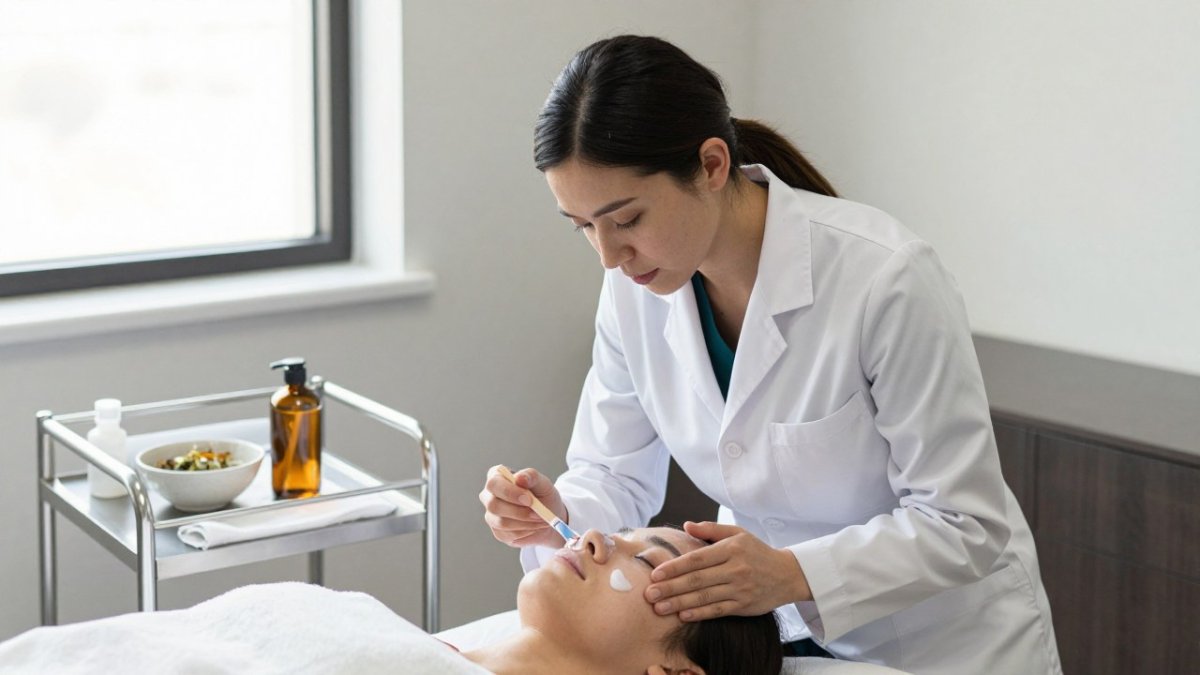
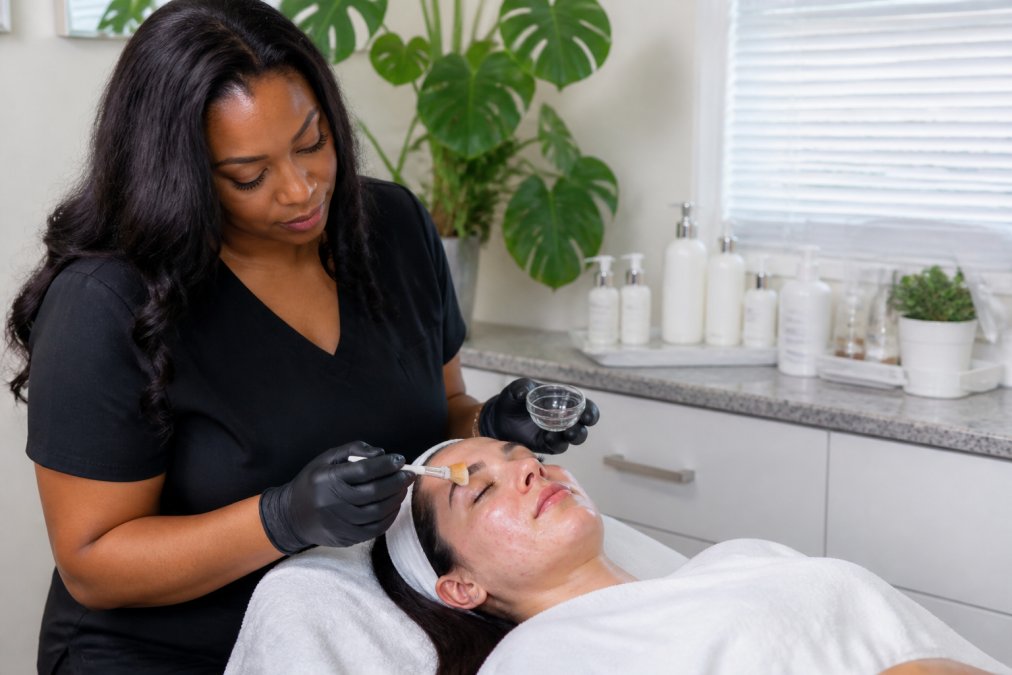
Professional Facial Treatments for Acne: What a Custom Corrective Facial Can Do
Conclusion
Frequently Asked Questions
How do I know if my acne is hormonal?
Hormonal acne typically appears along the jawline and chin, flares in the week before your period, and shows up as deeper, tender cystic bumps rather than surface whiteheads. It often continues past the teenage years and can shift with pregnancy, perimenopause, or stress. If breakouts follow a monthly pattern or cluster on the lower face, a dermatologist or skin specialist can confirm whether androgens and sebum production are driving it. A thorough skin analysis at Skin Solutions by 2 Divas in Sebring, FL can help identify your specific pattern.
How can I stop hormonal acne for good?
There is no single permanent fix, because the cause sits with your endocrine system rather than your skin surface. Most people manage it by combining in-office care with a consistent home routine. Options include topical treatments, retinoids, oral contraceptives, and spironolactone, which a dermatologist can prescribe. Professional facial treatments for acne, such as custom corrective facials at Skin Solutions by 2 Divas in Sebring, FL, help clear clogged pores and calm inflammation between medical visits, so results hold longer.
Do hormonal acne ever go away on their own?
For some people, hormonal acne fades after a life stage ends, such as after pregnancy or once perimenopause settles. For many adults, though, it persists for years without treatment because androgen levels and genetic predisposition keep oil glands active. Breakouts can also leave dark marks and scarring that outlast the acne itself. Working with a skin professional to manage sebum production, inflammation, and the skin barrier gives you far more control than waiting it out.
Does stress cause hormonal acne?
Stress raises cortisol, and cortisol pushes your oil glands to produce more sebum, which feeds bacterial growth and clogged pores. That is why breakouts often appear during exam weeks, job changes, or poor sleep stretches. Stress is not the root cause on its own, but it is one of the strongest lifestyle triggers for people already prone to hormonal imbalance. Regular sleep, movement, and consistent professional care at Skin Solutions by 2 Divas in Sebring, FL can reduce how often stress shows up on your skin.