 ultimate-guide
7 Skincare Ingredients to Avoid for Sensitive Skin
Last Updated: November 5, 2026
Quick Summary
The skincare ingredients most likely to irritate sensitive skin are fragrance and essential oils, drying alcohols, sulfates, strong exfoliating acids, and harsh physical scrubs. Because a weakened skin barrier reacts to what resilient skin tolerates, reading labels and patch testing each new product helps you avoid trouble.
- Fragrance and parfum can hide dozens of undisclosed compounds, so look for fragrance-free labeling.
- Drying alcohols strip oils and can leave sensitive skin tight and flaky, especially in toners and serums.
- Patch test each new product on the inner forearm or behind the ear once daily for three to five days.
- Ingredient lists run from highest to lowest concentration, so check the first five ingredients closely.
- Keep a log of products and reactions to spot patterns faster than memory allows.
Table of Contents
- Why Sensitive Skin Reacts to Some Skincare Ingredients
- Common Skincare Irritants to Watch For
- Fragrance and Essential Oils
- Drying Alcohols and Sulfates
- Exfoliating Acids and Harsh Scrubs
- Sensitive Skin Ingredients Checker: How to Read a Label
- How to Patch Test Skincare Products Before Full Use
- Best Ingredients for Sensitive Skin and What Works Better
- Book a Skin Analysis for a Routine Built Around Your Skin
- Frequently Asked Questions
Sensitive skin is reactive skin, and the products most people reach for first are often the ones causing the trouble. Many cosmetic products contain ingredients that can irritate sensitive skin, which is why a routine that looks gentle on the shelf can still leave your skin red and stinging. This guide walks through the ingredients most likely to cause problems, how to read a label, and how to test new products safely.
Why Sensitive Skin Reacts to Some Skincare Ingredients
Sensitive skin usually means a weakened skin barrier, the outer layer that holds moisture in and keeps irritants out. When that barrier is compromised, ingredients that a resilient skin type would tolerate can trigger redness, itching, burning, or dryness. Two different reactions are often confused here. Irritant contact dermatitis happens when a substance damages the skin directly, often through repeated exposure. Allergic contact dermatitis is an immune response to a specific ingredient and can occur even at low concentrations.
Many people assume "natural" means gentle. It does not. Ingredients that sound gentle and natural, such as tea tree oil and lavender oil, can still irritate extra-sensitive skin. Ingredient avoidance works best as a personal process, not a universal blacklist.
Common Skincare Irritants to Watch For
These are the categories that show up most often in sensitive-skin complaints. Concentration, formulation, and how long a product stays on your skin all change how it behaves, so treat this list as a starting point for your own observations.
The table below summarises the main irritant categories covered in this guide, and what to watch for in each.
| Irritant | Common sources | What to watch for |
|---|---|---|
| Fragrance | "Fragrance" or "parfum" labels | Undisclosed blends of dozens of compounds |
| Essential oils | Citrus, cinnamon, camphor | Frequent triggers of irritation |
| Drying alcohols | Denatured alcohol in toners and serums | Strips oils, leaves skin tight and flaky |
| Sulfates | Sodium lauryl sulfate in cleansers | Disrupts the skin barrier |
| Exfoliating acids | Glycolic, lactic and salicylic acid | Stinging and peeling at high strength or frequent use |
| Harsh scrubs | Rough physical particles | Micro-tears in already sensitised skin |
Fragrance and Essential Oils
"Fragrance" or "parfum" on a label can represent a blend of dozens of undisclosed compounds. Essential oils such as citrus oils, cinnamon, and camphor are common fragrance sources and are frequent triggers of irritation. Fragrance-free products contain no added scent, while unscented products may still contain masking ingredients to neutralize odor. If you react easily, look for fragrance-free labeling specifically.
Drying Alcohols and Sulfates
Denatured alcohol and other drying alcohols can strip oils from the skin and leave it tight and flaky, particularly in toners and some serums. Sulfates such as sodium lauryl sulfate are strong cleansing agents that can disrupt the barrier in cleansers. Gentler cleansers and alcohol-free formulas are usually a better fit for reactive skin.
Exfoliating Acids and Harsh Scrubs
Alpha hydroxy acids like glycolic and lactic acid, and beta hydroxy acids like salicylic acid, can be effective for texture and congestion. At high strengths or frequent use, though, they can cause stinging and peeling. Abrasive physical scrubs with rough particles can create micro-tears in already sensitized skin. If you use exfoliants, start low, go slow, and stop at the first sign of persistent redness.
Sensitive Skin Ingredients Checker: How to Read a Label
Ingredient lists are ordered from highest to lowest concentration, with ingredients below 1 percent generally listed in any order. That means a flagged ingredient near the bottom of a list is usually present in a small amount, though a sensitized person can still react to it.
Start with the first five ingredients, which carry the bulk of the formula. Scan for fragrance, parfum, or essential oil names near the top. Check for drying alcohols such as denatured alcohol high in the list. Look for sulfates in cleansers and shampoo-style products. Note preservatives and dyes or artificial colors, which some people react to. Identify any exfoliating acids and their listed position.
Two label terms cause more confusion than any others. Fragrance-free means no added scent and generally no masking fragrance, while unscented means the product may contain a masking fragrance to neutralize the smell of raw ingredients. For reactive skin, fragrance-free is the safer claim, but verify it against the ingredient list.
Hidden fragrance components are the hardest to spot. Look for terms such as linalool, limonene, citronellol, geraniol, eugenol, and coumarin, which are individual fragrance allergens that may appear without the word fragrance. Essential oils such as lavender, citrus, peppermint, eucalyptus, tea tree, and cinnamon are common natural fragrance sources and frequent triggers.
Book your appointment today! →
Keep a short log of products and reactions, noting the full ingredient list and where each product sat in your routine. Patterns become clear faster than memory allows.
How to Patch Test Skincare Products Before Full Use
Patch testing is the single most useful habit for sensitive skin, but most people do it wrong by testing once and calling it done. A proper test separates temporary irritation from a true allergy and gives you a clear answer before a product touches your whole face.
First, understand what you are watching for. Irritant contact dermatitis is a direct reaction that often builds with repeated exposure and tends to stay where the product was applied. Allergic contact dermatitis is an immune response that can appear after several days of use, may spread beyond the application site, and can worsen with each exposure. That difference is why a single test is not enough and why a reaction that spreads or persists deserves professional evaluation.
Use this step-by-step method:
- Choose one new product at a time and keep the rest of your routine unchanged.
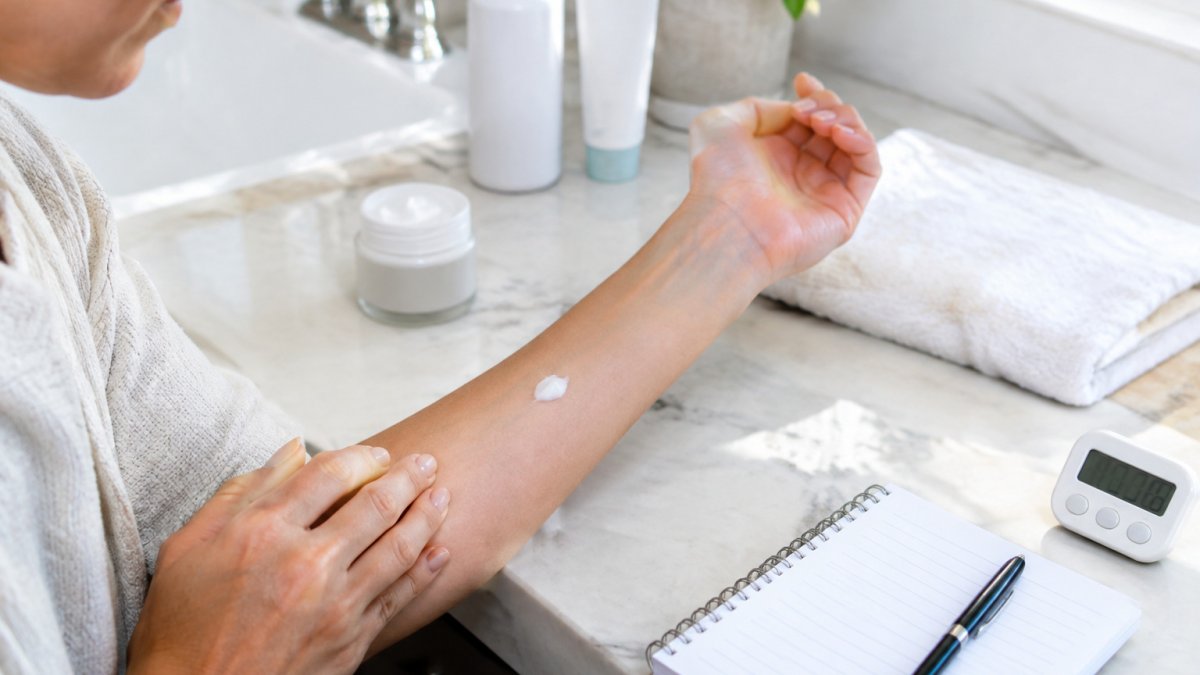
- Apply a small amount to the inner forearm or behind the ear, once daily for three to five days.
- Leave the area uncovered and avoid washing it immediately after application.
- Record redness, itching, burning, bumps, or swelling each day, including how quickly symptoms appear.
- If no reaction appears, test on a small area of the face, such as the jawline, for another two to three days before full use.
Watch out: testing only once and assuming the result is final is the most common mistake, since some reactions take several applications to surface. Introduce one new product at a time so you know which one is responsible if something goes wrong.
If a reaction develops, stop using the product and rinse the area with lukewarm water. Avoid adding new products or harsh exfoliants while the skin settles. Warning signs that warrant medical care include swelling, blistering, oozing, a rash that spreads beyond the application site, or symptoms that persist beyond a few days. Persistent or severe symptoms warrant a visit to a dermatologist.
Patch testing works best alongside a professional assessment. At Skin Solutions by 2 Divas in Sebring, FL, we review your skin's history, then build a personalized plan around your skin's needs. Call 772-999-8820 to schedule a skin analysis before introducing a new product.
Best Ingredients for Sensitive Skin and What Works Better
Gentler choices often include fragrance-free moisturizers with ceramides and glycerin, and cleansers without sulfates. You can also browse corrective facials, acne treatments, microdermabrasion and microneedling to see which professional treatments are offered. Plant-based ingredients are not automatically safer, so judge them the same way you judge any other ingredient. A professional skin analysis can help shape a sensitive-skin routine.
Book a Skin Analysis for a Routine Built Around Your Skin
Guessing your way through ingredient lists is slow and expensive. At Skin Solutions by 2 Divas, we begin with a thorough skin analysis, then build a personalized plan around your skin's needs. Learn more about our licensed estheticians and what they bring to each consultation, then book an appointment in Sebring. You can also call us at 772-999-8820 with questions about your skin before your visit.
Frequently Asked Questions
What are the worst ingredients for sensitive skin?
Fragrance, drying alcohols, sulfates such as sodium lauryl sulfate, and exfoliating acids like glycolic or salicylic acid are among the ingredients most often linked to stinging, redness and dryness in sensitive skin. Harsh physical scrubs can also damage a weakened skin barrier. Reactions vary from person to person, so the same ingredient may bother one person and not another. Watch how your own skin responds, and stop using any product that causes persistent burning or itching.
Can fragrance-free products still irritate sensitive skin?
Yes. Fragrance-free and unscented are not the same thing. Unscented products may still contain masking fragrances that add scent without being listed as fragrance. Essential oils, which are often marketed as natural, can also irritate reactive skin. Check the full ingredient list, not just the front label, and patch test any new product before using it across your face.
How do I patch-test a new skincare product?
Apply a small amount of the product to a discreet area such as the inner forearm or behind the ear once a day for several days. Leave it on as directed by the product, and watch for redness, itching, stinging or bumps. If nothing develops after about 48 to 72 hours, you can begin using it on your face, starting a few times a week. Introduce only one new product at a time so you can identify the cause of any reaction.
What ingredients should people with sensitive skin look for instead?
Look for gentle hydrators and barrier-supporting ingredients such as glycerin, ceramides, hyaluronic acid and niacinamide, which help the skin hold moisture and recover from irritation. Fragrance-free formulas with short ingredient lists are often easier to tolerate. A dermatologist or licensed esthetician can help you choose products that fit your skin type and any active treatments you are using.