 ultimate-guide
Skincare Routine for Aging Skin: A Complete Guide
Table of Contents
- Understanding Skin Aging and How Skincare Routine for Aging Skin Works
- Best Ingredients for Aging Skin and How They Target Damage
- Your Morning Skincare Routine for Aging Skin: Step-by-Step
- Your Evening Skincare Routine for Aging Skin: Step-by-Step
- Skincare Routine for Dry Aging Skin: Moisture-First Approach
- How Often to Get Facials to Support Your Home Routine
- Customizing Your Routine by Age and Skin Concerns
- Frequently Asked Questions
Last Updated: August 25, 2026
Understanding Skin Aging and How Skincare Routine for Aging Skin Works
Skin aging results from intrinsic factors (genetics, slowed cellular turnover) and extrinsic damage (sun exposure, environmental stress, free radicals). As we age, collagen production decreases, the skin barrier weakens, and moisture retention becomes difficult. A proper skincare routine for aging skin addresses these changes by supporting natural repair processes and protecting against further damage.
Visible signs, fine lines, hyperpigmentation, loss of elasticity, uneven texture, develop because the dermal layer thins and cellular renewal slows. An effective routine works on multiple fronts: strengthening the skin barrier, stimulating cellular turnover, protecting against photoaging, and maintaining hydration.
Aging skin requires active ingredients that penetrate effectively, formulations prioritizing moisture retention, and consistency.
The foundation of any skincare routine for aging skin starts with gentle cleansing and barrier support, not aggressive exfoliation. Your skin's barrier function is everything, when compromised, even the best active ingredients can't work properly.
Best Ingredients for Aging Skin and How They Target Damage
Retinoids are the gold standard because they accelerate cellular turnover, stimulate collagen production, and improve skin texture. They work by binding to retinoid receptors, triggering increased cell division and renewal. Start with lower concentrations (0.25-0.3%) if sensitive, and gradually increase as tolerance builds (the American Academy of Dermatology).
Hyaluronic acid functions as a humectant, drawing moisture into the skin and supporting the moisture barrier. It helps your skin retain water it already has, critical for aging skin because moisture retention directly impacts plumpness and resilience. Apply serums to damp skin for maximum effectiveness.
Vitamin C is a potent antioxidant that neutralizes free radical damage, brightens skin tone, and supports collagen synthesis. Stabilized forms like L-ascorbic acid work best. Apply vitamin C serums in the morning before sun protection.
Ceramides and peptides strengthen the skin barrier by filling gaps between skin cells and supporting structural proteins that keep skin firm. As ceramide levels naturally decline with age, supplementation through skincare is important.
Sunscreen with SPF 30+ (ideally 50+) is non-negotiable (the FDA). Photoaging accounts for up to 80% of visible skin aging (peer-reviewed research). Use consistently and reapply every two hours if outdoors.
Your Morning Skincare Routine for Aging Skin: Step-by-Step
A morning skincare routine for aging skin should be simplified but effective, focusing on gentle cleansing, barrier protection, and sun preparation.
Step 1: Gentle Cleanse (1-2 minutes) Use a non-comedogenic, pH-balanced cleanser formulated for mature skin. Avoid harsh sulfates that strip the skin barrier. Use warm water and pat skin dry gently.
Step 2: Apply Hydrating Toner or Essence (optional) A hydrating toner preps the skin to absorb subsequent products more effectively, adding an extra layer of moisture support.
Step 3: Serum with Active Ingredient (2-3 minutes) Apply vitamin C serum or hyaluronic acid serum to damp skin. Wait 30-60 seconds between layers for full absorption.
Step 4: Moisturizer (1-2 minutes) Use a moisturizer formulated for mature skin containing ceramides and peptides. Apply while skin is still slightly damp to lock in hydration.
Step 5: Eye Cream (1 minute) Apply with your ring finger using gentle tapping motions. Don't tug or stretch the delicate skin.
Step 6: Sunscreen (2-3 minutes) Apply broad-spectrum sunscreen with SPF 30 or higher. Use a quarter-teaspoon for the face and wait 10-15 minutes before sun exposure.
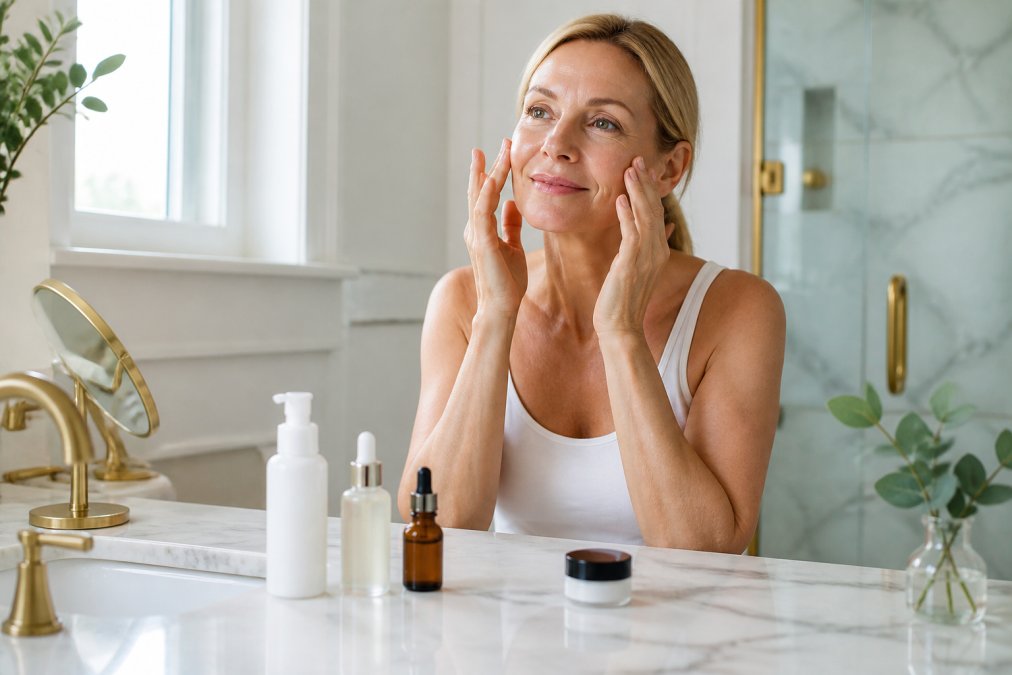
Your Evening Skincare Routine for Aging Skin: Step-by-Step
Your evening skincare routine for aging skin is where you introduce stronger active ingredients. This is when your skin's repair processes are most active, making it ideal for retinoids, exfoliating acids, and intensive treatments.
Step 1: Gentle Cleanse (1-2 minutes) Use the same gentle cleanser as your morning routine, or a slightly richer option if very dry. Double cleansing is optional but beneficial for thorough makeup and debris removal.
Step 2: Exfoliant or Treatment (2-3 minutes, 3-4 times per week) Use a gentle chemical exfoliant (AHA or BHA) to support cellular turnover. Skip this step on retinoid nights to avoid over-exfoliation.
Step 3: Retinoid or Peptide Serum (2-3 minutes) Apply retinoid 2-3 times per week initially, building to nightly use as your skin adapts. Start low (0.25-0.3% retinol) and increase gradually. Apply to completely dry skin and wait 10-15 minutes before proceeding.
Step 4: Hydrating Serum (1-2 minutes) Apply hyaluronic acid or peptide serum to support barrier recovery, especially important on retinoid nights.
Step 5: Night Cream (1-2 minutes) Use a richer, more occlusive night cream than daytime moisturizer, containing ceramides, peptides, and nourishing oils. Apply generously.
Book your appointment today! →
Step 6: Eye Cream (1 minute) Apply with gentle tapping motions for consistent hydration and peptide support.
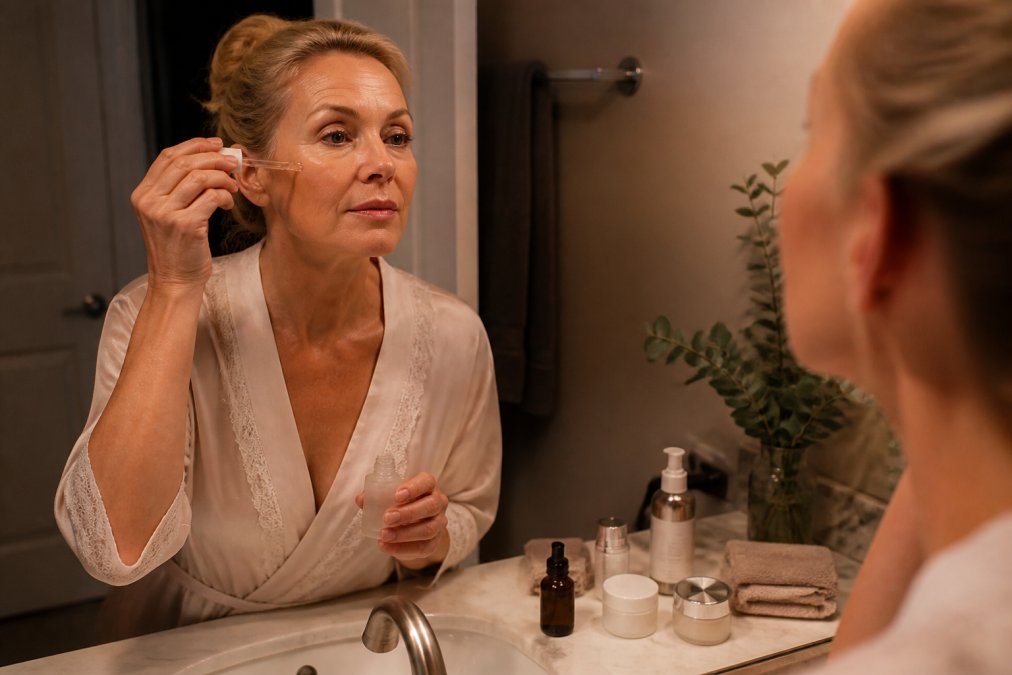
Skincare Routine for Dry Aging Skin: Moisture-First Approach
Dry aging skin requires a modified approach prioritizing moisture retention and barrier support. When skin is both aging and dry, the skin barrier is typically compromised, making hydration foundational.
For dry aging skin, apply hyaluronic acid to damp skin immediately after cleansing. Follow with a hydrating toner if very dry. Your moisturizer should be richer, containing ceramides, squalane, shea butter, and glycerin. Apply to damp skin to trap water molecules.
Retinoids can be drying, so introduce slowly. Consider lower concentrations (0.25% retinol) or gentler forms like retinyl palmitate. Apply only 1-2 times per week initially, always followed by hydrating serum and rich moisturizer.
Exfoliation should be minimal. Skip harsh physical exfoliants. If using chemical exfoliants, limit to once weekly with gentle formulation. Consider adding facial oil as the final step, using 2-3 drops pressed gently into skin.
| Ingredient | Purpose | Application |
|---|---|---|
| Hyaluronic acid | Moisture binding | Damp skin, first serum |
| Ceramides | Barrier repair | Moisturizer, night cream |
| Peptides | Collagen support | Serums, moisturizers |
| Squalane | Occlusion | Final step or mixed into moisturizer |
| Retinoids | Cell turnover | 1-2x weekly, evening only |
How Often to Get Facials to Support Your Home Routine
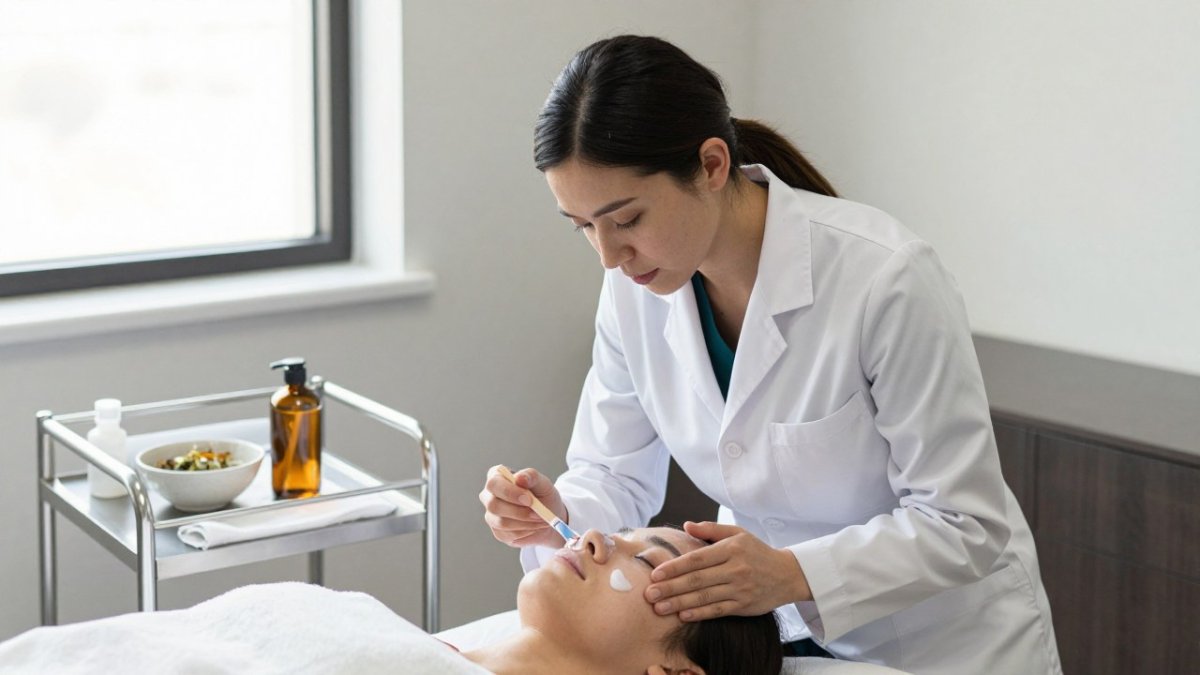
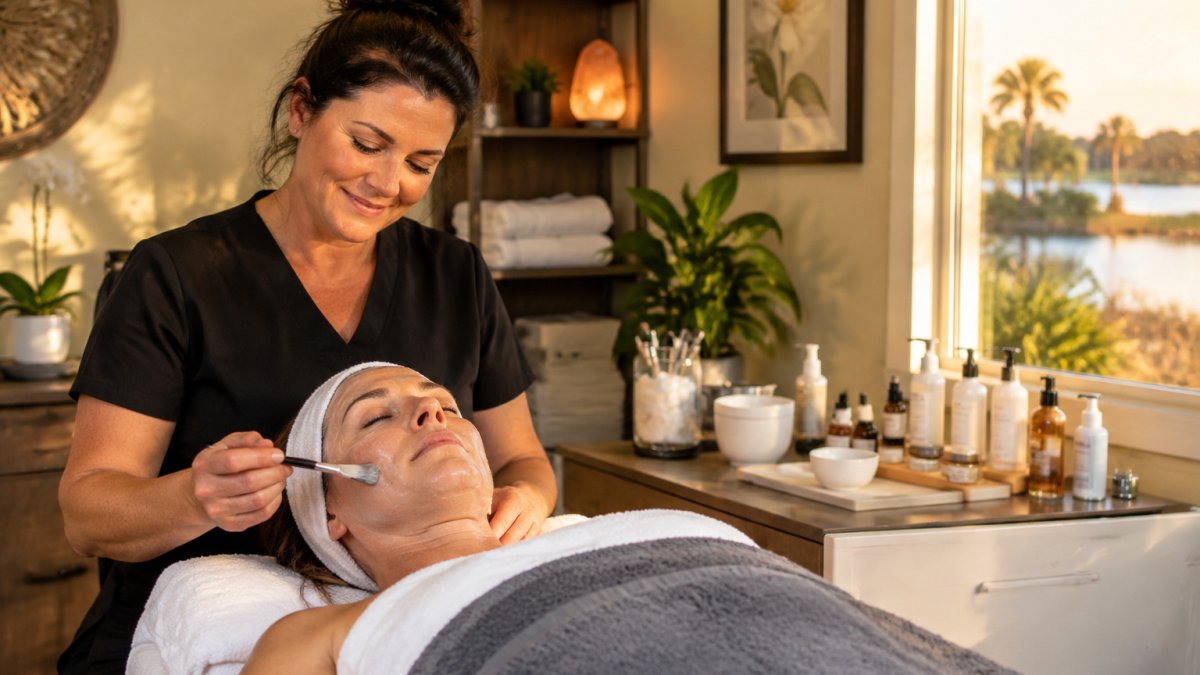
Professional facials complement your home skincare routine by providing deeper treatment that topical products alone cannot achieve. Most people benefit from facials every 4-6 weeks, aligning with the skin's natural renewal cycle.
For aging skin, seek facials including exfoliation, hydration, and active ingredients like retinoids or vitamin C. Chemical peels accelerate cellular turnover and improve texture. Between facials, maintain your home routine consistently, professional treatment amplifies benefits rather than replacing your regimen.
Skin Solutions by 2 Divas specializes in custom corrective facials tailored to your specific aging concerns. Our specialists conduct thorough skin analysis and design personalized treatment plans addressing your particular combination of concerns, whether hyperpigmentation, fine lines, or loss of elasticity.
Customizing Your Routine by Age and Skin Concerns
Your skincare routine for aging skin should evolve as your skin changes.
In Your 30s: Fine lines begin appearing and collagen production slows. Introduce a skincare routine for aging skin even without obvious signs, prevention is easier than correction. Start with gentle retinoid 1-2 times weekly and prioritize sun protection. Hyaluronic acid and peptides support early collagen loss.
In Your 40s: Fine lines deepen, hyperpigmentation becomes visible, and skin texture changes noticeably. Increase retinoid frequency to 3-4 times weekly. Add vitamin C serum for hyperpigmentation and dullness. Consider professional facials every 6 weeks. Include dedicated eye cream and targeted treatments.
In Your 50s and Beyond: Loss of elasticity becomes pronounced and the skin barrier often becomes compromised. Prioritize barrier support with ceramides and peptides. Use richer moisturizers and consider facial oils. Retinoids remain beneficial but may need adjustment for sensitivity. Professional treatments like microdermabrasion or chemical peels become increasingly valuable.
For specific concerns like hyperpigmentation, add targeted serum with niacinamide or kojic acid. For deep wrinkles, combine consistent retinoid use with peptide-rich moisturizers. For loss of elasticity, focus on collagen-supporting ingredients (retinoids, peptides, vitamin C) and hydration.
Consistency matters more than complexity. A simple, consistent skincare routine for aging skin beats an elaborate routine abandoned after two weeks.
Your skin's aging is inevitable, but how your skin ages is largely within your control. A targeted skincare routine for aging skin, supported by professional treatments when needed, can significantly slow visible aging and restore a healthy glow.
Skin Solutions by 2 Divas offers custom corrective facials designed specifically to address aging concerns like fine lines, hyperpigmentation, and loss of elasticity. Our specialists analyze your skin thoroughly and create personalized treatment plans working synergistically with your home routine. Book your appointment today to experience how professional skincare combined with a targeted home routine can transform your skin's health and appearance.
Frequently Asked Questions
Q: What is a simple skincare routine for aging skin?
A: A simple routine includes three steps morning and evening: cleanse gently, apply an active ingredient (like retinoids or vitamin C), and moisturize with hyaluronic acid and ceramides. Add sunscreen with SPF 30+ every morning. This foundation targets fine lines, collagen production, and skin barrier health without overwhelming your skin.
Q: How often should I get professional facials to support my home routine?
A: Monthly facials work best for most aging skin types. Professional treatments accelerate cellular turnover and address hyperpigmentation or stubborn texture issues your home routine alone cannot fix. Your skincare specialist can assess your skin and recommend a schedule, some clients benefit from every 4-6 weeks, while others do well with quarterly visits combined with a strong home routine.
Q: What are the best ingredients for aging skin?
A: Retinoids boost cellular turnover and collagen production. Hyaluronic acid and ceramides restore moisture retention and strengthen your skin barrier. Vitamin C and peptides provide antioxidant protection and improve skin elasticity. Sunscreen with SPF 30+ prevents photoaging and free radical damage. Look for products labeled dermatologist-recommended and non-comedogenic to avoid irritation.
Q: How can I improve skin elasticity as I age?
A: Retinoids and peptides directly stimulate collagen production over 8-12 weeks of consistent use. Hydration through hyaluronic acid and ceramides plumps the dermal layer and improves skin texture. Daily sun protection prevents photoaging that breaks down elasticity. Professional facials with active treatments accelerate results. Combined with adequate sleep and water intake, these steps visibly restore firmness and reduce fine lines.
Q: Is skincare routine for dry aging skin different from normal aging skin?
A: Yes. Dry aging skin needs ceramides and heavier night creams to repair the skin barrier first. Avoid harsh exfoliation; use gentle cleansing instead. Layer hydrating serums with hyaluronic acid before moisturizer. Retinoids should be introduced slowly and paired with rich moisturizers. Professional facials for dry skin focus on hydration and barrier repair rather than aggressive exfoliation.
Q: How long before I see results from a new skincare routine?
A: Fine lines and skin texture improve within 4-6 weeks with consistent use of retinoids and hydrating ingredients. Hyperpigmentation and dark spots take 8-12 weeks to fade noticeably. Skin elasticity improvements appear gradually over 3 months. Professional facials show immediate radiance, but long-term collagen production and anti-aging benefits require 2-3 months of combined home care and professional treatments.
This article was written using GrandRanker