 ultimate-guide
Simple Skincare Routine for Results: A 2026 Guide
Table of Contents
- Why a Simple Skincare Routine Actually Works Better
- Understanding Your Skin Type and Concerns
- The Essential Steps for Beginners
- How to Layer Skincare Products Correctly
- Best Ingredients for Hyperpigmentation and Skin Texture
- How Long to See Skincare Results
- Common Mistakes That Sabotage Your Routine
- When to Seek Professional Help
- Frequently Asked Questions
Last Updated: August 20, 2026
Why a Simple Skincare Routine Actually Works Better
The best skincare routine is the one you'll actually stick with. More steps and products don't equal better results, consistency does. A simple skincare routine delivers faster improvements because you're more likely to follow it daily, your skin barrier stays intact, and each product can work without interference from too many actives.
At Skin Solutions by 2 Divas, we've watched clients transform their skin by simplifying their approach. The most dramatic improvements in acne, hyperpigmentation, and texture come from clients who commit to a focused routine and give it time to work. When you strip away the noise, your skin barrier stabilizes, cells respond to active ingredients, and you can identify what's working versus what's causing irritation.
Understanding Your Skin Type and Concerns
Your skin type determines which products will work. Identifying whether you have oily, dry, combination, sensitive, or acne-prone skin is the foundation of any simple skincare routine for results.
Skin type is genetic and largely fixed. Your skin concerns, acne, hyperpigmentation, sensitivity, texture, can change based on environment, hormones, and products you use. You might have combination skin with acne-prone areas and sensitive patches. The key is treating each zone appropriately.
Identifying Acne-Prone and Sensitive Skin
Acne-prone skin produces excess sebum and clogs easily. Sensitive skin reacts to most products with redness, stinging, or irritation within minutes of application.
If you have acne-prone skin, use non-comedogenic products with ingredients like salicylic acid or benzoyl peroxide. Avoid heavy oils and thick creams unless formulated for oily, acne-prone skin.
Sensitive skin requires a stripped-down approach. Skip actives like retinoids and chemical exfoliants until your barrier heals. Focus on a gentle cleanser, hydrating moisturizer with ceramides, and broad-spectrum SPF. Often, sensitive skin just needs fewer products overall.
Never treat acne-prone and sensitive skin the same way. Acne-prone skin can handle stronger actives; sensitive skin cannot. If you have both, start with the sensitive skin protocol first.
Assessing Skin Barrier Health
Your skin barrier is the outermost layer. When healthy, it locks in moisture and keeps irritants out. When damaged, your skin becomes reactive, dry, and prone to sensitivity and acne.
Signs of a compromised barrier include persistent redness, stinging when applying products, excessive dryness, and sudden breakouts. Repair requires simplification: use only a gentle cleanser, hydrating moisturizer with ceramides and hyaluronic acid, and SPF. Skip exfoliants, retinoids, and other actives for 2-4 weeks.
The Essential Steps for Beginners
A simple skincare routine requires only three core steps: cleanse, treat (if needed), and protect. Everything else is optional until you've mastered these three.
Cleansing: The Foundation
Cleansing removes dirt, oil, makeup, and environmental pollutants. Over-cleansing damages your barrier and triggers excess oil production.
Cleanse twice daily with lukewarm water. Choose a cleanser that matches your skin type: oily skin needs a foaming or gel cleanser; dry or sensitive skin needs a cream or milk cleanser; combination skin can use a gentle gel.
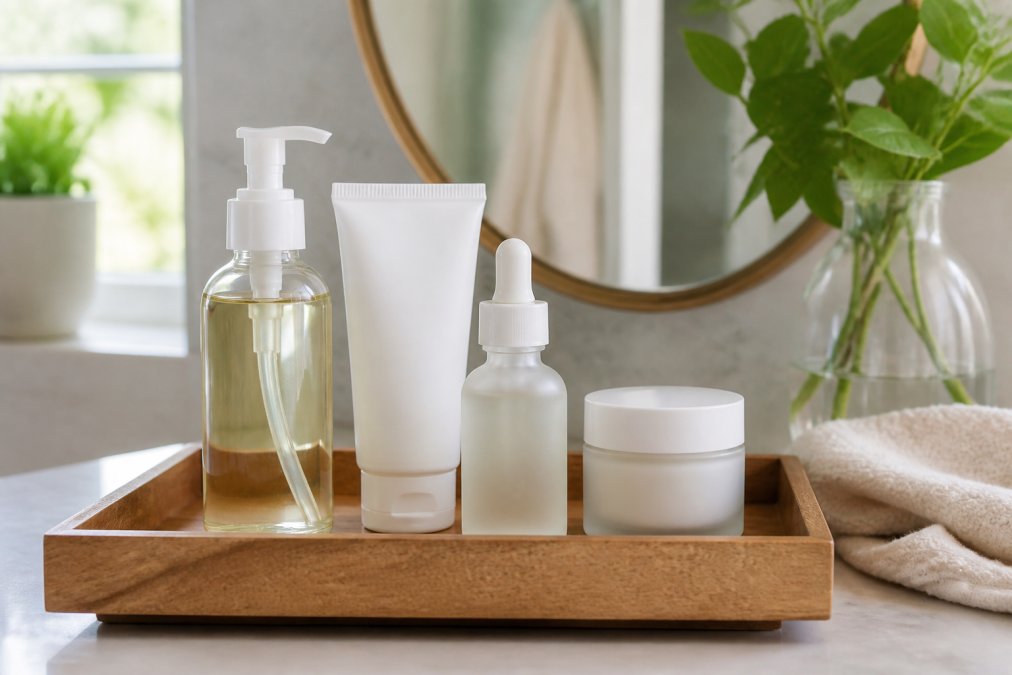
The double cleanse technique works for anyone wearing makeup or sunscreen. First, use an oil-based cleanser to dissolve makeup and sunscreen. Second, use a water-based cleanser to remove the oil and residue. Massage the cleanser for 30-60 seconds, then rinse thoroughly. Avoid physical exfoliants and cleansing brushes.
Moisturizing and Sun Protection
Moisturizing hydrates your skin and supports your barrier. SPF prevents sun damage, hyperpigmentation, and premature aging.
Apply moisturizer to damp skin immediately after cleansing. Use an amount about the size of a pea for your face. If your skin is very dry, apply a hydrating serum first, then a richer cream on top.
Apply SPF every single day, even on cloudy days and indoors near windows. Use at least one-quarter teaspoon for your face. Reapply every two hours if outdoors or after swimming. Broad-spectrum SPF 30 is the minimum; SPF 50 is better.
How to Layer Skincare Products Correctly
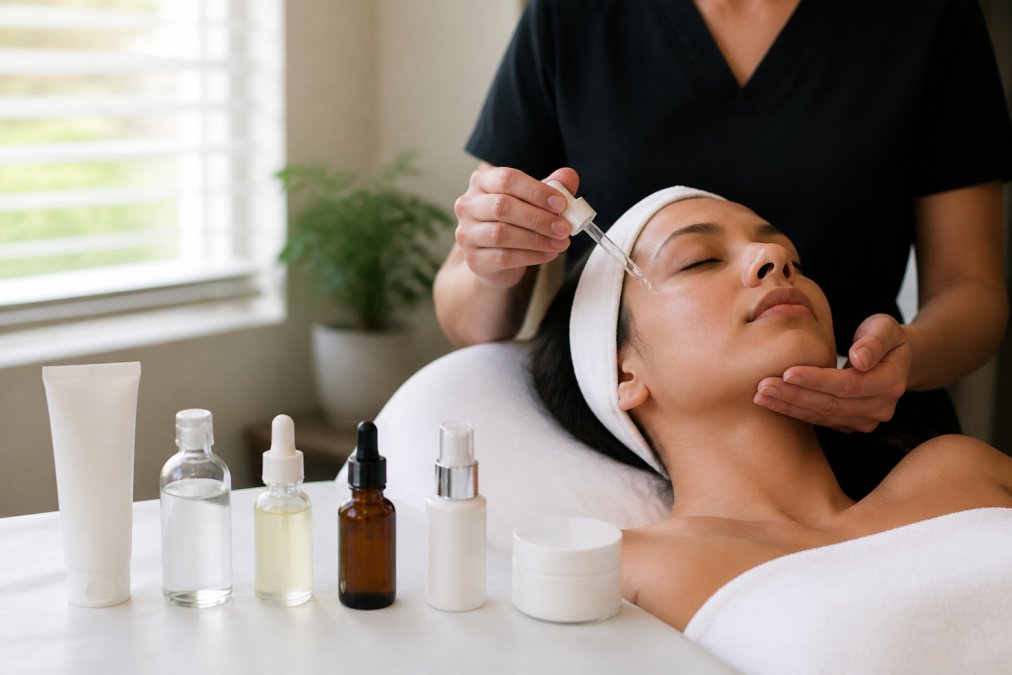
Layering is applying multiple products in a specific order so each one absorbs and works effectively. Apply products from thinnest to thickest consistency: thin products (serums, essences, toners) first, thick products (creams, oils) last.
Morning Routine Layering Order
Your morning routine should take about five minutes.
- Cleanser, Wash your face with a gentle cleanser and lukewarm water. Pat dry.
- Toner or Essence (optional), Apply to damp skin.
- Serum (optional), Apply serums (vitamin C, hyaluronic acid, niacinamide) to damp skin. Wait 30 seconds for absorption.
- Moisturizer, Apply to damp skin to lock in hydration.
- SPF, Apply broad-spectrum SPF 30 or higher. Wait two minutes before applying makeup.
If using multiple serums, apply from thinnest to thickest. Wait 30-60 seconds between layers to prevent pilling.
Evening Routine and Active Ingredients
Your evening routine is when you introduce active ingredients like retinoids, chemical exfoliants, and vitamin C. Your skin repairs itself at night, making actives more effective and less likely to cause irritation.
- Cleanser (or double cleanse), Remove makeup and sunscreen.
- Toner or Essence (optional), Apply to damp skin.
- Active Ingredient, Apply to completely dry skin. Wait 15-20 minutes before applying the next layer.
- Serum or Treatment, Apply supporting serums.
- Moisturizer, Apply a richer cream than morning use.
- Eye Cream (optional), Apply gently around the orbital bone.
Never layer two chemical exfoliants or two retinoids on the same night. If using a retinoid, skip chemical exfoliants that night. Start with one active ingredient at low concentration, 2-3 times per week, and gradually increase frequency as your skin adapts.
Best Ingredients for Hyperpigmentation and Skin Texture
Hyperpigmentation appears as dark spots or uneven tone. Skin texture includes roughness, bumps, enlarged pores, and uneven surface. Both respond to ingredients that increase cell turnover, reduce melanin production, or support skin repair.
Vitamin C and Antioxidant Serums
Vitamin C (ascorbic acid) is one of the most researched ingredients for brightening and preventing hyperpigmentation. It inhibits melanin production and provides antioxidant protection against environmental damage.
Look for L-ascorbic acid at 10-20% concentration in an opaque, airtight bottle. Vitamin C oxidizes quickly when exposed to light and air. If your serum is orange or brown, it's oxidized and won't work.
Apply vitamin C serum to clean, dry skin in the morning. Wait 15 minutes before applying moisturizer and SPF. You'll notice brightening within 8-12 weeks of consistent use.
Other antioxidant serums include niacinamide (reduces redness and supports barrier), ferulic acid (stabilizes vitamin C), and resveratrol (protects against environmental damage).
Retinoids and Chemical Exfoliation
Retinoids (vitamin A derivatives) are the gold standard for improving skin texture and addressing hyperpigmentation. They increase cell turnover, boost collagen production, and fade dark spots.
Book your appointment today! →
Start with low concentration (0.25-0.3% retinol) and use 2-3 times per week. Gradually increase frequency to nightly use over 8-12 weeks. Use retinoids only at night and follow with a rich moisturizer.
Chemical exfoliants (AHAs and BHAs) remove dead skin cells and improve texture and tone. Glycolic acid (AHA) is best for hyperpigmentation. Salicylic acid (BHA) is best for acne-prone skin. Use 2-3 times per week, not daily.
Never combine retinoids with chemical exfoliants on the same night.
How Long to See Skincare Results
Cell turnover takes about 28 days, so the earliest you'll see results is three to four weeks. Most concerns require multiple cycles of cell turnover to show significant improvement.
Acne typically improves within 4-6 weeks with the right actives. Hyperpigmentation fades slowly, expect 8-12 weeks to see noticeable lightening. Skin texture and fine lines improve over 8-16 weeks with consistent retinoid use.
The timeline depends on severity, your age, and whether you're using prescription-strength or over-the-counter products. Prescription retinoids work faster than over-the-counter retinol.
Give your routine at least six weeks before deciding whether it's working. Most people see subtle improvements around week four, then more obvious changes by week eight.
Common Mistakes That Sabotage Your Routine
Using too many actives at once. Introduce one active ingredient at a time, use it consistently for 4-6 weeks, then add another if needed.
Not waiting long enough between products. Wait 15-20 minutes after applying an active before layering the next product.
Applying products to wet skin. Actives must be applied to completely dry skin. Damp skin is fine for moisturizer.
Skipping sunscreen. Sun exposure causes new hyperpigmentation, ages your skin, and triggers acne in sun-sensitive people.
Using the wrong cleanser for your skin type. Match your cleanser to your skin type to avoid stripping or leaving residue.
Expecting results too fast. Give your routine six to eight weeks before evaluating whether it's working.
Not addressing your skin barrier. If your skin is red, stinging, or reactive, simplify your routine and skip actives for 2-4 weeks.
When to Seek Professional Help
A simple skincare routine works for most people with common concerns like mild acne, hyperpigmentation, or texture issues. See a dermatologist if you have severe acne, skin conditions like rosacea or eczema, or if your skin isn't improving after 12 weeks.
For faster results with hyperpigmentation, sun damage, or texture issues, professional treatments accelerate improvement. Corrective facials address multiple concerns in a single session. At Skin Solutions by 2 Divas, our specialists conduct a thorough skin analysis and create a personalized treatment plan based on your specific concerns. A custom corrective facial targets your skin's exact needs using high-quality ingredients and professional-grade techniques.
Professional treatments use higher concentrations of active ingredients, deeper penetration, and targeted application you can't replicate at home. Most people see visible improvement after one session, with continued improvement over multiple sessions.
If you're in the Sebring area and your skin isn't responding to at-home care, or you want faster results before a special event, professional corrective facials are worth considering. Book your appointment today with Skin Solutions by 2 Divas to get a personalized skin analysis and treatment plan designed specifically for your needs.
A simple skincare routine for results isn't about having the most products or the most expensive ingredients. It's about consistency, proper technique, and patience. Most people see dramatic improvements in acne, hyperpigmentation, and texture within 8-12 weeks of following a focused routine tailored to their skin type.
| Concern | Timeline | Best Ingredients | Professional Option |
|---|---|---|---|
| Mild acne | 4-6 weeks | Salicylic acid, benzoyl peroxide | Corrective facial for acne-prone skin |
| Hyperpigmentation | 8-12 weeks | Vitamin C, retinoids, glycolic acid | Professional brightening treatment |
| Skin texture | 8-16 weeks | Retinoids, chemical exfoliants | Corrective facial for texture refinement |
| Fine lines | 12-16 weeks | Retinoids, peptides, vitamin C | Professional anti-aging treatment |
| Sensitivity/barrier damage | 2-4 weeks | Ceramides, hyaluronic acid, niacinamide | Calming corrective facial |
Frequently Asked Questions
What are the three essential steps of a simple skincare routine?
The foundation of any simple skincare routine consists of cleanse, treat, and protect. Cleansing removes impurities and dead skin cells, creating a clean base for absorption. Treatment involves targeted serums or actives that address your specific skin concerns like hyperpigmentation or acne. Protection means moisturizing to maintain skin barrier health and applying sun protection factor daily. These three steps, done consistently, deliver measurable results without overwhelming complexity.
How long does it take to see results from a new skincare routine?
Most people notice initial improvements in skin texture and hydration within 2-4 weeks of consistent use. However, addressing deeper concerns like hyperpigmentation, fine lines, or acne requires 8-12 weeks of daily application. Cell turnover cycles take time, and active ingredients like retinoids need 6-8 weeks to show significant results. Consistency matters more than perfection, skipping steps or switching products frequently delays visible progress.
How do I know how to layer skincare products correctly?
The general rule is to apply products from thinnest to thickest consistency: cleanse first, then apply water-based serums and treatments, follow with lightweight moisturizer, and finish with heavier creams or oils if needed. In the morning, always end with sun protection factor. In the evening, you can use active ingredients like retinoids or chemical exfoliants after cleansing but before moisturizing. Wait 30-60 seconds between layers to allow absorption and prevent pilling.
What ingredients should I use if I have hyperpigmentation?
Vitamin C serums brighten skin and fade dark spots by inhibiting melanin production. Niacinamide helps regulate sebum and supports skin barrier repair while reducing redness. Retinoids accelerate cell turnover, which helps fade hyperpigmentation faster. Hydroquinone, a dermatologist-recommended ingredient, directly targets melanin but requires professional guidance. Sunscreen with SPF 30+ is essential because sun exposure worsens hyperpigmentation. Combining these ingredients strategically, under professional guidance, produces the best long-term results.
Can I use a simple routine if I have sensitive or acne-prone skin?
Yes, simplicity actually benefits sensitive skin. Fewer products reduce the risk of irritation and barrier damage. Focus on a gentle cleanser, a soothing moisturizer with ceramides and hyaluronic acid, and daily sun protection. If you have acne-prone skin, add one targeted treatment like salicylic acid or a non-comedogenic retinoid, but introduce it slowly to avoid over-stripping the skin barrier. Patch testing new products on a small area first prevents reactive breakouts.
What's the difference between morning and evening skincare routines?
Morning routines prioritize protection: cleanse, apply a lightweight serum or treatment, moisturize, and always finish with sun protection factor. Evening routines focus on repair and renewal: cleanse (often with double cleansing for thorough removal), apply active ingredients like retinoids or exfoliants, then moisturize generously to support overnight skin repair. Your nighttime regimen is when cell turnover accelerates, making it the ideal time for stronger actives that might cause sensitivity in daylight.
How often should I exfoliate if I want results without damaging my skin barrier?
Chemical exfoliation with AHAs or BHAs is gentler than physical exfoliants and can be used 2-3 times weekly for most skin types. Physical exfoliants should be limited to once weekly at most to avoid micro-tears. If you have sensitive skin or are new to exfoliation, start with once weekly and observe how your skin responds. Over-exfoliating damages the skin barrier, leading to irritation, redness, and compromised hydration. More frequent exfoliation doesn't mean faster results, consistency and proper barrier repair matter more.
Do I need professional facials if I have a good home routine?
A solid home routine addresses daily maintenance and prevention, but professional corrective facials provide deeper benefits. Dermatologist-backed facials use clinical-grade ingredients and professional techniques that penetrate beyond what home products achieve. They're especially valuable for stubborn concerns like severe acne, deep hyperpigmentation, or significant fine lines. A personalized facial combined with a consistent home routine accelerates results and ensures your skin barrier stays healthy throughout the process.
This article was written using GrandRanker