 how-to guide
How to Improve Skin Texture: A Step-by-Step Guide
Table of Contents
- Understanding Skin Texture and What Causes Uneven Texture
- Step 1: Choose the Right Exfoliation Method for Your Skin
- Step 2: Build a Skincare Routine for Smooth Skin
- Step 3: Incorporate Retinoids and Vitamin A for Collagen Production
- Step 4: Protect Your Skin with Sunscreen and UV Defense
- Best Products to Improve Skin Texture by Skin Type
- How to Get Rid of Bumpy Skin: Professional Treatments
- Foods for Skin Texture: Nutrition and Internal Health
- Frequently Asked Questions
Last Updated: July 30, 2026
Improving your skin texture requires understanding what causes roughness, dullness, and uneven surfaces, then applying targeted treatments that address the root causes. At SKIN SOLUTIONS BY 2 DIVAS, we've helped countless clients in Sebring and Highlands County transform their skin through personalized corrective facials and professional guidance. This guide explains how to improve skin texture using science-backed methods, from daily routines to professional treatments that deliver visible results.
Understanding Skin Texture and What Causes Uneven Texture
Skin texture refers to the surface quality of your skin, how smooth or rough it feels and looks. Uneven texture appears as bumpy patches, dullness, enlarged pores, or a general lack of smoothness. Dead skin cells accumulate on the surface instead of shedding naturally, creating that rough, dull appearance. Sun damage accelerates this by breaking down collagen and thickening the outer skin layer. Hormonal fluctuations, dehydration, and inflammatory conditions like acne also contribute to persistent uneven texture.
The good news: texture is one of the most responsive skin concerns to targeted treatment. Many people see noticeable improvement within 2-4 weeks of consistent care.
Step 1: Choose the Right Exfoliation Method for Your Skin
Exfoliation is the foundation of any texture-improvement routine. It removes dead skin cells and accelerates cell turnover, which is why dermatologists recommend it as the first step.
Chemical exfoliants (AHAs and BHAs) vs. physical exfoliation
Chemical exfoliants are the gold standard for improving skin texture because they dissolve the bonds holding dead skin cells together. AHAs (alpha hydroxy acids) like glycolic acid and lactic acid work on the skin's surface and are best for dry, dull skin. BHAs (beta hydroxy acids) like salicylic acid penetrate deeper into pores and work better for oily, congestion-prone skin.
Physical exfoliation carries higher risk of irritation and microtears, especially for sensitive skin. If you use it, keep it gentle and limit to 1-2 times per week.
Start with a lower concentration (5-10% AHA or 0.5-2% BHA) and use it 2-3 times per week. As your skin adapts, you can increase frequency or concentration. Overexfoliation causes irritation and sensitivity, which worsens texture.
Step 2: Build a Skincare Routine for Smooth Skin
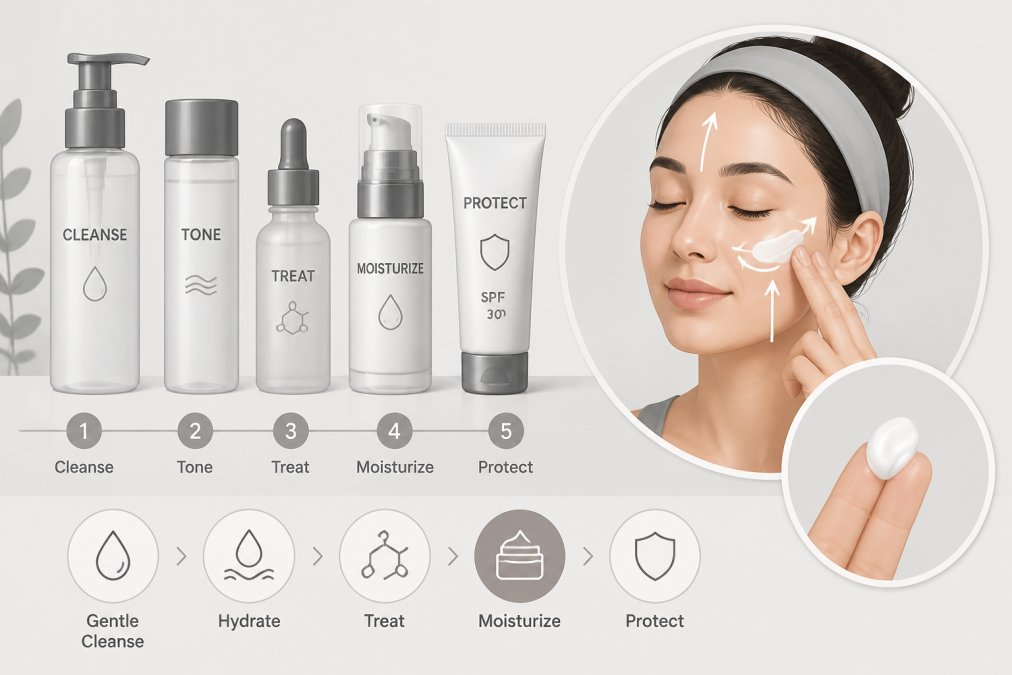
A routine that improves skin texture combines exfoliation with deep hydration and barrier repair. Your skin barrier controls water retention; when compromised, skin becomes dry, reactive, and textured.
Cleansing and hydration with hyaluronic acid
Use a gentle cleanser that doesn't strip your skin. Look for cleansers labeled "creamy," "hydrating," or "milk-based" rather than foaming formulas.
After cleansing, apply a hydrating toner or essence with hyaluronic acid. This ingredient holds water in the skin and plumps the surface, visibly smoothing fine texture and making pores appear smaller. Apply it within 30 seconds of cleansing while your skin is still slightly wet.
Moisturizers and skin barrier repair with ceramides
Ceramides are lipids that seal moisture into the skin and strengthen the barrier. Look for moisturizers listing ceramides in the first five ingredients. Pair ceramides with peptides or niacinamide (vitamin B3) for additional barrier support.
Apply moisturizer to damp skin right after your hydrating toner. This traps water and prevents transepidermal water loss (TEWL), the primary cause of dry, textured skin.
Step 3: Incorporate Retinoids and Vitamin A for Collagen Production
Retinoids are the most evidence-backed ingredient for improving skin texture over time. They increase cell turnover, boost collagen production, and refine pores. Results take 8-12 weeks to become obvious, but they're dramatic and lasting.
Start with a low-strength retinol (0.25-0.3%) or a gentler retinoid like retinaldehyde. Use it 2-3 times per week initially, gradually increasing frequency as your skin adapts. Apply it to completely dry skin, then follow with a moisturizer to buffer irritation.
Retinoids increase sun sensitivity, so daily SPF becomes non-negotiable. Many people see improved texture after just 4 weeks of consistent retinoid use.
Step 4: Protect Your Skin with Sunscreen and UV Defense
UV damage is the single biggest cause of rough, textured skin in adults over 30. Sun exposure breaks down collagen and thickens the outer skin layer. Preventing further damage is as important as treating existing texture.
Use a broad-spectrum SPF 30 or higher daily, even on cloudy days. Reapply every two hours if you're outdoors. For texture-prone skin, choose a sunscreen that doesn't feel heavy or leave a white cast.
Combining sun protection with exfoliation and retinoids creates a powerful trio: you're removing old, damaged cells while preventing new damage and rebuilding collagen.
Best Products to Improve Skin Texture by Skin Type
Sensitive skin: gentle ingredients and barrier support
Use lactic acid (gentler than glycolic) at low concentration (5-8%) once or twice per week. Avoid BHAs, which can be too drying.
Focus on barrier repair: ceramides, centella asiatica, and oat extract calm inflammation while strengthening the skin barrier. Start retinoids with retinaldehyde or very low-strength retinol (0.25%), using it once weekly and building up over 8-12 weeks.
Oily and acne-prone skin: BHAs and lightweight hydration
Use a BHA toner or serum 3-4 times per week to penetrate congested pores. Hydrate with lightweight, non-comedogenic products like a hydrating toner with niacinamide. Skip heavy moisturizers; use a gel or fluid moisturizer with hyaluronic acid and glycerin.
For retinoids, oily skin tolerates stronger concentrations. A 0.5-1% retinol works well. Many oily-skin types also benefit from azelaic acid, which reduces redness and congestion.
Dry and mature skin: antioxidants and rich moisturizers
Use AHA (glycolic or lactic acid) 2-3 times per week, always followed immediately by a hydrating serum and rich moisturizer.
Layer antioxidants like vitamin C, vitamin E, or resveratrol under your moisturizer. A vitamin C serum in the morning plus a retinoid at night creates powerful synergy for texture and fine lines.
Moisturizers should contain peptides, hyaluronic acid, and occlusive ingredients like squalane or jojoba oil. Apply to damp skin to maximize hydration.
How to Get Rid of Bumpy Skin: Professional Treatments
While a solid home routine improves texture significantly, professional treatments accelerate results and address texture problems that topicals alone can't fix.
Non-surgical options: microneedling and laser resurfacing
Microneedling creates controlled micro-injuries that trigger the skin's natural healing response, boosting collagen production and smoothing texture. Most people see improvement after 3-4 sessions spaced 4-6 weeks apart.
Laser resurfacing removes the outer layer of damaged skin and stimulates deeper collagen. Different laser types target different concerns: CO2 lasers are strongest for severe texture and scars, while gentler lasers work for mild to moderate roughness. Recovery varies from a few days to 1-2 weeks depending on strength.
Both treatments require sun protection afterward. Many people combine microneedling or laser with professional facials for amplified results.
Chemical peels and dermatologist-approved treatments
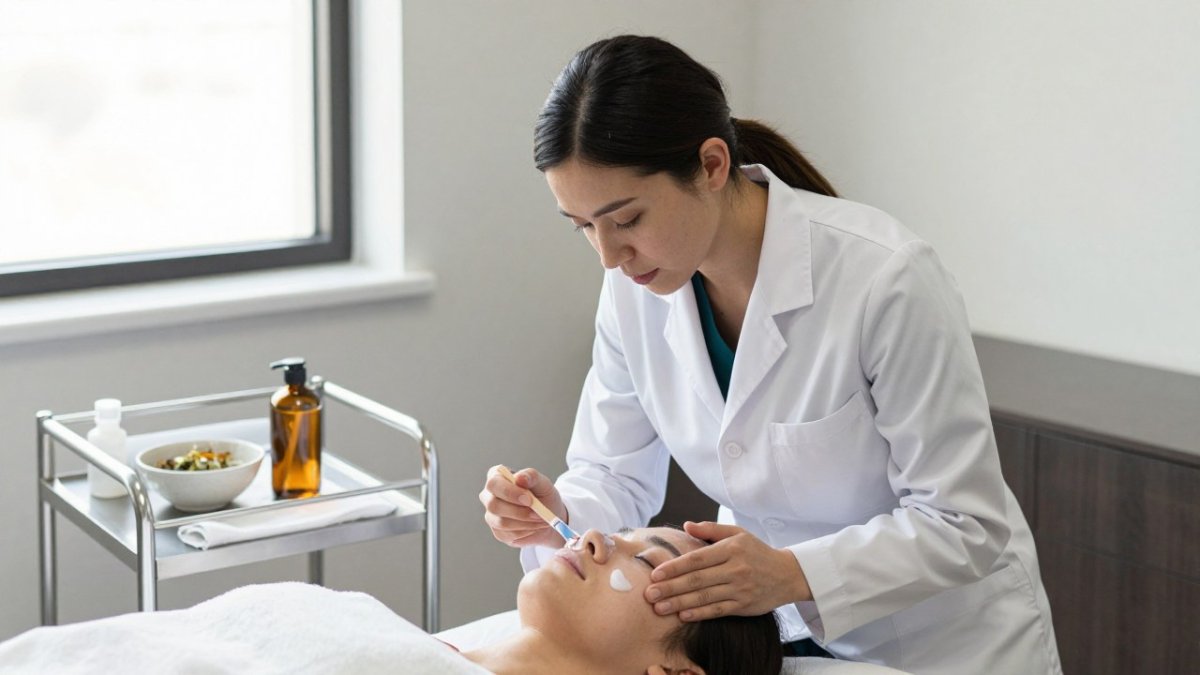
Professional chemical peels use higher concentrations than at-home products, delivering deeper exfoliation. A medium-depth peel removes significant dead skin and stimulates collagen, improving texture noticeably after one treatment.
Dermatologists also offer microdermabrasion and radiofrequency treatments (RF microneedling), which heat the skin to trigger collagen without creating visible wounds.
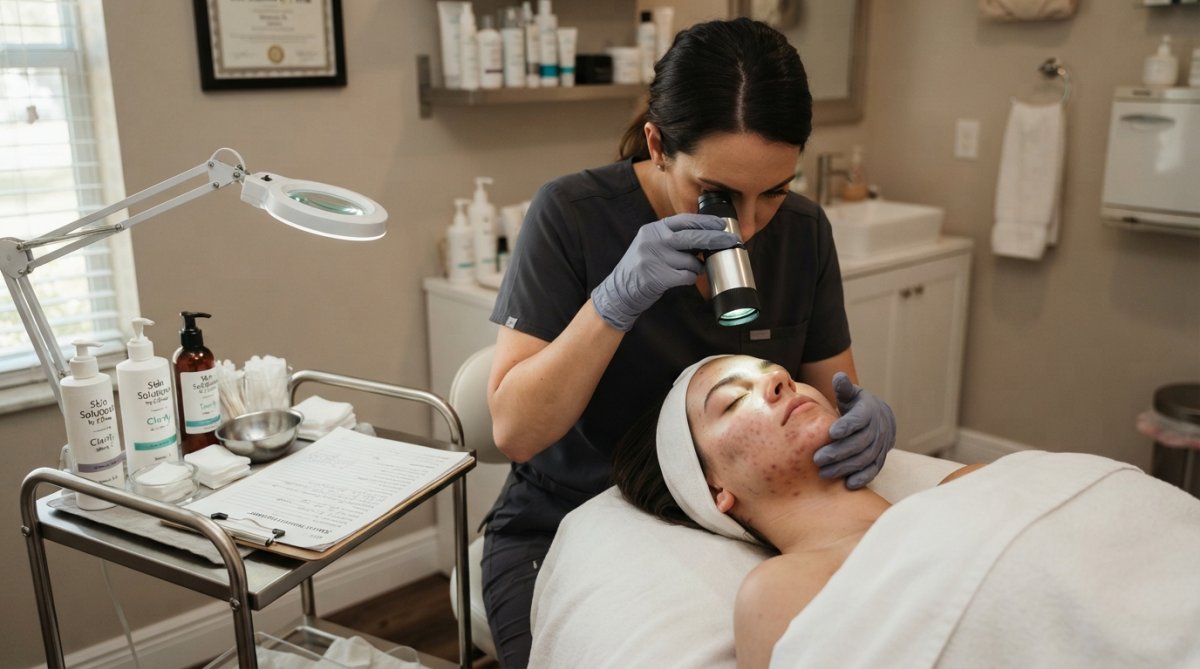
At SKIN SOLUTIONS BY 2 DIVAS, our custom corrective facials are designed specifically to address texture concerns through thorough skin analysis and personalized treatment planning. We combine professional-grade exfoliation, targeted serums, and specialized techniques to improve cell turnover and reveal smoother skin.
Foods for Skin Texture: Nutrition and Internal Health
Skin texture improves from internal health as well as topical treatments. Nutrition affects collagen production, skin barrier function, and inflammation.
Protein is essential because collagen is a protein. Amino acids from dietary protein provide the building blocks your skin uses to repair and regenerate. Healthy fats support the skin barrier. Omega-3 fatty acids from fish, flax, and walnuts reduce inflammation and strengthen the lipid barrier. Hydration matters internally too, dehydrated skin looks dull and textured.
Foods high in sugar and refined carbohydrates can worsen texture by triggering inflammation and increasing sebum production.
| Nutrient | Food Sources | Skin Benefit |
|---|---|---|
| Protein | Fish, eggs, chicken, legumes | Collagen synthesis and repair |
| Omega-3s | Salmon, flax, walnuts, chia | Barrier function and hydration |
| Vitamin C | Citrus, berries, peppers, greens | Collagen production and antioxidant |
| Zinc | Oysters, beef, pumpkin seeds, chickpeas | Wound healing and sebum control |
| Vitamin E | Nuts, seeds, spinach, avocado | Antioxidant protection |
| Antioxidants | Blueberries, dark chocolate, green tea | Collagen preservation |
Improving skin texture is a combination of consistent exfoliation, hydration, barrier repair, and sun protection, supported by professional treatments when needed. Real texture improvement takes 4-12 weeks depending on the method. SKIN SOLUTIONS BY 2 DIVAS specializes in custom corrective facials that analyze your specific skin concerns and create personalized treatment plans using professional-grade ingredients and techniques. Our approach targets the root causes of bumpy skin, dullness, and uneven texture, delivering visible results that last. Book your appointment today and discover how a professional skin analysis can transform your texture.
Frequently Asked Questions
What causes uneven skin texture and bumpy skin?
Uneven skin texture results from dead skin cell buildup, reduced cell turnover, dehydration, sun damage, and hormonal acne. Environmental stress, poor skincare habits, and inadequate exfoliation prevent your skin barrier from functioning optimally. Sensitivity and inflammation can also create a bumpy appearance. Professional skin analysis helps identify your specific cause so you can target the right treatment.
What's the best skincare routine for smooth skin?
A proven routine includes: cleansing with a gentle cleanser, exfoliating 2-3 times weekly with chemical exfoliants (AHAs/BHAs), applying hydrating serums with hyaluronic acid, moisturizing with ceramides to repair your skin barrier, and using SPF 30+ daily. Add retinoids 2-3 times weekly to boost collagen production and cell turnover. Consistency matters more than complexity, stick with your routine for 4-6 weeks before expecting visible improvement in skin texture.
Can foods for skin texture really improve how my skin looks?
Yes, internal health directly impacts skin health. Foods rich in antioxidants (berries, leafy greens), omega-3 fatty acids (salmon, walnuts), and vitamin C (citrus, bell peppers) support collagen production and reduce inflammation. Adequate hydration and protein intake also strengthen your skin barrier. While topical treatments work faster, combining dietary improvements with your skincare routine accelerates results and supports long-term skin rejuvenation.
How long does it take to see improvement in skin texture?
At-home routines typically show visible results in 4-8 weeks with consistent use. Chemical exfoliants and retinoids require time to increase cell turnover and build collagen. Professional treatments like microneedling or laser resurfacing deliver faster results, often noticeable after one session, but require post-procedure maintenance. For persistent concerns like severe acne or hyperpigmentation, a personalized treatment plan from a skincare specialist ensures realistic timelines and sustainable outcomes.
This article was written using GrandRanker