 ultimate-guide
Corrective Facials for Sensitive Skin: A Complete Guide
Table of Contents
- What Are Corrective Facials for Sensitive Skin?
- How Corrective Facials Differ from Standard Facials
- Key Benefits of Corrective Facials for Sensitive Skin
- Ingredients to Avoid for Sensitive Skin
- Benefits of Enzyme Peels for Sensitive Skin
- How Often to Get Facials for Sensitive Skin
- Post-Facial Skincare Routine and Recovery
- Preparing for Your Corrective Facial
- Frequently Asked Questions
Last Updated: August 12, 2026
What Are Corrective Facials for Sensitive Skin?
Corrective facials for sensitive skin are professional treatments that address concerns like acne, hyperpigmentation, and texture issues while protecting a compromised skin barrier. Unlike standard facials focused on cleansing and hydration, they use carefully selected active ingredients and gentle techniques to target problems without triggering inflammation.
At Skin Solutions by 2 Divas, we begin with thorough skin analysis to identify your unique concerns, hormonal acne, post-inflammatory hyperpigmentation, or barrier dysfunction. This assessment guides every step, ensuring ingredients and techniques align with your skin's specific needs rather than a one-size-fits-all approach.
The key distinction is that corrective facials prioritize barrier repair alongside active treatment. Your skin barrier protects against water loss and environmental irritants. When compromised, even gentle ingredients can trigger redness. A proper corrective facial addresses both the underlying concern and barrier health simultaneously.
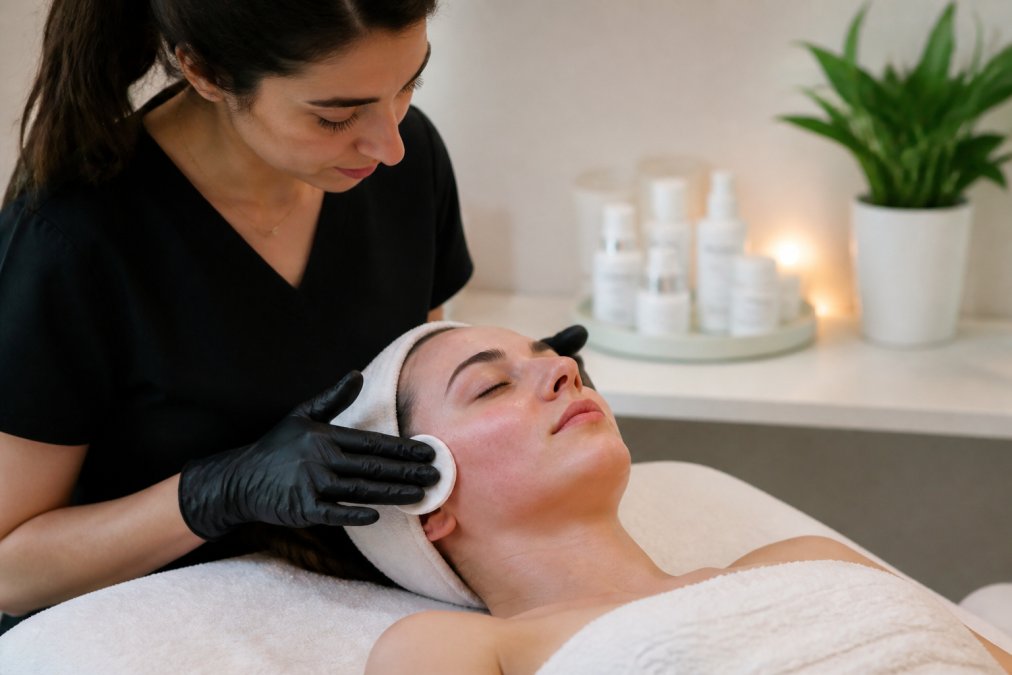
Many clients arrive after facials elsewhere left their skin red, tight, or more reactive. That's because those treatments didn't account for barrier sensitivity. Our corrective approach delivers improvements in your specific concern, clearer skin, faded discoloration, smoother texture, without the inflammation that derails progress.
How Corrective Facials Differ from Standard Facials
Standard facials follow a general protocol: cleanse, exfoliate, extract, mask, moisturize. Corrective facials for sensitive skin are diagnostic and adaptive. We adjust ingredients, techniques, and intensity based on your skin's individual response rather than applying the same treatment to everyone.
During a standard facial, you might spend five minutes discussing your skin type. During a corrective facial at Skin Solutions by 2 Divas, we conduct detailed analysis, assessing barrier function, identifying inflammation patterns, noting congestion and sensitivity, and understanding your treatment history. This informs which actives we use, how we apply them, and your home care afterward.
Standard facials often include aggressive exfoliation or manual extractions that compromise sensitive barriers. Corrective facials use gentler methods, enzyme peels instead of physical scrubs, that remove dead skin without triggering reactive responses.
Ingredient selection differs critically. Standard facials might use fragrance, essential oils, or high-concentration acids. Corrective facials prioritize hypoallergenic, fragrance-free formulations with proven soothing agents like niacinamide, aloe vera, and green tea extract that calm inflammation while corrective actives address your concern.
Recovery time also differs. After a standard facial, mild redness fades in hours. Corrective facials for sensitive skin minimize downtime, you see improvement without significant peeling or prolonged irritation.
Key Benefits of Corrective Facials for Sensitive Skin
Corrective facials deliver results without worsening your condition. Many with reactive skin avoid professional treatments due to bad experiences. A proper corrective facial changes that equation: you get clinical-grade treatment designed for your barrier's limitations.
For acne-prone sensitive skin, corrective facials reduce congestion and bacterial colonization while calming inflammation that makes breakouts more visible and painful. Over a series of sessions, clients typically see clearer skin with fewer reactive episodes.
For hyperpigmentation, corrective facials use brightening actives like mandelic acid, niacinamide, or gentle vitamin C at concentrations that work without triggering post-inflammatory hyperpigmentation, crucial because aggressive treatment often backfires, creating more discoloration.
Barrier repair is an immediate benefit. After a proper corrective facial, your skin should feel more comfortable, less tight, and less reactive to your normal routine. The treatment includes soothing serums and barrier-supporting ingredients that restore transepidermal water loss control.
Clients also report improved texture and even skin tone. Corrective facials exfoliate dead skin while promoting micro-circulation, creating a natural glow from improved health rather than irritation-induced redness.
At Skin Solutions by 2 Divas, we discuss realistic timelines during consultation. You have a clear plan rather than guessing.
Ingredients to Avoid for Sensitive Skin
Knowing which ingredients to avoid is as important as knowing which ones to use. Many products marketed as "gentle" or "natural" destabilize sensitive skin.
Fragrance and essential oils irritate sensitive skin, even in small amounts. These volatile compounds penetrate the barrier and trigger inflammatory responses. A corrective facial should be completely fragrance-free.
Alcohol denat (denatured alcohol) strips the skin barrier and causes transepidermal water loss. You'll see it in toners and serums marketed as "refreshing" or "clarifying."
High concentrations of AHAs and BHAs are too aggressive for sensitive skin. Glycolic acid and salicylic acid are effective, but concentrations above 5-7% or pH below 3.5 trigger significant irritation. Enzyme peels are gentler alternatives.
Benzoyl peroxide, while effective for acne, can be drying and irritating. Many acne-prone sensitive clients benefit from lower concentrations (2.5%) or alternative antibacterial ingredients like niacinamide and zinc.
Retinol and retinoids require careful introduction in sensitive skin. Start with lower concentrations and introduce slowly, ideally under guidance from someone experienced with sensitive skin protocols.
Sulfates, particularly sodium lauryl sulfate, are stripping cleansers that compromise the barrier. Look for sulfate-free cleansers, especially after a corrective facial when your barrier needs support.
Silicones and heavy occlusives can trap bacteria and exacerbate acne in some sensitive skin types. Lightweight, non-comedogenic moisturizers work better post-facial.
Benefits of Enzyme Peels for Sensitive Skin
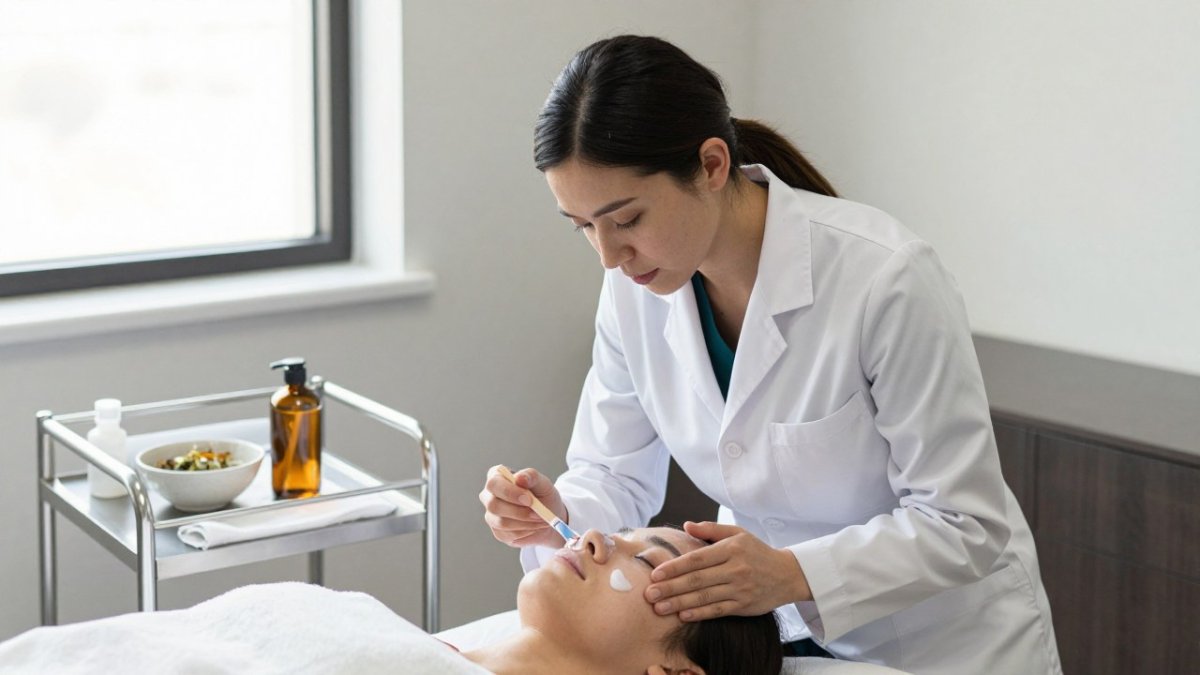
Enzyme peels are among the gentlest exfoliation methods available, making them ideal for corrective facials for sensitive skin. Unlike physical scrubs or high-concentration chemical peels, enzyme peels break down bonds between dead skin cells without disrupting the barrier.
Enzymes like papain (from papaya) and bromelain (from pineapple) are proteolytic, they digest protein structures holding dead skin to the surface. You get effective exfoliation at much lower irritation levels. Dead skin simply lifts away rather than being abraded or chemically burned off.
Enzyme peels offer minimal downtime and reduced inflammation. After treatment, your skin might have slight redness that fades within hours, not days, ideal if you're preparing for an event. Because exfoliation is gentler, your barrier remains intact and functional.
Enzyme peels work well for acne-prone skin without the irritation that triggers additional breakouts. By removing dead skin that clogs pores, they reduce congestion without defensive skin reactions.
For clients with rosacea or reactive skin, enzyme peels are often the only exfoliation method that doesn't trigger a flare. You get skin-smoothing, brightening effects without the vascular response that worsens rosacea.
Many professionals layer enzyme peels with other actives in corrective facials for sensitive skin. An enzyme peel removes the dead skin barrier, allowing serums with mandelic acid, niacinamide, or hyaluronic acid to penetrate more effectively. This combination approach is more effective than either treatment alone.
Results accumulate over time. A single treatment improves texture and brightness. Regular enzyme peels (typically monthly) create sustained improvements in skin clarity, tone evenness, and overall radiance.
How Often to Get Facials for Sensitive Skin
The frequency of corrective facials for sensitive skin depends on your specific concern, your barrier's current state, and your home skincare routine.
For active acne, most clients benefit from monthly corrective facials during the first 3-4 months. Monthly frequency allows your skin to cycle through treatment and recovery while addressing congestion and bacterial colonization. After significant improvement, extend to every 6-8 weeks for maintenance.
For hyperpigmentation, monthly treatments for 6-8 months is typical. Pigment changes slowly, and consistent monthly exposure to brightening actives yields better results than sporadic treatments. Once discoloration fades, quarterly maintenance facials prevent new pigment formation.
Book your appointment today! →
If your skin is currently very reactive, red, and easily irritated, start with facials every 6-8 weeks to allow your barrier to strengthen between treatments. As your barrier improves, increase frequency.
Your home skincare routine influences frequency too. If you're using complementary actives at home like gentle retinol or vitamin C serum, you might space facials further apart. If your home routine is minimal, monthly facials become more important.
Once you've achieved your goal, quarterly corrective facials for sensitive skin maintain that healthy state and prevent regression.
At Skin Solutions by 2 Divas, we reassess your skin every 4-6 weeks and adjust frequency based on your progress.
Post-Facial Skincare Routine and Recovery
The first 24-48 hours after a corrective facial for sensitive skin are critical. What you do during this window determines whether you see full benefits or experience unnecessary irritation.
Immediately after your facial, avoid hot water, which opens pores and increases irritation. Use lukewarm water only. Avoid all active ingredients for at least 24 hours, no retinol, acids, or vitamin C. Your skin needs recovery time, not additional treatment.
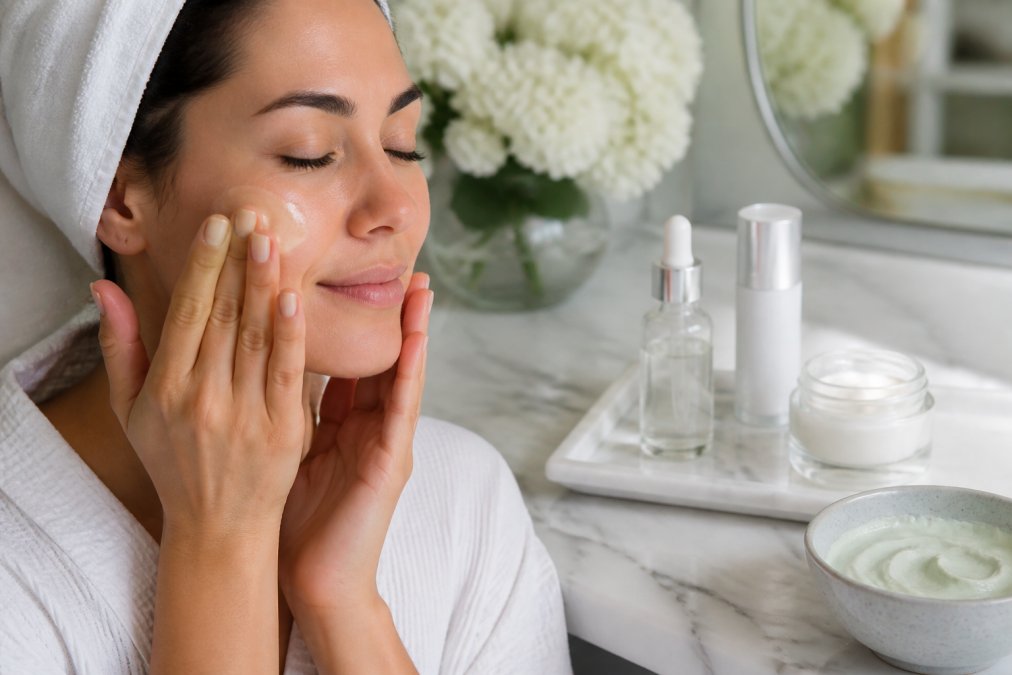
Your post-facial skincare routine should focus on barrier support and hydration. Use a gentle, fragrance-free cleanser like a milk or oil cleanser. Apply a hydrating toner or essence with hyaluronic acid. Follow with a lightweight, non-comedogenic moisturizer. If your skin feels dry, add a barrier-supporting serum with ceramides or niacinamide.
Slight redness or sensitivity in the first 12-24 hours is normal and typically resolves quickly. If redness persists beyond 48 hours or you develop significant irritation, contact your esthetician.
Sun protection is non-negotiable after a corrective facial for sensitive skin. Use SPF 30 or higher daily, even indoors. UV exposure can trigger post-inflammatory hyperpigmentation. Apply sunscreen 15 minutes before sun exposure and reapply every two hours if outdoors.
Avoid makeup for at least 24 hours if possible. If you must wear makeup, use mineral-based products that don't clog pores or irritate freshly treated skin.
For the first week, keep your routine minimal: cleanser, hydrating toner, and moisturizer. Avoid exfoliation, active serums, and new products. Your skin is healing.
After the first week, gradually reintroduce your normal routine. If you use retinol, acids, or other actives, wait until day 5-7 and start at lower frequency, every other night instead of nightly.
Consistency matters more than product choice. Using the same gentle products for a week post-facial yields better results than switching products or adding actives too soon.
Drink extra water for 2-3 days after your facial. Your skin is working to repair and regenerate; adequate hydration supports that process.
Preparing for Your Corrective Facial
Preparation for a corrective facial for sensitive skin starts several days before your appointment. What you do beforehand significantly impacts how your skin responds and the results you see.
Stop using active ingredients 3-5 days before your appointment. Pause retinol, acids, vitamin C serums, and any other actives. Your skin needs to be in a calm baseline state, not already stressed by treatment. If you use prescription retinoids, discuss timing with your esthetician.
Avoid sun exposure and tanning beds for 48 hours before your appointment. Sun-exposed skin is more reactive and may not respond optimally to corrective treatment.
Don't over-exfoliate before your appointment. Skip physical scrubs, chemical peels, and exfoliating tools for at least a week. Your skin should arrive calm and uncompromised.
Avoid new skincare products for 1-2 weeks before your appointment. Introducing something new right before a corrective facial means you won't know whether any reaction comes from the new product or the facial.
If you have active breakouts, acne lesions, or open wounds, mention them during booking. Your esthetician may adjust the treatment plan or recommend rescheduling if your skin is too compromised.
Come to your appointment with clean skin, but don't apply moisturizer or sunscreen immediately beforehand. A thin layer of product can interfere with analysis and treatment.
Wear comfortable, loose clothing that won't irritate your face or neck.
Discuss your timeline and goals during consultation. If you're preparing for a special event, mention the date. If you're managing a specific concern like hormonal acne or post-inflammatory hyperpigmentation, be specific.
Prepare for the consultation to take time. A proper assessment takes 15-20 minutes and is the foundation for effective, personalized treatment.
Ask about your esthetician's experience with sensitive skin. This expertise matters.
Discuss realistic expectations. Corrective facials deliver results, but they're not instant transformations. Acne improves gradually over weeks. Hyperpigmentation fades over months.
Ask about home care between appointments. Your esthetician should provide specific product recommendations or guidance on what to use and avoid. The corrective facial is one piece of your skincare strategy; home care is equally important.
Be honest about your skin's history. If you've had bad reactions to facials elsewhere, if you have conditions like rosacea or eczema, if you're on medications that affect skin sensitivity, share this information. It helps your esthetician anticipate challenges and adjust the protocol accordingly.
Sensitive skin doesn't mean you have to accept acne, hyperpigmentation, or texture concerns. The right corrective facial for sensitive skin, paired with consistent home care and professional guidance, delivers real improvement without the irritation that derails progress. At Skin Solutions by 2 Divas, we've helped countless clients in our community transform their skin by taking a personalized, barrier-conscious approach to corrective treatment. Book your appointment today and discover what professional care designed specifically for your skin's needs can accomplish.
Frequently Asked Questions
Are corrective facials safe for rosacea or eczema-prone skin?
Corrective facials can be safe for rosacea and eczema-prone skin when performed by qualified specialists who understand your skin barrier and inflammatory triggers. The key is thorough pre-treatment consultation and patch testing. Avoid harsh exfoliants, fragrance, and high concentrations of active ingredients. Enzyme peels and gentle hydrating treatments are typically better tolerated than aggressive chemical peels. Always disclose your condition to your esthetician before treatment to ensure they use appropriate techniques and soothing ingredients like aloe vera and green tea extract.
What ingredients should be avoided in facials for sensitive skin?
Avoid alcohol, synthetic fragrances, sulfates, and high concentrations of acids or retinoids in facials for sensitive skin. Benzoyl peroxide, salicylic acid at high percentages, and essential oils can trigger irritation and inflammation. Steer clear of products containing dyes, parabens, and non-comedogenic claims that don't match your skin's actual needs. Instead, look for hypoallergenic formulations with hyaluronic acid, niacinamide, and barrier-repair ingredients. Always request ingredient lists upfront and ask your esthetician about patch testing before full facial application.
How often should someone with sensitive skin get a professional corrective facial?
Most people with sensitive skin benefit from corrective facials every 4-6 weeks, though frequency depends on your specific concerns and skin tolerance. Starting with one facial every 6 weeks allows your skin barrier to recover fully between treatments. If your skin tolerates treatment well and you're addressing acne or hyperpigmentation, you may increase to every 4 weeks. Avoid more frequent treatments, as sensitive skin needs time to repair and balance pH. Your esthetician will recommend a personalized schedule based on your skin analysis and treatment goals.
What should I do after a corrective facial to protect my skin?
After a corrective facial, follow a gentle post-facial skincare routine: avoid hot water, harsh cleansers, and active ingredients for 24-48 hours. Use fragrance-free, hypoallergenic moisturizers with hyaluronic acid to support skin hydration and barrier repair. Apply broad-spectrum SPF 30+ daily to prevent post-inflammatory hyperpigmentation and sun damage. Skip exfoliation, retinoids, and vitamin C serums for at least one week. Keep your skin barrier protected by using soothing products with aloe vera or green tea extract. Your esthetician will provide specific aftercare instructions tailored to your treatment.
This article was written using GrandRanker