 ultimate-guide
Can Facials Fix Acne Scars? A Practical Guide to Treatment Options
Table of Contents
- Can Facials Actually Fix Acne Scars?
- Understanding Acne Scar Types and What Facials Can Address
- Types of Facials for Acne Scars
- Facial vs. Medical Procedure: What's the Difference?
- Dermatologist Treatments for Acne Scars
- Cost of Facials for Acne Scars and What Affects Pricing
- How Often Should You Get Facials for Acne Scars?
- At-Home Skincare Between Professional Treatments
- Frequently Asked Questions
Can Facials Fix Acne Scars? A Practical Guide to Treatment Options
Last Updated: August 2, 2026
Can Facials Actually Fix Acne Scars?
The answer is nuanced: some facials meaningfully improve acne scars by stimulating collagen production and resurfacing damaged skin, while others provide only temporary cosmetic benefits. Outcome depends on scar type, treatment selection, skin tone, and realistic expectations.
The critical distinction is that facials exist on a spectrum. A standard hydrating facial won't touch scar tissue. But medical-grade facials using chemical peels, microneedling, or laser technology trigger genuine dermal remodeling, the biological process where your skin rebuilds itself from within. Whether facials fix your acne scars depends on matching the right treatment to your scar type and committing to a maintenance timeline.
Below, we'll break down which facial treatments work for different scar patterns, what separates cosmetic facials from clinical procedures, what to realistically expect, and how to build a long-term skincare strategy that compounds results.
Understanding Acne Scar Types and What Facials Can Address
Not all acne scars respond to the same treatment. Scar type determines whether a facial will help or whether you need something more aggressive.
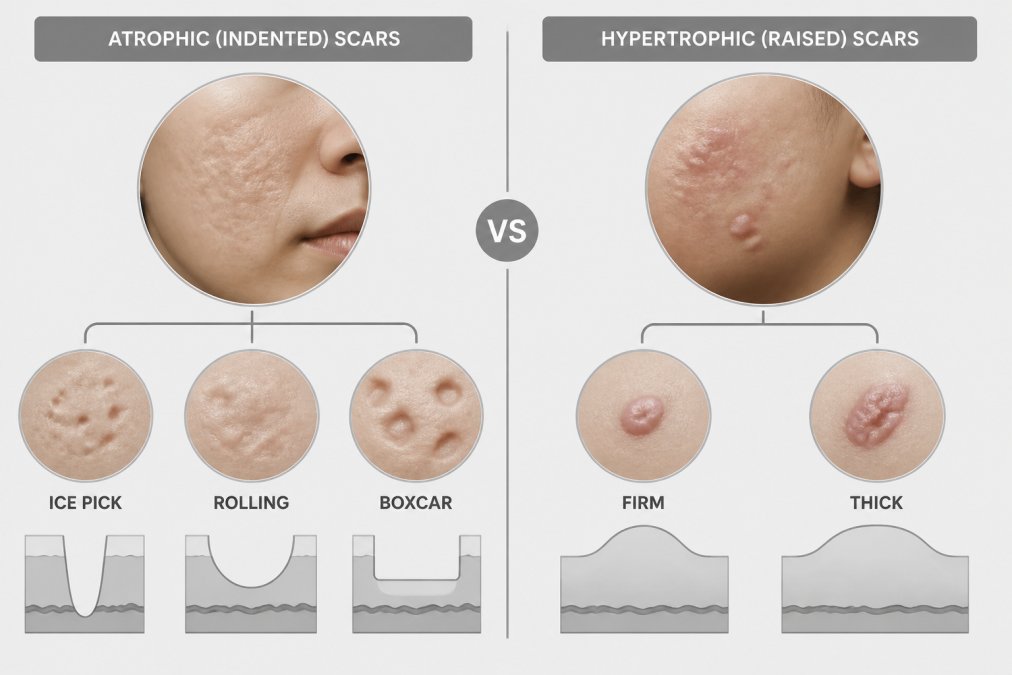
Atrophic vs. Hypertrophic Scars
Atrophic scars are indentations where collagen was destroyed during inflammation and didn't rebuild properly. These are the most common type and respond most effectively to facials that stimulate collagen production, gradually filling depressions from below.
Hypertrophic scars are raised, thickened tissue from excess collagen formation. These are less common but more stubborn. Standard facials won't flatten them effectively; they typically require laser resurfacing or subcision by a dermatologist.
Post-inflammatory erythema, red or pink discoloration after acne heals, is often mistaken for scarring. Facials address this directly through chemical peels, microneedling, and certain laser treatments that reduce vascular components and promote epidermal turnover.
Scar Type Matching for Treatment Success
Scar depth, width, and type determine treatment efficacy more than anything else.
Shallow atrophic scars (less than 1mm deep) respond well to chemical peels and microdermabrasion, typically requiring 4-6 sessions before meaningful texture change appears.
Moderate atrophic scars (1-3mm deep) are where microneedling and fractional CO2 laser excel. Microneedling creates controlled micro-injuries activating collagen induction therapy without removing skin. Fractional CO2 removes damaged tissue while stimulating deeper collagen production simultaneously.
Deep atrophic scars (over 3mm) often need combination approaches. A single facial won't bridge that depth gap. Dermatologists typically recommend starting with subcision, then following with laser or microneedling to stimulate fill-in collagen.
At SKIN SOLUTIONS BY 2 DIVAS, our specialists conduct thorough skin analyses to measure scar characteristics before recommending treatment, preventing wasted money on treatments that won't address your specific scar profile.
Types of Facials for Acne Scars
Several facial treatments can improve acne scars. Understanding how each works and what results to expect prevents disappointment.
Chemical Peels and Medical-Grade Acids
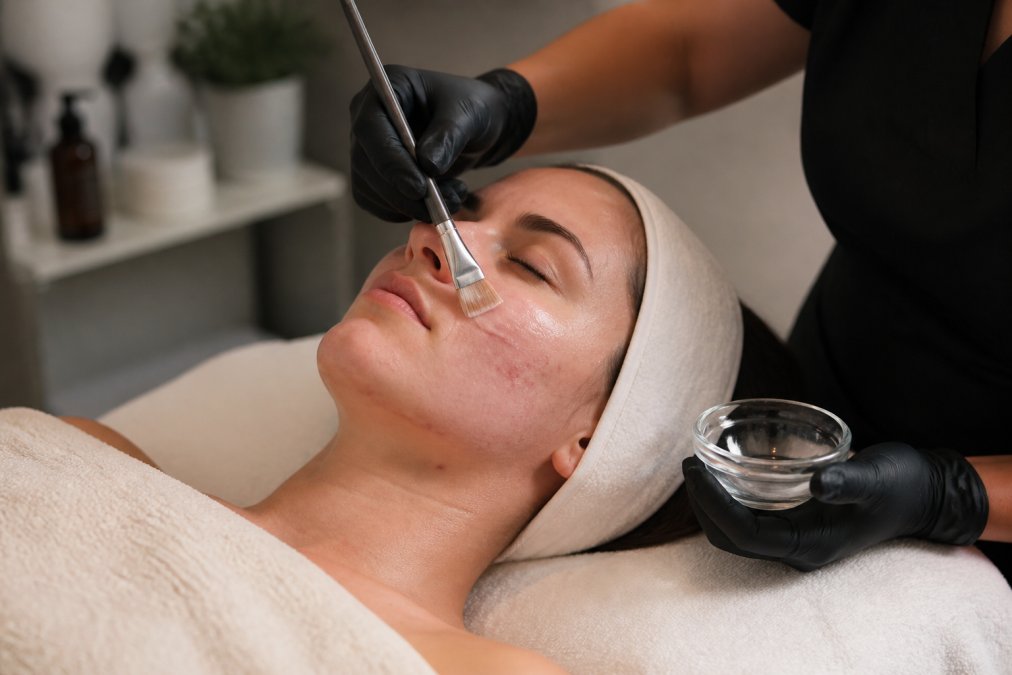
Chemical peels use medical-grade acids, salicylic acid, glycolic acid, lactic acid, or trichloroacetic acid (TCA), to dissolve outermost skin layers and trigger controlled resurfacing.
Superficial peels remove only the epidermis and are the gentlest option. They improve texture, reduce post-inflammatory hyperpigmentation, and regulate oil production. Results are subtle but cumulative after 4-6 treatments spaced two weeks apart, with minimal recovery.
Medium-depth peels penetrate into the dermis and create more significant collagen stimulation. These address moderate atrophic scars more effectively, showing visible improvement in scar depth after 2-3 treatments, though recovery takes 5-7 days with visible peeling and redness.
Chemical peels are accessible and affordable but results plateau; they work best on shallow to moderate scars and won't significantly improve deep pitting.
Microneedling and Collagen Induction Therapy
Microneedling uses fine needles (typically 0.5-2.5mm depth) to create controlled micro-punctures triggering collagen induction therapy, your body's natural healing response that rebuilds damaged skin.
Microneedling works for all skin tones without hyperpigmentation risk. Needle depth adjusts to match scar depth, making it precise and customizable. For moderate atrophic scars, microneedling typically requires 3-4 sessions spaced 4-6 weeks apart before meaningful texture improvement appears.
Results compound over time. Your skin continues producing collagen for weeks after each session. Most people see 30-50% scar depth reduction after a full treatment series, with continued improvement for months afterward.
Recovery is moderate: expect redness and mild swelling for 24-48 hours, then normal skin function resumes. You can apply skincare products and makeup after 24 hours, though sun protection is essential.
Laser Resurfacing: Ablative vs. Non-Ablative
Ablative lasers (primarily CO2 and erbium lasers) vaporize top skin layers while heating the deeper dermis to stimulate collagen remodeling. Fractional CO2 laser is the gold standard for moderate to deep atrophic scars, with most people seeing 50-70% scar depth reduction after a single treatment and continued improvement as collagen remodels over 3-6 months.
Recovery requires 7-10 days of visible healing with peeling and redness. Ablative laser also carries higher hyperpigmentation and hypopigmentation risk in darker skin tones.
Non-ablative lasers heat the dermis without removing the epidermis. Recovery is faster (24-48 hours of mild redness), but results are more gradual, usually requiring 4-6 sessions to match a single ablative treatment. They're safer for darker skin tones but less effective for deep scars.
Choose based on scar severity, skin tone, and downtime tolerance. Shallow to moderate scars often respond well to non-ablative approaches with minimal risk. Deep scars benefit from ablative treatment with careful practitioner selection for darker skin.
Microdermabrasion and Skin Resurfacing
Microdermabrasion uses fine crystals or a diamond tip to mechanically exfoliate skin, removing dead cells and stimulating mild collagen response. It's one of the gentlest options, working best on very shallow scars and post-inflammatory erythema.
Results are subtle but consistent after 4-6 treatments spaced two weeks apart. Recovery is minimal with redness resolving within hours. The limitation is depth of penetration; it doesn't significantly improve moderate or deep atrophic scars.
Facial vs. Medical Procedure: What's the Difference?
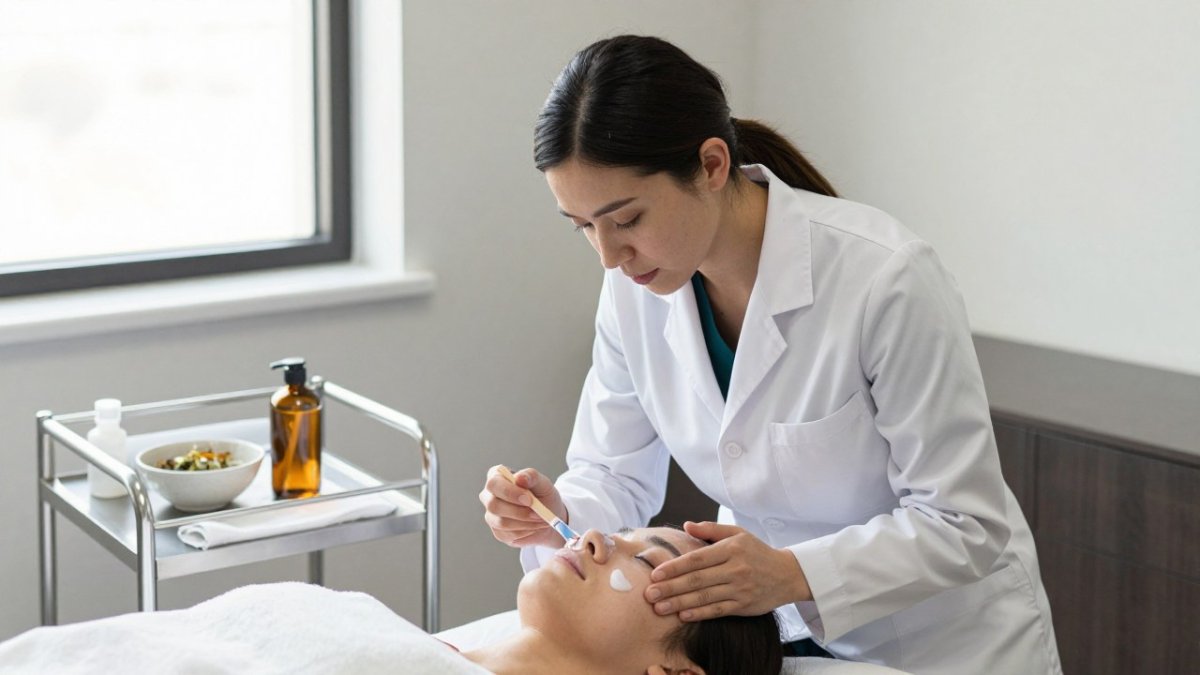
A facial is performed by an esthetician and focuses on improving skin appearance and health through collagen stimulation and damaged skin removal. Results are real but gradual, requiring multiple sessions and ongoing maintenance.
A medical procedure is performed by a dermatologist or licensed medical provider using more aggressive technology. Ablative laser resurfacing, subcision, and dermal fillers achieve faster, more dramatic results because they work deeper and more intensively.
Facials excel for maintenance, prevention, and shallow to moderate scarring. Medical procedures are necessary for deep scars or faster results. Many benefit from combining both: starting with a medical procedure for dramatic improvement, then maintaining with regular facials.
At SKIN SOLUTIONS BY 2 DIVAS, we specialize in custom corrective facials designed to address acne scarring. Our approach involves thorough skin analysis to determine whether a facial series will deliver your desired results or whether you should consult a dermatologist for medical-grade intervention first.
Dermatologist Treatments for Acne Scars
When facials reach their limits, dermatologists have additional tools for deeper scarring.
Subcision uses a special needle to break up fibrous bands anchoring depressed scars, allowing them to rise. Often combined with filler injection for immediate improvement, results are dramatic but require skill.
Dermal fillers (hyaluronic acid, calcium hydroxylapatite, or poly-L-lactic acid) are injected under scars to lift them from below. Results are immediate but temporary, lasting 6-18 months. Fillers work well for isolated deep scars but aren't practical for widespread scarring.
Ablative laser resurfacing delivers the most dramatic results for deep atrophic scarring, with 70-80% scar depth reduction possible after a single treatment, though recovery is significant.
TCA CROSS (trichloroacetic acid chemical reconstruction of skin scars) applies high-concentration TCA directly into individual scars to stimulate targeted collagen remodeling. It's precise for ice-pick scars but requires expertise to avoid scarring surrounding skin.
Cost of Facials for Acne Scars and What Affects Pricing
Facial pricing varies based on treatment type, practitioner experience, and geographic location. Contact SKIN SOLUTIONS BY 2 DIVAS directly for a personalized quote. Our specialists conduct skin analysis and recommend customized treatment plans with transparent pricing.
What affects cost: Treatment complexity matters significantly. Medical-grade chemical peels or microneedling require specialized equipment and training. Laser treatments typically cost more due to equipment investment and expertise required.
Practitioner credentials influence pricing. Board-certified dermatologists charge more than estheticians, reflecting medical training and liability. However, facials by experienced estheticians often deliver excellent results at lower cost, especially for maintenance and shallow scarring.
Geographic location affects pricing. Urban areas and regions with higher cost of living typically charge more than rural areas.
Treatment series discounts are common. Most practitioners offer package pricing if you commit to multiple sessions upfront.
View facial pricing as an investment in a series, not a single treatment. Budget for 4-6 sessions spaced appropriately for realistic improvement expectations.
How Often Should You Get Facials for Acne Scars?
Frequency depends on treatment type and scar severity.
Maintenance Timeline and Recovery Expectations
| Treatment Type | Session Frequency | Sessions Needed | Recovery Time | Expected Results |
|---|---|---|---|---|
| Superficial Chemical Peel | Every 2 weeks | 4-6 | Minimal (same day) | Subtle texture improvement |
| Medium Chemical Peel | Every 3-4 weeks | 3-4 | 5-7 days | Moderate scar improvement |
| Microneedling | Every 4-6 weeks | 3-4 | 24-48 hours | 30-50% depth reduction |
| Microdermabrasion | Every 2 weeks | 4-6 | Minimal (same day) | Gradual texture improvement |
| Non-Ablative Laser | Every 4 weeks | 4-6 | 24-48 hours | Gradual improvement |
| Ablative Laser | One treatment (rarely repeated) | 1-2 | 7-10 days | 50-70% depth reduction |
Spacing matters. Your skin needs time between treatments to heal and produce new collagen. Treatments spaced too close together irritate skin without adding benefit. Treatments spaced too far apart interrupt collagen-building momentum.
After your initial series, maintenance becomes the question. For shallow scars or post-inflammatory erythema, monthly facials maintain results. For deeper scars requiring aggressive treatment, quarterly maintenance facials extend improvement without requiring another full series.
Visible results vary by treatment type. Superficial treatments show subtle improvement within 2-3 sessions. Moderate treatments require 4-6 sessions before meaningful change appears. Deep scar treatment shows dramatic improvement after a single session, with continued improvement for months.
Collagen remodeling takes time. Your skin is literally rebuilding itself, and that biological process can't be rushed. Patience compounds into significant improvement over 6-12 months.
At-Home Skincare Between Professional Treatments
What you do between facials matters as much as the facials themselves. Professional treatments create the stimulus; at-home skincare amplifies and maintains results.
Ingredients That Support Collagen Production and Skin Repair
Tretinoin (prescription retinoid) is the gold standard for at-home collagen stimulation. It increases cell turnover, stimulates collagen synthesis, and improves skin texture. Start with low concentration (0.025%) and increase gradually. Expect 8-12 weeks before visible improvement.
Niacinamide (vitamin B3) reduces inflammation, regulates sebum production, and strengthens the skin barrier. Concentrations of 4-10% are effective. Apply after cleansing, before heavier creams.
Vitamin C (ascorbic acid) stimulates collagen production and provides antioxidant protection. Use stabilized forms at 10-20% concentration. Apply in the morning before sunscreen.
Hyaluronic acid holds moisture in the skin, plumping fine lines and supporting the skin barrier. It amplifies results from other treatments by keeping skin hydrated and resilient.
Alpha hydroxy acids (AHAs) like glycolic acid promote gentle exfoliation and collagen remodeling between professional treatments. Use 5-10% concentrations 2-3 times weekly.
Sunscreen and Post-Treatment Protection
Sunscreen is non-negotiable after any scar treatment. UV exposure triggers inflammation and hyperpigmentation, undoing treatment benefits. Use SPF 50+ daily, reapply every two hours if outdoors, and use physical blockers (zinc oxide, titanium dioxide) rather than chemical sunscreens if your skin is reactive.
Post-inflammatory hyperpigmentation is a real risk after aggressive treatments, especially for darker skin tones. Consistent sunscreen use is your primary defense. Vitamin C and niacinamide also help prevent hyperpigmentation by reducing inflammation.
Avoid irritants during the healing phase after treatments. Skip active ingredients for 48 hours post-treatment. Your skin barrier is temporarily compromised and needs time to rebuild. Resume gradually after 3-5 days.
Moisturize aggressively after treatments. Professional treatments temporarily disrupt the skin barrier. Heavy creams, facial oils, and hydrating serums support barrier repair and reduce post-treatment sensitivity.
Facials work for acne scars, but within realistic limits. Shallow to moderate scars respond beautifully to consistent facial treatments combined with targeted at-home skincare. Deep scars may require medical procedures for dramatic improvement. The key is matching treatment to scar type, committing to a full series rather than expecting one session to fix years of scarring, and maintaining results with ongoing care.
At SKIN SOLUTIONS BY 2 DIVAS, we specialize in custom corrective facials designed to address your specific skin concerns through thorough analysis and personalized treatment planning. Our results-driven approach prioritizes your unique skin needs and long-term skin health. If you're ready to move beyond temporary fixes and invest in meaningful scar improvement, book your appointment today for a consultation with our specialists. We'll analyze your scars, explain exactly what's realistic for your situation, and create a treatment plan designed to deliver the radiant, healthy skin you're seeking.
Frequently Asked Questions
What types of acne scars can facials actually treat?
Facials work best on atrophic scars (indented or pitted scars) through collagen induction and skin resurfacing. Shallow rolling scars respond well to microneedling and chemical peels. Hypertrophic scars (raised, thick scars) are harder to treat with facials alone and may need dermatologist intervention. Scar depth, age, and skin tone all affect which facial type will deliver results. A thorough skin analysis helps identify which scars will respond to professional facial treatments.
How often should you get facials for acne scars?
Treatment frequency depends on the facial type and scar severity. Chemical peels typically require 4-6 sessions spaced 2-4 weeks apart. Microneedling sessions are often spaced 4-6 weeks apart for optimal collagen production. Laser treatments may need 3-5 sessions over several months. Most people see visible improvement after 3-4 sessions, but maintaining results requires ongoing treatments every 6-12 months. Your specialist will create a personalized maintenance timeline based on your specific scars and skin response.
Can facials completely remove acne scars?
Facials can significantly improve the appearance of acne scars by promoting collagen production, improving skin texture, and reducing scar depth. However, they rarely eliminate scars completely, especially deep or severe ones. Results depend on scar type, depth, age, and skin tone. Shallow scars often show dramatic improvement, while deep scars may require multiple treatments or combination approaches. Realistic expectations: most people see 50-80% improvement with consistent professional treatment and proper at-home skincare maintenance.
What's the difference between a regular facial and a corrective facial for acne scars?
Regular facials focus on cleansing, hydration, and surface-level skin health. Corrective facials for acne scars use medical-grade acids, microneedling, or laser technology to trigger dermal remodeling and collagen induction at deeper skin layers. Corrective facials require a thorough skin analysis to match scar type to treatment method. They often involve stronger active ingredients like trichloroacetic acid or fractional CO2 lasers. Recovery time is longer, but results target structural scar improvement rather than just surface refreshment.
This article was written using GrandRanker