 ultimate-guide
Benefits of Professional Skin Analysis: A 2026 Guide
Table of Contents
- What Professional Skin Analysis Reveals About Your Skin
- How Professional Skin Analysis Works: Technology and Assessment
- Identifying Your Skin Type and Hidden Concerns
- Creating Your Personalized Skincare Routine After Analysis
- How Often to Get a Facial for Lasting Results
- Tracking Progress: Why Skin Analysis Monitoring Matters
- Professional Skin Analysis vs. DIY Approaches: What Actually Works
- Conclusion
- Frequently Asked Questions
Last Updated: August 9, 2026
What Professional Skin Analysis Reveals About Your Skin
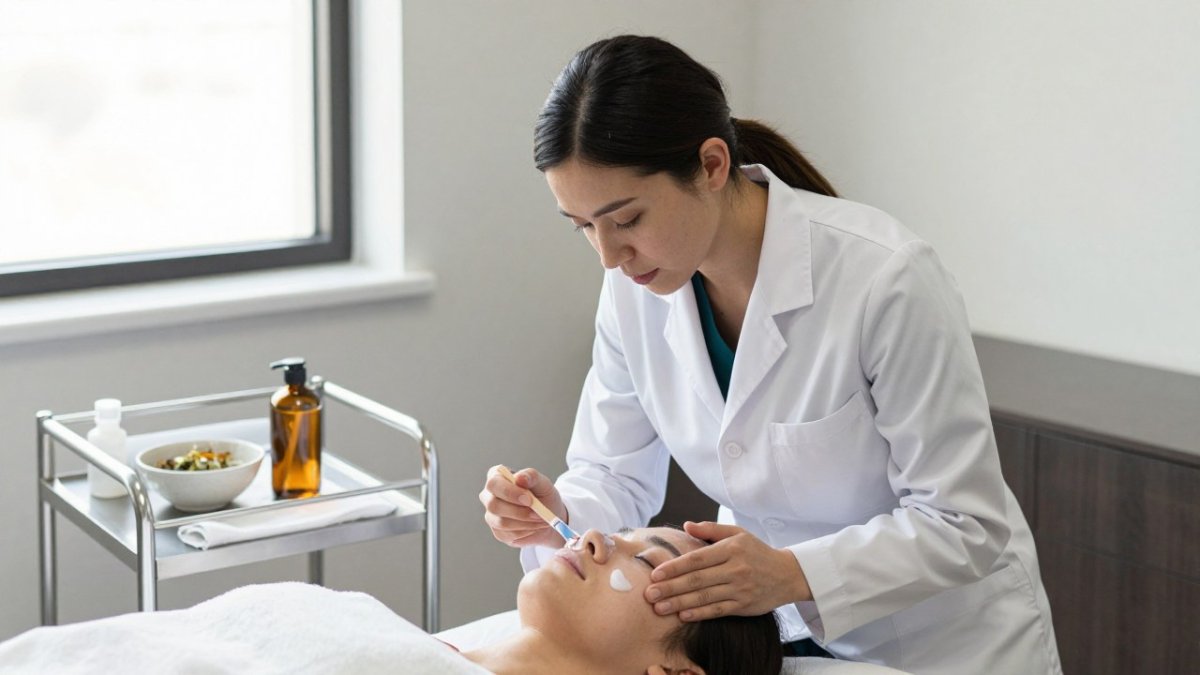
Professional skin analysis is a comprehensive evaluation of your skin's current condition, identifying underlying concerns invisible to the naked eye. Unlike a casual mirror glance, it examines texture, hydration, oil production, pigmentation, and early aging signs to create a complete picture of what your skin actually needs.
Many people misjudge their skin type based on feel alone. Your skin might appear oily in the T-zone while dehydrated underneath, or show active acne alongside sun damage and fine lines. Professional analysis separates what you see from what's actually happening beneath the surface.
At Skin Solutions by 2 Divas, we conduct thorough skin analysis for every client before recommending treatment. This reveals your skin's unique baseline so we can track meaningful progress over time. Early detection of skin barrier issues, dehydration patterns, and UV damage prevents more serious problems. A dermatological assessment distinguishes hormonal acne from sensitivity or product buildup, each requires a completely different approach.
How Professional Skin Analysis Works: Technology and Assessment
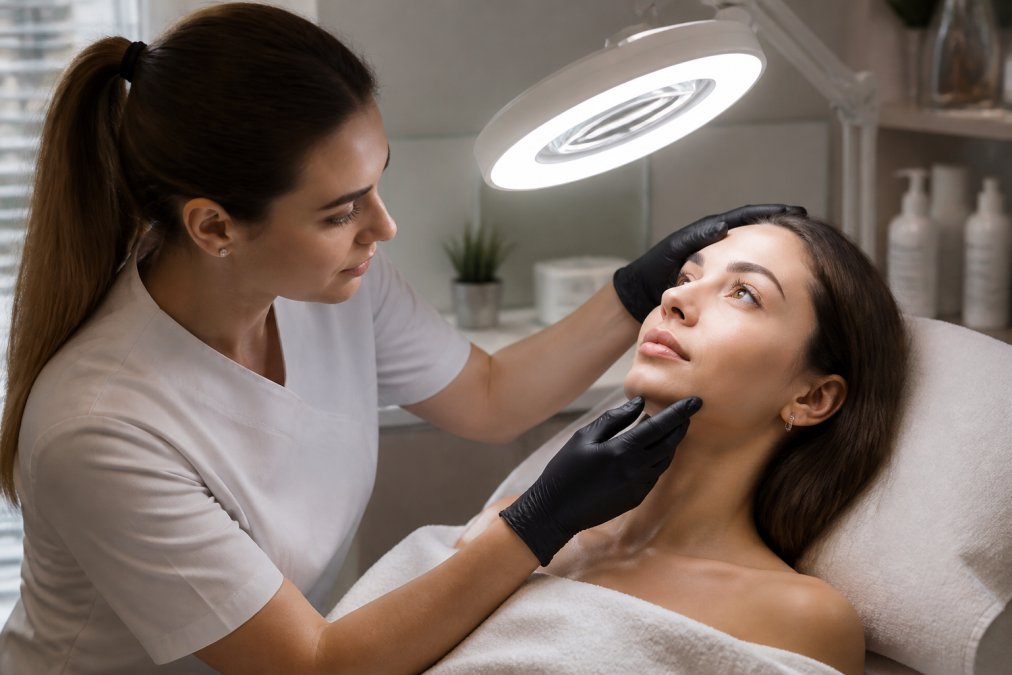
Professional skin analysis combines visual assessment with diagnostic imaging to evaluate your skin comprehensively. Modern machines use magnification and specialized lighting to reveal pore size, collagen levels, sun damage patterns, and moisture retention capacity.
The process begins with visual examination under bright, magnified conditions. Your specialist observes texture irregularities, pore variations, congestion, and dehydration signs, assessing skin barrier health in minutes.
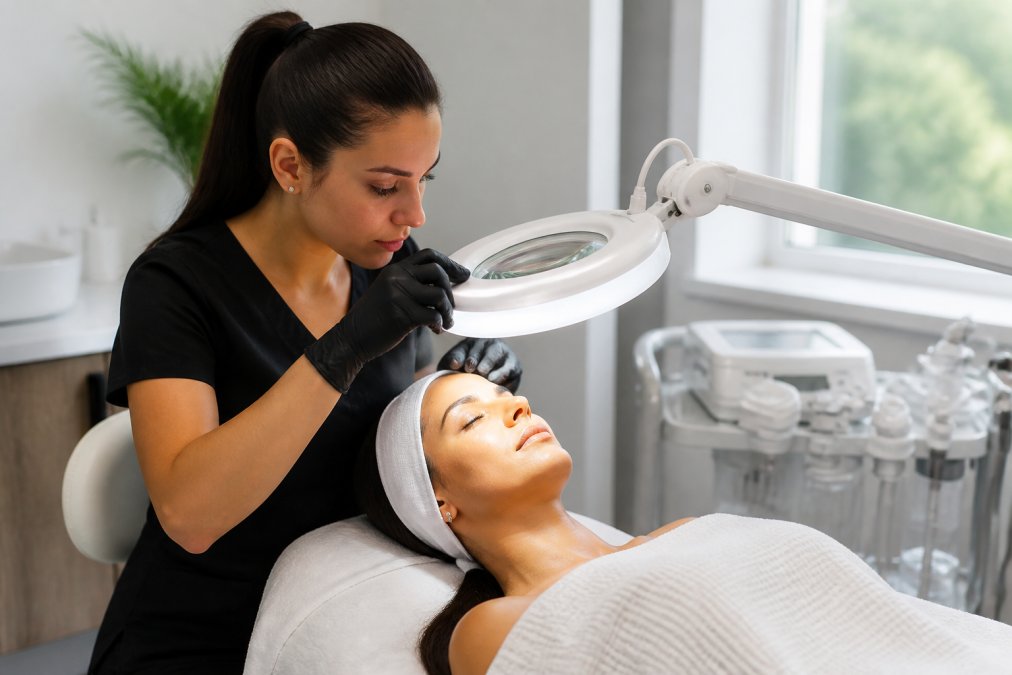
Next comes diagnostic imaging. UV imaging reveals hidden sun damage and hyperpigmentation. Thermal imaging shows inflammation patterns and excess oil production. These images create a visual map of your skin's condition, becoming your baseline for tracking progress.
Your specialist then conducts a clinical assessment, asking detailed questions about your routine, sensitivities, lifestyle, and goals. They identify patterns: Do certain products worsen your skin? Do breakouts follow a monthly cycle? Is dehydration seasonal or constant? These details reveal whether concerns are environmental, hormonal, or product-related.
Face mapping divides your face into zones, documenting specific concerns in each area. This systematic approach ensures nothing gets overlooked and enables targeted treatment recommendations.
Identifying Your Skin Type and Hidden Concerns
Your skin type is more nuanced than "oily," "dry," "combination," or "normal." Professional analysis measures sebum production, moisture levels, and sensitivity simultaneously. You might discover you're not combination skin, you're dehydrated skin with reactive oil production compensating for moisture loss.
Hidden concerns are problems your skin has that you don't yet see. Sun damage accumulated over years appears as rough texture and early pigmentation before visible spots emerge. Dehydration manifests as fine lines before you notice tightness. Hormonal acne begins as congestion weeks before breaking through.
Professional analysis catches early warning signs. Fair skin might show significant UV damage without visible spots. Someone in their 30s might have early collagen loss appearing as subtle texture changes rather than obvious lines. Acne-prone skin might have a compromised barrier actually driving breakouts.
The analysis also identifies sensitivities you might not realize you have. Your skin might react poorly to certain ingredients, but you've never isolated which products trigger reactions. A professional identifies whether you're sensitive to fragrance, specific actives, or preservatives based on reaction patterns.
Many people discover their "problem skin" isn't problematic, it's been treated incorrectly. Skin that seemed oily might actually be dehydrated and overproducing oil defensively. Skin that seemed resistant might be too sensitized to tolerate products. Understanding what's actually happening makes the right approach obvious.
Creating Your Personalized Skincare Routine After Analysis
Your personalized routine should be built directly from analysis results, not generic advice. If analysis reveals dehydration as your primary concern, your routine prioritizes hydration and barrier repair. If it reveals acne-prone skin with sensitivity, your routine focuses on gentle but effective acne management without triggering reactions.
The routine typically includes four components: cleanse, treat, moisturize, and protect. But specific products and techniques depend entirely on your skin's needs. Someone with acne-prone skin needs a different cleanser than someone with sensitivity.
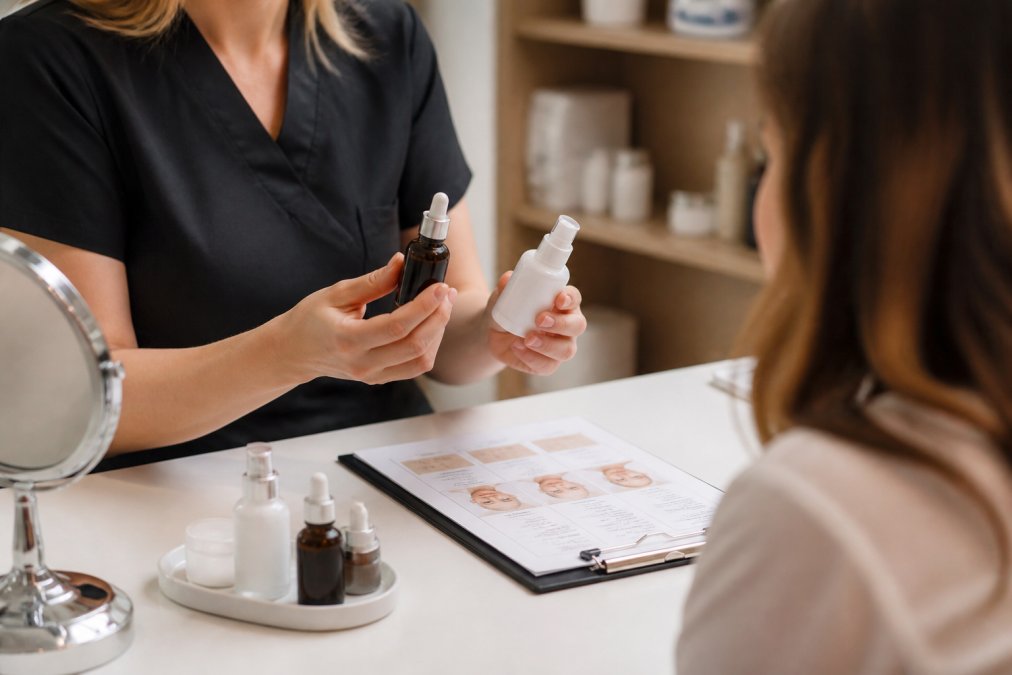
A professional routine from Skin Solutions by 2 Divas goes beyond product recommendations. We sequence products correctly, specify how often to use actives, and identify which concerns to address first. Treating everything simultaneously overwhelms your skin and produces poor results. A strategic approach targets your most pressing concern first, then layers in additional treatments as your skin adapts.
Your routine should account for lifestyle. If you work outdoors, sun protection is non-negotiable. If you have a demanding schedule, a complicated routine won't stick. Your personalized approach considers these practical realities.
Consistency matters more than complexity. A simple routine you actually follow produces better results than an elaborate routine you abandon after two weeks.
How Often to Get a Facial for Lasting Results
How often to get a facial depends on your skin concerns, treatment intensity, and healing capacity. Someone addressing active acne might benefit from monthly facials, while someone maintaining healthy skin might need quarterly treatments. Your specialist recommends a schedule based on your specific situation.
Book your appointment today! →
Regular facials provide professional-grade treatment more intensive than home care and allow your specialist to monitor progress and adjust your routine. A facial every 4-6 weeks gives your skin enough time to show visible changes while maintaining momentum.
Between facials, your home skincare routine becomes your maintenance tool. Professional treatments accelerate results but don't replace daily work. Think of facials as strategic interventions that boost your routine's effectiveness.
Your skin's response determines ideal frequency. If you see significant improvement after one facial lasting 4-6 weeks, that spacing works. If results fade after 2-3 weeks, more frequent treatments initially might help, then spacing them out as your skin improves.
Seasonal changes also affect frequency. Winter might require more frequent treatments due to dehydration and barrier stress. Summer might require different spacing due to sun exposure. A flexible approach that adjusts with seasonal needs produces better year-round results.
Tracking Progress: Why Skin Analysis Monitoring Matters
Your baseline skin analysis becomes your reference point for measuring progress. Without it, you rely on subjective feelings. With documented baseline photos, pore measurements, and pigmentation mapping, you see exactly what's changed.
Progress tracking reveals whether your current approach works. After three months following a personalized routine, a follow-up analysis shows whether hydration improved, acne reduced, texture refined, or barrier strengthened. This data-driven approach prevents continuing ineffective strategies.
Regular monitoring catches new concerns early. Your specialist might notice early sun damage you haven't seen, subtle texture changes indicating dehydration, or new congestion suggesting hormonal shifts. Catching issues when small prevents them from becoming major problems.
Tracking also provides motivation. Skincare progress is often subtle, slight texture improvement, reduced breakouts, more even tone. Comparing documented baseline photos to current photos makes subtle improvements obvious, keeping you consistent with your routine.
Professional Skin Analysis vs. DIY Approaches: What Actually Works
| Approach | Assessment Quality | Treatment Depth | Progress Tracking | Cost |
|---|---|---|---|---|
| Professional Analysis | Diagnostic imaging + expert assessment | Clinical-grade treatments | Documented baseline + follow-ups | Investment required |
| At-Home Devices | Visual assessment only | Limited to consumer products | Self-observation | Lower upfront cost |
| No Analysis | Guesswork | Generic routines | Subjective feelings | Varies widely |
Professional skin analysis differs fundamentally from DIY approaches in three ways: accuracy, treatment intensity, and accountability.
A professional uses diagnostic imaging technology revealing concerns invisible to the naked eye. At-home devices provide limited magnification and no thermal or UV imaging. You see your skin better, but miss crucial information about what's happening beneath the surface, meaning your treatment plan is built on incomplete data.
Professional treatments use clinical-grade products and techniques producing results faster than over-the-counter skincare alone. A professional facial includes exfoliation, extraction, and targeted treatments at concentrations and intensities you can't safely replicate at home.
Accountability matters significantly. When you're responsible for your entire skincare plan, it's easy to skip steps or abandon your routine when results come slowly. A professional relationship creates structure, scheduled appointments, tracked progress, routine adjustments based on results. This external accountability produces better compliance and faster progress.
DIY approaches work for people with generally healthy skin wanting to optimize their routine or prevent future concerns. But the moment you're dealing with a specific concern, professional guidance almost always produces faster results.
Conclusion
Professional skin analysis transforms skincare from guesswork into a strategic, data-driven approach. When you understand exactly what your skin needs, your routine becomes effective instead of frustrating. At Skin Solutions by 2 Divas, we conduct thorough skin analysis for every client, identifying your unique concerns and creating a personalized treatment plan that delivers results. Our specialists use diagnostic technology and clinical expertise to reveal what's actually happening beneath your skin's surface, then guide you toward lasting improvements in skin health and appearance. Book your appointment today and discover what professional skin analysis can reveal about your skin.
Frequently Asked Questions
What are the main benefits of getting a professional skin analysis?
Professional skin analysis identifies underlying skin concerns you can't see with the naked eye, including dehydration, excess oil production, early signs of aging, pigmentation issues, and sun damage. A thorough assessment creates a baseline for your skin health and enables your specialist to develop a personalized treatment plan targeting your specific needs. This precision approach prevents wasted money on products that won't work for your skin type and accelerates visible results.
How often should you get a professional skin analysis and facial?
Most skin benefits from consistent professional care every 4-6 weeks, which aligns with your skin's natural regeneration cycle. However, the ideal frequency depends on your skin concerns. Acne-prone skin may benefit from monthly visits, while aging skin focused on collagen production might see results with every 6-8 weeks. Your specialist will recommend a schedule based on your baseline assessment and long-term skin goals during your initial analysis.
Can professional skin analysis actually help with acne or sensitive skin?
Yes. Professional skin analysis identifies whether acne stems from dehydration, excess oil production, bacterial issues, or hormonal factors. This diagnosis allows specialists to recommend targeted treatments and products that address the root cause rather than surface symptoms. For sensitive skin, analysis reveals whether reactions are due to barrier damage, product incompatibility, or underlying inflammation, enabling safer, more effective care that won't trigger breakouts.
Is professional skin analysis worth the cost compared to buying skincare products online?
Professional analysis costs less long-term because it eliminates guesswork and failed purchases. Most people spend significant money on products that don't work for their actual skin type or concerns. A professional assessment provides a dermatological evaluation, personalized product recommendations, and a clinical skincare routine optimized for your specific needs. You also receive professional application of high-quality ingredients and expert guidance on preventing future damage, benefits DIY routines cannot match.
This article was written using GrandRanker