 how-to
When to Worry About a New Mole: Signs to Watch
Table of Contents
- When to Worry About a New Mole: What You Need to Know
- The ABCDE Rule for Melanoma: Your First Line of Defense
- How to Check Moles for Skin Cancer: A Practical Self-Check
- When to See a Dermatologist for a Mole
- Abnormal Mole Diagnosis: What to Expect During Clinical Assessment
- New Moles in Adulthood: Why They Matter and When They're Harmless
- Risk Factors That Increase Your Concern Level
- Your Next Steps: Taking Action on a Concerning Mole
- Frequently Asked Questions
Last Updated: October 8, 2026
When to Worry About a New Mole: What You Need to Know
A new mole can feel alarming, but most are harmless.
At Skin Solutions by 2 Divas in Sebring, FL, we help clients understand their skin through thorough analysis and personalized care.
The key is learning what to watch for. Not every new spot requires a dermatologist visit, but some changes demand immediate attention.
The ABCDE Rule for Melanoma: Your First Line of Defense
The ABCDE rule is your fastest screening tool for spotting potentially dangerous moles and identifying melanoma risk before it advances.
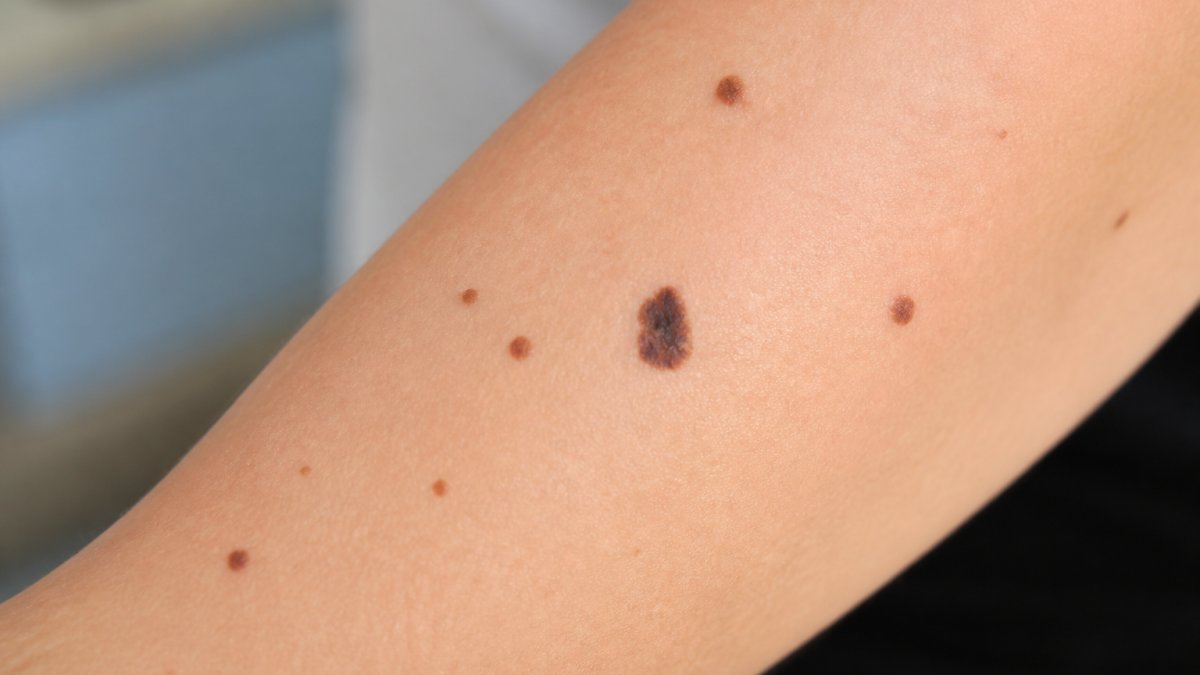
Each letter represents a warning sign:
- A = Asymmetry: One half of the mole doesn't match the other half
- B = Border: The edges are ragged, notched, or poorly defined
- C = Color: Multiple colors appear within one mole (brown, black, tan, red)
If your new mole shows any of these signs, see a dermatologist. You don't need all five, even one warrants professional evaluation.
Asymmetry and Irregular Shape
Asymmetry is one of the most telling red flags. Draw an imaginary line through the center of your mole. If both sides look identical, that's reassuring. If one side differs noticeably, discuss it with a doctor. Most benign moles are round or oval and symmetrical; irregular, lobed, or scalloped shapes deserve closer attention.
Irregular or Poorly Defined Borders
Healthy moles have clean, well-defined edges. Concerning borders look fuzzy, blurry, or fade into surrounding skin, and some appear notched or jagged. This loss of definition can signal abnormal cell growth.
Uneven or Changing Color
A single mole should be one consistent color. Variations mixing brown, black, tan, or reddish areas raise concern. A mole that was solid brown for years, then develops black speckles or a red tint, needs professional assessment.
Diameter and Changes in Size
The pencil eraser rule is simple: a new mole larger than a pencil eraser (roughly 6mm) warrants evaluation. But size matters less than change, a mole stable at 5mm for years is usually fine, while one that grows noticeably over weeks or months is not.
Evolving: Changes Over Time
This is the most important warning sign. Any mole that changes in size, shape, color, or texture deserves professional attention. Benign moles stay relatively stable, they might darken slightly with sun exposure or fade over years, but dramatic shifts signal something different. If your new mole looks different than it did a month ago, don't wait.
How to Check Moles for Skin Cancer: A Practical Self-Check
A monthly self-check takes about ten minutes once you know the routine. The goal isn't to diagnose yourself, it's to establish a baseline so you can recognize when something changes.
Set Up Before You Start
You need bright light, a full-length mirror, and a hand mirror. Natural daylight works well; if you use a lamp, position it so it doesn't cast shadows. A blow dryer on cool can help you part your hair to check your scalp.
The Head-to-Toe Routine
Work in the same order every time so you do not skip areas. A common pattern is:
- Scalp and hairline. Use a comb or blow dryer to move hair aside. Check the part lines and behind your ears.
- Face, neck, and ears. Include your lips, nose, and the rims of your ears.
- Hands and nails. Look at your palms, between your fingers, and under your fingernails. Melanoma can appear in nail beds as a dark streak.
- Arms and underarms. Check front, back, and both sides.
- Torso. Women should check under the breasts. Men should check the chest and back.
- Back and buttocks. Use the hand mirror and a second mirror, or ask a partner to help. This is the most commonly missed area.
- Legs and feet. Do not skip the soles, between the toes, and under the toenails.
How to Document What You See
A mental note fades; a photo doesn't. For any mole that concerns you, take a close-up photo in good lighting, place a ruler or coin beside it for scale, and note the date. If you have many moles, take full-body photos once or twice a year as a reference, or draw a simple body map marking each mole's location.
What to Look For During the Check
You're not memorizing every mole, you're looking for anything that stands out as different from your others, the "ugly duckling" sign. A mole that looks unlike the rest deserves a closer look even if it doesn't meet the ABCDE criteria. Also note any mole that itches, bleeds, crusts, or doesn't heal; these aren't part of ABCDE but are reasons to call a clinician.
When to Move From Checking to Calling
If you find a mole that is new, changing, or different from your others, book an appointment rather than waiting for your next monthly check.
At Skin Solutions by 2 Divas in Sebring, FL, we encourage clients to pair self-checks with professional skin assessments. While we do not diagnose or treat skin cancer, our team can help you understand your skin's condition and support your overall skin health between medical visits.
When to See a Dermatologist for a Mole
Not every new mole requires professional evaluation. But certain situations demand it.
See a dermatologist if:
- Your new mole shows any ABCDE warning signs
- An existing mole has changed in size, shape, or color
- A mole itches, bleeds, or becomes painful
Don't wait for multiple concerns to stack up, one warning sign is enough. Dermatologists can examine moles with tools beyond the naked eye and perform a biopsy if needed, removing a tiny tissue sample for lab analysis.
Abnormal Mole Diagnosis: What to Expect During Clinical Assessment
If you've never had a concerning mole checked, the unknown is often the hardest part. Knowing what happens step by step makes the visit more predictable and helps you ask better questions.
Book your appointment today! →
Before the Exam
When you book, tell the scheduler you're calling about a new or changing mole, that often moves you into a different scheduling category than a routine cosmetic visit. Ask whether to bring photos or a list of concerns, and whether a skin history form is needed beforehand.
The Visual Examination
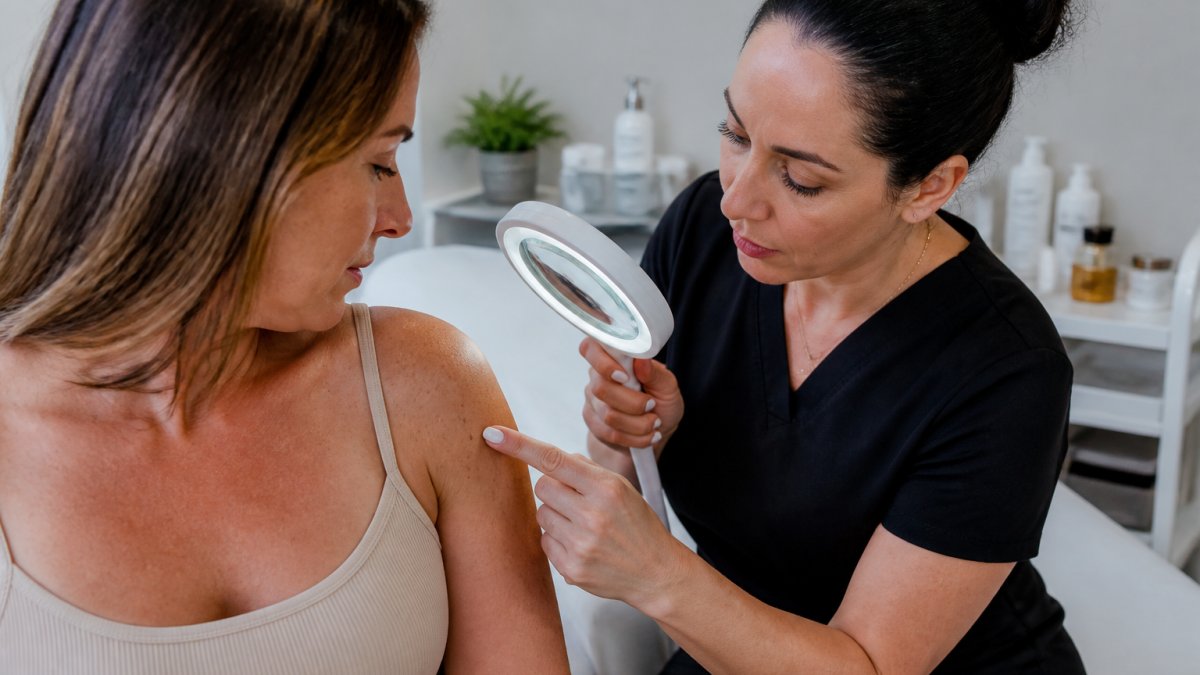
Your clinician will look at the mole with the naked eye, then with a dermatoscope, a handheld magnifier with a light source that reveals structures below the skin surface. It isn't painful and usually takes a minute or two per mole. They'll also examine surrounding skin and compare the mole to your others; one that looks different from your personal pattern (the "ugly duckling" sign) is often more concerning than one that simply meets a size threshold.
Photography and Monitoring
Some practices use total body or close-up dermoscopic photography to track moles over time. If your clinician suggests monitoring rather than immediate biopsy, ask how often to return and what changes would prompt a biopsy, a common interval is three to six months.
Biopsy: What It Is and What It Is Not
If the mole needs a definitive answer, the clinician will recommend a biopsy, removing a tissue sample for lab analysis. There are several types:
- Shave biopsy. A thin layer of the mole is shaved off with a blade. This is common for raised moles.
- Punch biopsy. A small circular tool removes a deeper sample. This is often used for flat moles or when depth matters.
- Excisional biopsy. The entire mole and a small margin of normal skin are removed. This is often used when melanoma is suspected.
Most biopsies are done in the office with a local anesthetic while you're awake, usually in under 15 minutes. You'll get a bandage and instructions for keeping the area clean.
Waiting for Results
Lab results typically take one to two weeks, and most biopsies come back benign. If not, your clinician will discuss next steps, which may include a wider excision or referral to a specialist. Early detection is why these steps exist, a biopsy is not something to fear.
Questions Worth Asking
- What did you see that concerned you?
- Do you recommend monitoring or biopsy?
- If monitoring, how often should I return?
At Skin Solutions by 2 Divas in Sebring, FL, we support clients before and after medical skin evaluations. If you are looking for help with sun damage, aging skin, or a personalized skin care routine that complements your dermatology care, our team is here to help you keep your skin healthy.
New Moles in Adulthood: Why They Matter and When They're Harmless
Most people stop developing new moles after their 30s, so a new mole in your 40s, 50s, or beyond is worth attention. New moles in adulthood aren't automatically dangerous, but they deserve scrutiny because childhood and adolescent moles are usually benign, adult-onset moles are statistically more likely to be concerning, and your skin's growth patterns change with age.
Risk Factors That Increase Your Concern Level
Some people have higher skin cancer risk. If any of these apply, be more vigilant about new moles.
High-risk factors include:
- Fair skin, light eyes, or red/blonde hair. Lighter skin has less protective melanin.
- Family history of melanoma. Genetics play a real role.
- Personal history of skin cancer. Once you've had it, risk increases.
If you fall into multiple risk categories, discuss a regular screening schedule with your dermatologist. Some people benefit from annual full-body exams.
Your Next Steps: Taking Action on a Concerning Mole
Spotting a concerning mole is just the beginning. Here's what to do next.
Immediately:
- Take a clear photo of the mole with good lighting
- Note the date and any changes you've observed
- Write down which ABCDE signs concern you
Within one week:
- Call a dermatologist to schedule an appointment
- Mention your specific concerns (new mole, changing mole, itching, bleeding)
- Ask if they can see you quickly or if it can wait
At your appointment:
- Bring any photos you've taken
- Mention your risk factors
- Ask about follow-up monitoring if a biopsy isn't needed
Going forward:
- Check yourself monthly using the self-check method described above
- Protect your skin from UV damage with sunscreen and protective clothing
- Consider annual dermatology visits if you have multiple risk factors
At Skin Solutions by 2 Divas in Sebring, FL, we understand that skin health goes beyond treating active concerns, it includes prevention and early detection. While dermatologists handle mole evaluation and biopsy, our team helps you maintain healthy skin through personalized care that addresses sun damage, aging, and other concerns that complement your medical skin care.
Frequently Asked Questions
What are the warning signs I should look for in a new mole?
Use the ABCDE rule: Asymmetry (one half doesn't match the other), irregular Borders, uneven Color variation, Diameter larger than a pencil eraser, and Evolving (changing over time). Additionally, watch for itching, bleeding, or rapid growth. Any of these warrant a professional evaluation by a dermatologist.
When should I have a new mole checked by a dermatologist?
Schedule an appointment if your new mole shows any ABCDE warning signs, appears suddenly in adulthood, bleeds or itches, grows quickly, or causes you concern. If you have a personal or family history of skin cancer, have fair skin, or have had significant sun exposure, get any new mole evaluated promptly. Early detection makes a significant difference.
Can a new mole be harmless?
Yes, many new moles are benign, especially if they appear as flat, symmetrical spots with uniform color and stable size. However, new moles appearing in adulthood warrant more caution than those from childhood or adolescence. When in doubt, have a dermatologist assess it rather than waiting to see if it changes.
How is an abnormal mole diagnosis confirmed?
A dermatologist performs a visual examination and may use dermoscopy (a magnified viewing tool) to inspect the mole closely. If abnormalities are suspected, a biopsy may be recommended, where a small sample is removed and examined under a microscope. This definitive test determines whether the mole is benign or requires further treatment.
Skin changes deserve attention, but most new moles turn out fine. The key is knowing what warrants professional evaluation and acting quickly when something looks off. A brief dermatology visit can give you peace of mind or catch something early when treatment is most effective. Don't let uncertainty keep you from getting answers, when to worry about a new mole is ultimately a question your dermatologist can answer with certainty.