 how-to
Treating Sun Damage: A Step-by-Step Guide
Table of Contents
- Understanding Sun Damage and UV Exposure
- How to Repair Sun-Damaged Skin
- Sun Damage Treatment Options: What Actually Works
- Vitamin C for Sun Damage: Why It Matters
- Daily Sunscreen for Sun-Damaged Skin: Prevention and Maintenance
- When to See a Specialist and What to Expect
- Your Personalized Treatment Plan
- Frequently Asked Questions
Last Updated: October 19, 2026
Understanding Sun Damage and UV Exposure
Sun damage happens when UV rays penetrate skin and break down collagen and elastin fibers, accumulating over years of exposure.
Sun-damaged skin shows rough texture, dark spots, fine lines, uneven tone, and sometimes a leathery appearance, ranging from mild discoloration to severe wrinkles and precancerous lesions.
At Skin Solutions by 2 Divas in Sebring, we help residents understand that treating sun damage starts with recognizing what type of damage you have.
How to Repair Sun-Damaged Skin
Repairing sun-damaged skin requires a two-part approach: stopping further damage through prevention and actively treating existing damage.
Repairing damaged skin takes time and cellular-level support to rebuild collagen and restore barrier function, so consistency matters more than occasional intensive treatments.
The repair process involves:
- Protecting skin from additional UV damage
- Hydrating deeply to restore the skin barrier
- Using ingredients that stimulate collagen production
- Exfoliating damaged outer layers gently
- Addressing pigmentation and texture issues
Most visible improvements appear after 4-8 weeks of consistent care; deeper changes take 3-6 months.
Sun Damage Treatment Options: What Actually Works
Different damage levels require different approaches: mild discoloration may respond to over-the-counter products, while severe texture or deep pigmentation usually needs professional treatment. Match the option to your concern, skin tone, recovery tolerance, and time commitment.
At-Home Care and Over-the-Counter Solutions
At-home care forms your foundation. These products work best for early-stage damage or maintenance after professional treatments.
Hydrating moisturizers with hyaluronic acid or ceramides restore the skin barrier and reduce irritation; apply to damp skin to lock in hydration.
Antioxidants protect remaining healthy skin: vitamin C serums neutralize free radicals from sun exposure, and green tea extract and niacinamide also help.
Retinol stimulates collagen; start at 0.25-0.5% two to three times weekly, and since it increases sun sensitivity, daytime sunscreen becomes non-negotiable.
Professional Treatments for Significant Damage
Professional treatments penetrate deeper and work faster than at-home products. They're worth considering if at-home care hasn't delivered results after 8-12 weeks.
| Treatment | Best for | Typical recovery | Main risks | Realistic timeline |
|---|---|---|---|---|
| Topical routine (retinoid, vitamin C, exfoliant, sunscreen) | Early spots, mild texture, maintenance | None to mild flaking | Irritation, purging, sun sensitivity | 8-12 weeks for early changes; 3-6 months for deeper tone and texture |
| Dermaplaning | Dull surface, peach fuzz, product penetration | None; mild redness for a few hours | Nicks, irritation, temporary sensitivity | Immediate glow; repeat every 3-4 weeks for maintenance |
| Light chemical peel | Mild discoloration, dullness, early texture | 1-3 days of light flaking | Redness, dryness, post-inflammatory pigmentation in darker skin tones | Series of 3-6 peels spaced 3-4 weeks apart |
| Medium chemical peel | Moderate pigmentation, texture, fine lines | 3-7 days of visible peeling | Blistering, infection, scarring, pigment changes | 1-3 peels spaced 4-6 weeks apart; results build over months |
| Microneedling | Texture, fine lines, acne scars, mild pigmentation | 1-3 days of redness and mild swelling | Irritation, infection, post-inflammatory pigmentation | 3-6 sessions spaced 4-6 weeks apart; collagen remodeling continues for months |
| Fractional laser | Stubborn pigmentation, deeper texture, wrinkles | 3-7 days of redness and flaking, depending on intensity | Burns, scarring, infection, prolonged redness, pigment changes | 1-3 sessions spaced 4-8 weeks apart; final results often at 3-6 months |
Microneedling creates controlled micro-injuries that trigger collagen production; 3-6 sessions spaced 4-6 weeks apart produce the best results, especially for texture and fine lines.
Dermaplaning removes the top layer of dead skin and fine facial hair, revealing fresher skin and improving product penetration; results appear immediately but fade as new skin cells surface.
Laser treatments target specific damage. Some lasers focus on pigmentation. Others stimulate collagen. Fractional lasers treat part of the skin at a time, reducing downtime.
Matching the Option to Your Skin Tone, Age, and Medications
Treatment suitability is not one-size-fits-all. People with deeper skin tones face a higher risk of post-inflammatory hyperpigmentation from peels, lasers, and even microneedling, so gentler settings and careful priming with a retinoid or pigment inhibitor may be recommended.
At Skin Solutions by 2 Divas in Sebring, FL, our custom corrective facials combine professional-grade ingredients with targeted techniques. We analyze your specific damage and create a treatment plan matching your skin's needs. This personalized approach delivers better results than generic treatments.
Vitamin C for Sun Damage: Why It Matters
Vitamin C is one of the most researched ingredients for sun-damaged skin. It does three important things: protects against further damage, brightens discoloration, and stimulates collagen.
Collagen production increases with vitamin C. Your skin becomes firmer and fine lines soften. This effect takes weeks to become visible.
Vitamin C serums work best applied to clean, dry skin before moisturizer.
Combining vitamin C with sunscreen amplifies protection. The vitamin C protects against free radical damage while sunscreen blocks UV rays. This combination is your strongest defense against additional sun damage.
Daily Sunscreen for Sun-Damaged Skin: Prevention and Maintenance
Once you've invested in repairing sun damage, protecting your skin becomes essential. Daily sunscreen prevents new damage and protects your investment in treatments.
Book your appointment today! →
SPF 30 blocks 97% of UVB rays and SPF 50 blocks 98%, but reapplication matters more than SPF number, most people don't apply enough initially and never reapply.
Proper application requires:
- Apply to all exposed skin (ears, neck, hands often get missed)
- Use enough product (about 1/4 teaspoon for face)
- Apply 15 minutes before going outside
- Reapply every 2 hours
- Reapply after swimming or sweating
Water-resistant sunscreen lasts longer during swimming or exercise. It still requires reapplication after 80 minutes in water.
Daily sunscreen prevents new damage from accumulating, especially important in Sebring, where year-round sun means new damage forms faster than treatments can repair it.
When to See a Specialist and What to Expect
Some sun damage requires professional evaluation, since cosmetic damage and potentially cancerous lesions can look similar at first glance. A clear framework helps you decide when to book an evaluation.
Cosmetic Damage vs. Potentially Cancerous Lesions
Cosmetic sun damage, freckles, sun spots, uneven tone, fine lines, and rough texture, tends to be stable or slow-changing and usually responds to the treatments described above. The ABCDE rule is a widely used memory aid for the warning signs of melanoma: (Melanoma Treatment)
- A, Asymmetry: one half of the spot does not match the other.
- B, Border: edges are irregular, ragged, notched, or blurred.
- C, Color: the spot contains multiple shades of brown, black, or patches of red, white, or blue.
- D, Diameter: the spot is larger than a pencil eraser (about 6 mm), though melanomas can be smaller.
- E, Evolving: the spot changes in size, shape, color, or symptoms such as itching or bleeding.
Other warning signs include a sore that does not heal within a few weeks, a rough or scaly patch that persists despite moisturizing, a new growth, or any spot that looks different from the others on your body, the so-called ugly duckling sign.
A Step-by-Step Pathway by Severity
Use this pathway to decide what to do next. It moves from immediate first aid to clinician-directed care.
- Immediate sunburn (red, warm, painful skin within hours of exposure): Cool the skin with cool compresses, take a cool shower, apply a fragrance-free moisturizer or aloe vera gel, drink extra water, and avoid further sun exposure until the skin heals. Do not pop blisters. Seek medical care if you have widespread blistering, fever, chills, or signs of infection.
- Persistent discoloration or texture changes (spots, roughness, fine lines that have been present for months): Start a daily sunscreen and a gentle at-home routine with a retinoid, vitamin C, and a chemical exfoliant as tolerated. If there is no meaningful improvement after 8-12 weeks, consider professional treatments such as dermaplaning, chemical peels, or microneedling.
- Stubborn pigmentation or deeper texture (moderate to severe damage): A series of professional treatments is usually needed. A consultation at Skin Solutions by 2 Divas in Sebring, FL can help you choose between peels, microneedling, and laser options based on your skin tone, recovery time, and goals.
- Any suspicious lesion (changing spot, non-healing sore, bleeding, or ABCDE warning signs): See a dermatologist or qualified clinician for a skin exam. Do not treat a suspicious lesion with cosmetic products first, because that can delay diagnosis.
What to Expect at a Specialist Visit
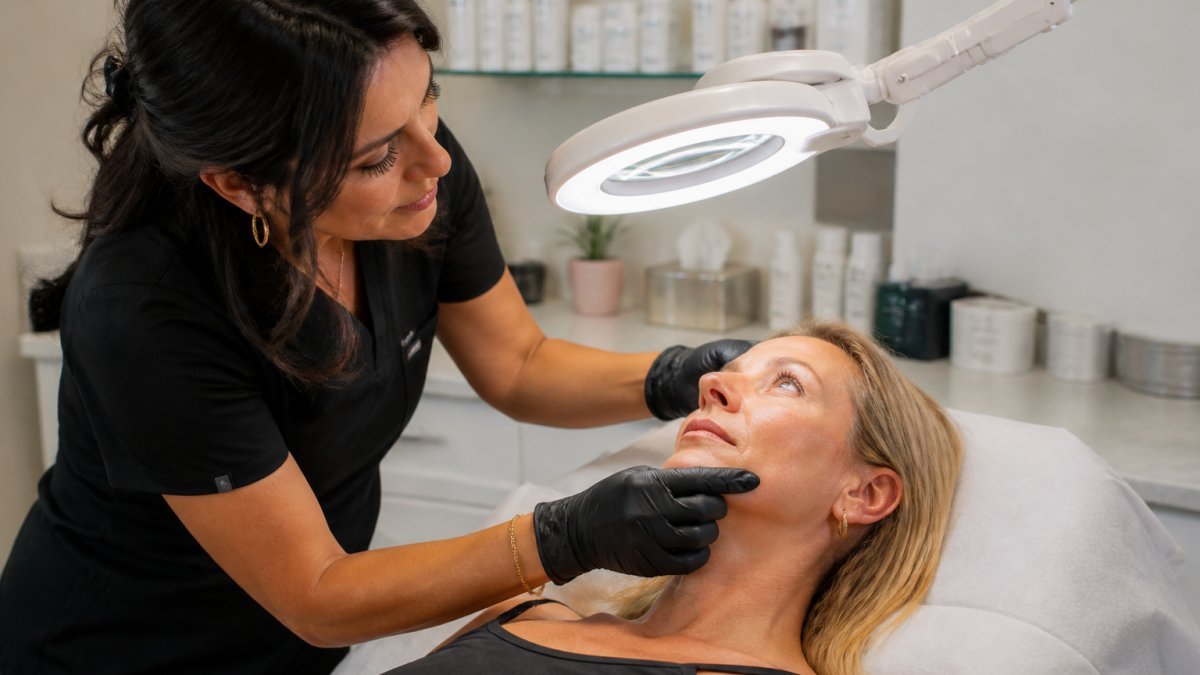
A specialist conducts a thorough skin analysis, examining your skin under magnification, asking about sun exposure history, and possibly taking photos for comparison over time to track changes.
If any lesions look concerning, the specialist may recommend a biopsy, a small sample analyzed in a lab to determine whether cells are normal, precancerous, or cancerous. Early detection is crucial.
Treatment recommendations depend on findings. Cosmetic damage might be addressed with professional treatments. Precancerous lesions might need removal or monitoring. Cancerous lesions require immediate treatment.
Your Personalized Treatment Plan
Creating a treatment plan requires understanding your specific situation. Generic advice doesn't work because every person's damage is different.
Start by assessing damage severity.
Consider your skin type and sensitivities. Sensitive skin needs gentler approaches. Reactive skin might skip certain ingredients.
Your lifestyle affects treatment choices. If you work outdoors, sunscreen reapplication becomes critical.
Budget influences decisions: professional treatments work faster while at-home care requires patience, and many people combine both approaches.
At Skin Solutions by 2 Divas, we create personalized plans after analyzing your skin.
Your plan might include:
- Professional corrective facials on a schedule
- Specific at-home products for daily use
- Dietary or lifestyle changes supporting skin health
- Follow-up appointments to track progress
- Adjustments based on how your skin responds
Frequently Asked Questions
How long does it take to see results from treating sun damage?
Results depend on the severity of damage and the treatment method. At-home care with sunscreen and hydration may show improvement in 4-8 weeks. Professional treatments like chemical peels or microneedling often show visible results within 2-4 weeks, though full benefits appear over 8-12 weeks as skin continues to regenerate. Multiple sessions are often needed for significant sun damage, with spacing between treatments to allow proper healing.
Does vitamin C reverse sun damage?
Vitamin C cannot fully reverse sun damage, but it is highly effective at improving the appearance of sun-damaged skin. It boosts collagen production, reduces redness and irritation, and helps fade discoloration caused by UV exposure. For best results, use vitamin C serum daily as part of your morning routine, combined with broad-spectrum sunscreen and professional treatments for deeper damage.
Can I treat sun damage at home, or do I need professional help?
Mild sun damage responds well to consistent home care: daily broad-spectrum sunscreen (SPF 30+), hydrating moisturizers, vitamin C serums, and gentle exfoliation. Moderate to severe damage, deep wrinkles, significant pigmentation, or textured patches, requires professional treatments like chemical peels, microneedling, or dermaplaning. A skin specialist can assess your specific damage and recommend the right combination of at-home and professional care.
When should I see a dermatologist about sun damage?
See a dermatologist if you have new or changing spots, lesions that itch or bleed, irregular pigmentation, or sun damage that does not improve with home care after 8-12 weeks. Any lesion that looks asymmetrical, has irregular borders, or varies in color should be evaluated professionally to rule out skin cancer. Professional assessment ensures you receive the right treatment and early detection of any concerning changes.
Treating sun damage requires both professional guidance and consistent personal care. The damage accumulated over years won't disappear overnight, but visible improvements appear when you commit to a plan. Book your appointment at Skin Solutions by 2 Divas in Sebring today to get a personalized assessment and discover which treatments will work best for your skin's unique needs.