 how-to
Skincare Routine for Melasma Management: A Step-by-Step Guide
Table of Contents
- Understanding Melasma and Why Skincare Routine Matters
- What You'll Need: Essential Products and Tools
- Morning Skincare Routine for Melasma
- Sunscreen for Melasma: Your Most Critical Step
- Night Skincare Routine for Melasma
- How Long Does Melasma Take to Fade with a Skincare Routine
- Common Mistakes to Avoid
- When to Seek Professional Help
- Frequently Asked Questions
Last Updated: October 17, 2026
Understanding Melasma and Why Skincare Routine Matters
Melasma is a common skin condition that causes patches of hyperpigmentation, typically on the face, when skin produces too much melanin in response to sun exposure, hormonal changes, or genetic factors.
Melasma doesn't respond to quick fixes. You need a structured approach that addresses root causes while protecting your skin from further damage.
A proper skincare routine for melasma management does three essential things:
- Prevents new pigmentation from developing through consistent sun protection
- Gradually fades existing dark spots using targeted brightening ingredients
- Maintains your skin barrier so treatments don't cause irritation
- Keeps your skin hydrated and healthy throughout the process
The difference between a routine that works and one that doesn't comes down to consistency and product selection: gentle cleansing, strategic brightening ingredients, and rigorous sun defense.
What You'll Need: Essential Products and Tools
An effective skincare routine for melasma management needs the right products working together, not dozens of items.
Core products for your routine:
- Gentle cleanser (non-foaming, pH-balanced)
- Hydrating toner or essence
- Vitamin C serum or brightening treatment
- Lightweight moisturizer
- Broad-spectrum sunscreen (SPF 30+)
- Nourishing night moisturizer or treatment serum
Optional but beneficial additions:
- Azelaic acid treatment for stubborn pigmentation
- Retinol or retinoid for evening use (if tolerated)
- Hydrating sheet masks for extra moisture
- Gentle exfoliant (chemical, not physical)
Choose products formulated for sensitive or reactive skin. Melasma-prone skin irritates easily, so avoid harsh actives and focus on gentle, effective ingredients that each serve a specific purpose.
Morning Skincare Routine for Melasma
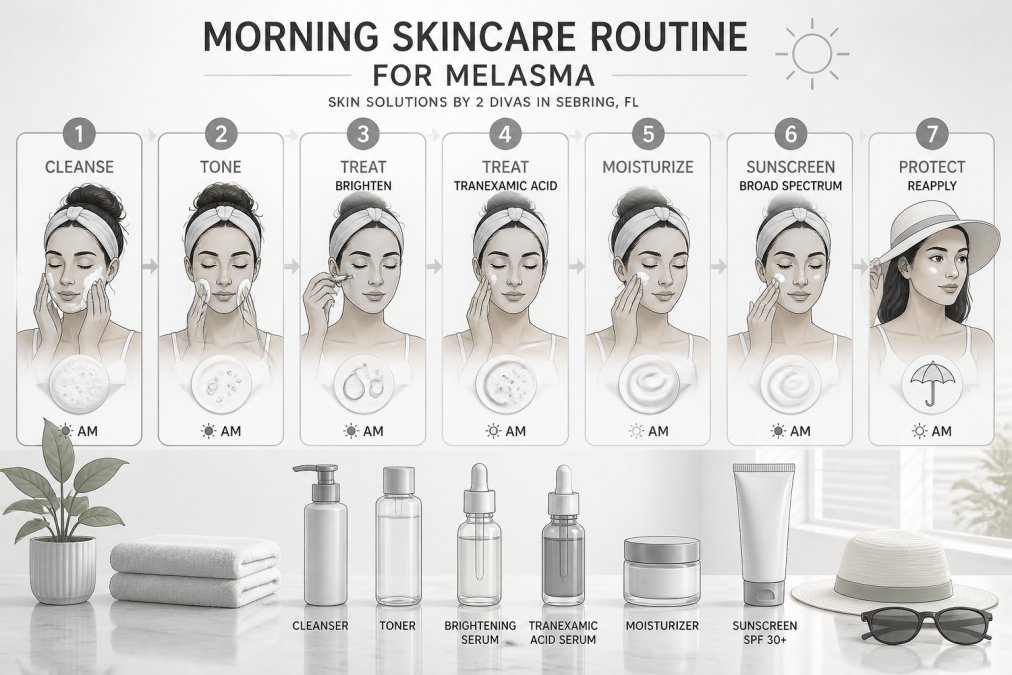
Your morning routine sets the tone for the day: cleanse, hydrate, brighten, and protect without overwhelming your skin. A practical AM sequence helps you layer products so each step absorbs and none cancels another out.
Step 1: Gentle Cleansing
Start with lukewarm water and a gentle, non-foaming cleanser, massaging it across your face for about 30 seconds. Avoid hot water, which can irritate melasma-prone skin and trigger inflammation. Pat dry with a soft towel rather than rubbing.
If your skin feels tight after cleansing, your cleanser is too harsh. A pH-balanced, sulfate-free formula preserves the skin barrier, and a compromised barrier makes pigmentation harder to treat.
Step 2: Apply Hydrating Toner or Essence
A hydrating toner preps skin to absorb the serums that follow. Press a few drops into your face and neck, then wait about 30 seconds before the next product.
Step 3: Vitamin C Serum for Brightening
Vitamin C is one of the most studied ingredients for fading hyperpigmentation and defending against new dark spots (pubmed.ncbi.nlm.nih.gov). Apply a pea-sized amount to clean, damp skin and pat it in rather than rubbing.
If your skin is sensitive, start with a lower-concentration vitamin C (around 10%) or a derivative like sodium ascorbyl phosphate, applied every other morning until your skin adapts. Introduce one new active at a time and wait 2-3 weeks before adding another.
Step 4: Lightweight Moisturizer
Apply a lightweight, hydrating moisturizer while skin is still slightly damp to lock in hydration from your toner and serum. Use upward strokes, avoiding tugging on delicate skin. If it leaves a heavy residue, switch to a lighter formula.
Step 5: Sunscreen as the Final Step
Apply sunscreen as your final morning step, after all serums and moisturizers have absorbed. Use at least one-quarter teaspoon for face and neck, reapplying every two hours outdoors or after swimming or sweating. For melasma, a tinted sunscreen with iron oxides adds visible-light protection untinted formulas may not provide.
Layering Order at a Glance
| Order | Product | Wait Time Before Next Step |
|---|---|---|
| 1 | Gentle cleanser | Pat dry |
| 2 | Hydrating toner or essence | ~30 seconds |
| 3 | Vitamin C serum | ~1 minute |
| 4 | Lightweight moisturizer | Until absorbed |
| 5 | Broad-spectrum tinted sunscreen (SPF 30+) | , |
Adapting the Morning Routine to Your Skin
Melasma and irritation risks vary across skin types. Sensitive skin may skip the toner and apply vitamin C every other day. Darker skin tones should choose tinted mineral sunscreens labeled "sheer" or "universal tint" to avoid a white cast.
At Skin Solutions by 2 Divas in Sebring, FL, we help clients adjust this AM sequence to their skin type and tolerance so the routine stays consistent without triggering irritation.
Sunscreen for Melasma: Your Most Critical Step
Sunscreen is not optional in a skincare routine for melasma management. It's the single most important product you'll use. UV exposure triggers melanin production, which deepens existing melasma and creates new dark spots.
Broad-Spectrum Protection and UVA/UVB Defense
Broad-spectrum sunscreen protects against both UVA and UVB radiation. UVB rays cause sunburn and skin cancer, while UVA rays penetrate deeper and accelerate aging and pigmentation (the EPA). You need protection from both.
Mineral Sunscreen and Physical Blockers
Mineral sunscreen uses zinc oxide or titanium dioxide to block UV rays, sitting on top of skin and reflecting sunlight away. These are often gentler for sensitive, melasma-prone skin than chemical sunscreens, though they can leave a white cast on darker tones, look for "universal tint" or "sheer" formulas to minimize this.
Tinted Sunscreen and Visible-Light Protection
Visible light, especially blue light, can also trigger melasma in susceptible individuals. Tinted sunscreens often contain iron oxides, which protect against visible light while temporarily evening out skin tone, double duty that makes hyperpigmentation less noticeable throughout the day.
Night Skincare Routine for Melasma
Your evening routine focuses on repair and deeper treatment, when you can use stronger actives that might be too irritating for daytime. It also lets you troubleshoot irritation before it worsens pigmentation.
Book your appointment today! →
Step 1: Cleanse Thoroughly
Remove all sunscreen, makeup, and environmental debris with the same gentle cleanser from your morning routine. Incomplete cleansing leaves residue that can clog pores and trap bacteria. If you wear heavy makeup, double cleanse: the first pass removes makeup and sunscreen, the second removes remaining impurities.
Step 2: Apply Treatment Serums
Apply stronger actives, azelaic acid, retinol, or prescription treatments like hydroquinone, after cleansing and before moisturizer. Wait 15-20 minutes between actives if using multiple treatments to prevent over-irritation. Start with one active and add others gradually as your skin builds tolerance.
Safety notes for prescription and clinician-directed actives:
- Hydroquinone is a prescription-strength treatment in many cases and requires clinician supervision, including periodic breaks. Do not use it without guidance.
- Retinoids can cause dryness and flaking at first. Start with a low concentration two nights per week and increase slowly.
- If you are pregnant, breastfeeding, or taking medication, review every active with your clinician before use. Some ingredients are not recommended during pregnancy, and blanket safety assurances are not appropriate.
Step 3: Nourishing Night Moisturizer
Your night moisturizer can be richer and more occlusive than your morning version. Apply generously to damp skin to lock in hydration overnight while your skin repairs itself. Let it absorb for a few minutes before bed.
Troubleshooting Irritation and Worsening Pigmentation
If your skin stings, burns, or turns red after a night product, stop the active for several days and use only cleanser, moisturizer, and sunscreen. Irritation itself can deepen melasma, so calming the skin is part of treatment. Over-exfoliation, using retinol, an acid, and a brightening serum in the same week without building tolerance, is a common culprit; scale back to one active and reintroduce slowly.
Evening Layering Order at a Glance
| Order | Product | Notes |
|---|---|---|
| 1 | Gentle cleanser | Double cleanse if wearing makeup |
| 2 | Treatment serum (azelaic acid, retinol, or prescription) | Wait 15-20 minutes between actives |
| 3 | Nourishing night moisturizer | Apply to damp skin |
Skin Solutions by 2 Divas in Sebring, FL can help you build a night sequence that matches your tolerance and review whether prescription treatments belong in your plan.
How Long Does Melasma Take to Fade with a Skincare Routine
The timeline for fading melasma depends on pigmentation severity, skin type, and consistency. Most people see noticeable improvement within 8-12 weeks of consistent treatment.
Visible lightening typically appears gradually:
- Weeks 1-4: Your skin feels better hydrated and less irritated. Pigmentation may look slightly less pronounced due to improved skin texture.
- Weeks 5-8: Early lightening becomes visible. Dark spots appear slightly less intense.
- Weeks 9-12: More significant fading. The overall tone of your skin appears more even.
- Months 4-6: Continued gradual improvement. Some spots fade more quickly than others.
Melasma is stubborn. Complete fading can take 6-12 months or longer, especially for deep pigmentation. The key is patience and consistency. Stopping your routine early allows melasma to return quickly.
Common Mistakes to Avoid
These are the patterns we see derail clients' progress.
Skipping or inconsistent sunscreen use is the biggest mistake.
Using too many active ingredients at once overwhelms your skin and causes irritation. Start simple.
Expecting overnight results leads to frustration and abandonment. Melasma fades slowly. Patience is part of the process.
Switching products too frequently prevents your skin from adapting.
Ignoring skin irritation can worsen pigmentation. If your routine causes redness, burning, or excessive dryness, scale back.
Using physical scrubs or harsh exfoliants irritates melasma-prone skin and can trigger deeper pigmentation.
When to Seek Professional Help
Your at-home routine is powerful, but some situations benefit from professional intervention. Skin Solutions by 2 Divas in Sebring, FL offers custom corrective facials designed to address melasma alongside your daily routine.
Consider professional help if:
- Your melasma hasn't improved after 3-4 months of consistent routine
- Your skin becomes irritated by over-the-counter treatments
- You want faster results for a specific event
- You're unsure which products are right for your skin
- You need guidance on combining professional treatments with your home routine
A thorough skin analysis from a specialist helps you understand whether your routine needs adjustment, whether you'd benefit from professional treatments, or whether your melasma requires medical intervention.
Managing melasma requires patience, consistency, and the right products working together. When your routine alone isn't enough, professional guidance from Skin Solutions by 2 Divas in Sebring, FL can accelerate your results with custom corrective facials tailored to your specific skin concerns.
Frequently Asked Questions
How long does melasma take to fade with a consistent skincare routine?
Results vary depending on melasma severity and ingredient potency. Most people notice visible improvement within 8-12 weeks of consistent daily use. However, deep melasma may require 4-6 months or longer. The key is daily application without interruption, especially sun protection. Professional treatments from specialists like those at Skin Solutions by 2 Divas in Sebring, FL can accelerate fading when combined with a solid home routine.
What skincare ingredients work best for melasma management?
Vitamin C serums, azelaic acid, hydroquinone (prescription), retinoids, and alpha hydroxy acids target pigmentation effectively. Vitamin C boosts brightening through antioxidants, while azelaic acid reduces melanin production and inflammation. Retinoids increase cell turnover to reveal clearer skin beneath. Start with gentler options like vitamin C and gradually introduce stronger treatments. Always pair any pigment-targeting ingredient with broad-spectrum sunscreen to prevent worsening.
Can a home skincare routine alone fix melasma, or do I need professional treatment?
A dedicated home routine can fade melasma noticeably, especially mild to moderate cases. However, professional corrective facials accelerate results by delivering concentrated active ingredients and deeper skin analysis. Skin Solutions by 2 Divas in Sebring, FL offers custom corrective facials designed specifically for hyperpigmentation, combining professional-grade treatments with personalized aftercare routines for faster, more dramatic fading.
Will skipping sunscreen make my melasma worse?
Yes. Ultraviolet radiation and visible light trigger melanin production, directly worsening melasma. Even one day without sunscreen can reverse weeks of progress. Use broad-spectrum sunscreen daily, reapply every two hours outdoors, and consider tinted mineral sunscreen with iron oxides for extra visible-light protection. This single step is non-negotiable for melasma management.