 how-to
Is Professional Acne Extraction Safe for Sensitive Skin?
Last Updated: October 25, 2026
Quick Summary
Yes, professional acne extraction is safe for sensitive skin when a trained esthetician assesses your skin first and adjusts the technique. The risk comes from aggressive pressure and poor aftercare, not from extraction itself. We build every acne extraction around a full skin analysis at Skin Solutions by 2 Divas in Sebring, FL.
- Sensitive skin has a thinner barrier, so even mild pressure can trigger redness, stinging, or swelling.
- Most practitioners ask clients to pause retinoids and strong acids for about three to seven days before extraction.
- Wait at least two weeks after a peel or laser before booking an extraction.
- Minor redness typically subsides within 24 to 48 hours after a facial extraction.
- Do not exfoliate or apply retinoids for at least 48 hours after your appointment.
Table of Contents
- Why Sensitive Skin Reacts Differently to Acne Extraction
- A Suitability Checklist for Sensitive Skin
- Inflamed Acne Extraction Risks You Need to Know
- What a Safe Professional Extraction Appointment Looks Like
- Acne Extraction Aftercare for Reactive Skin
- How Long Extractions Take to Heal
- At-Home Acne Extraction Tools: Why They Backfire on Sensitive Skin
- Book a Sensitive-Skin Consultation at Skin Solutions by 2 Divas in Sebring, FL
- Frequently Asked Questions
Why Sensitive Skin Reacts Differently to Acne Extraction
Is professional acne extraction safe for sensitive skin? Yes, when a trained esthetician assesses your skin first and adjusts the technique. The risk comes from aggressive pressure and poor aftercare, not from extraction itself.
Sensitive skin has a thinner barrier. That barrier normally holds moisture in and keeps irritants out. When it is compromised, even mild pressure can trigger redness, stinging, or swelling that lasts longer than it would on resilient skin.
What Makes Sensitive Skin More Vulnerable
Three things separate sensitive skin from tough skin during an extraction:
- A weaker barrier. Less protection means irritants penetrate faster and inflammation builds quicker.
- Faster inflammation response. The skin floods with redness and heat at lower levels of pressure.
- Slower recovery. What clears in a day on normal skin can take two or three on reactive skin.
The Skin Games advises people with sensitive skin to speak up about their concerns before treatment, since they may be more prone to irritation and redness. That single conversation changes how an esthetician works.
A Suitability Checklist for Sensitive Skin
Not every sensitive-skin client should be extracted on the first visit, and a checklist only helps if you understand what each item is protecting against. At Skin Solutions by 2 Divas in Sebring, FL, we run this screen during the consultation, not in the treatment room, because the answer changes the plan.
The four factors that decide suitability
Barrier condition. A healthy barrier holds moisture in and keeps irritants out.
Active inflammation. Redness, warmth, swelling, and tenderness around breakouts signal that the immune response is already running.
Reactivity history. How has your skin responded to facials, waxing, or new products in the past?
Current routine and recent treatments. Prescription retinoids, over-the-counter retinol, alpha- and beta-hydroxy acids, benzoyl peroxide, and recent peels or laser sessions all thin or sensitize the surface.
The pre-booking checklist
- Your skin is not currently sunburned, windburned, or peeling
- You have no active cold sore, open wound, or broken skin in the treatment area
- You are not using prescription retinoids or strong acids in the days right before your appointment
If you check most boxes, you are likely a good candidate for a first, conservative session. If several are unchecked, a consultation-only visit is the smarter move, we can map out a barrier-repair plan and schedule extraction once your skin is ready.
When extraction should be postponed or skipped
Some situations call for waiting rather than adjusting technique:
- Compromised barrier, stinging, tightness, or widespread flaking
- Active infection, pus, spreading redness, or warmth that suggests a bacterial infection needs medical care, not a facial
- Severe cystic or nodular acne, deep lesions are a dermatologist's territory; a referral is the right call
If any of these apply, the answer to "is professional acne extraction safe for sensitive skin" for you, today, is not yet. That is a safety answer, not a rejection, and it is exactly the kind of judgment a trained esthetician should make before touching your skin.
Inflamed Acne Extraction Risks You Need to Know
The biggest risk with inflamed acne extraction is squeezing a lesion that should be left alone. Cystic acne sits deep under the skin.
Curology notes that dermatologist extraction may help treatment-resistant acne but is not suitable in every case, and flags cystic acne as one requiring caution.
Other risks worth naming:
- Pore wall damage from too much pressure, which can enlarge pores over time
- Post-inflammatory hyperpigmentation, especially on darker skin tones
- Prolonged redness that outlasts the normal recovery window
A skilled esthetician knows when to stop. That judgment matters more than the tool being used.
What a Safe Professional Extraction Appointment Looks Like
A safe appointment starts with a conversation, not a tool. Competitors describe the steps; what they rarely cover is what you should expect to feel, what you should be asked, and when a practitioner should stop. That is the part that matters most for sensitive skin.
Before anything touches your skin
Consent and health history. Your esthetician should ask about medications (especially retinoids, isotretinoin, and blood thinners), allergies, pregnancy, recent peels or laser treatments, and how your skin has reacted to facials before.
Skin assessment under good light. This is a visual and tactile pass over the whole face, not just the congested areas.
A patch test when relevant. For reactive skin, a small test of a cleanser, enzyme, or mask on the jawline or behind the ear before full application is a reasonable precaution.
Book your appointment today! →
The treatment sequence
- Double cleanse to remove makeup, sunscreen, and surface oil
- Warm compress or gentle steam for a few minutes to soften congestion, not prolonged heat, which can aggravate reactive skin
- Sanitation of hands, tools, and the treatment area; gloves should be fresh, and extractors should come out of a sealed sterile pouch or an approved disinfectant bath
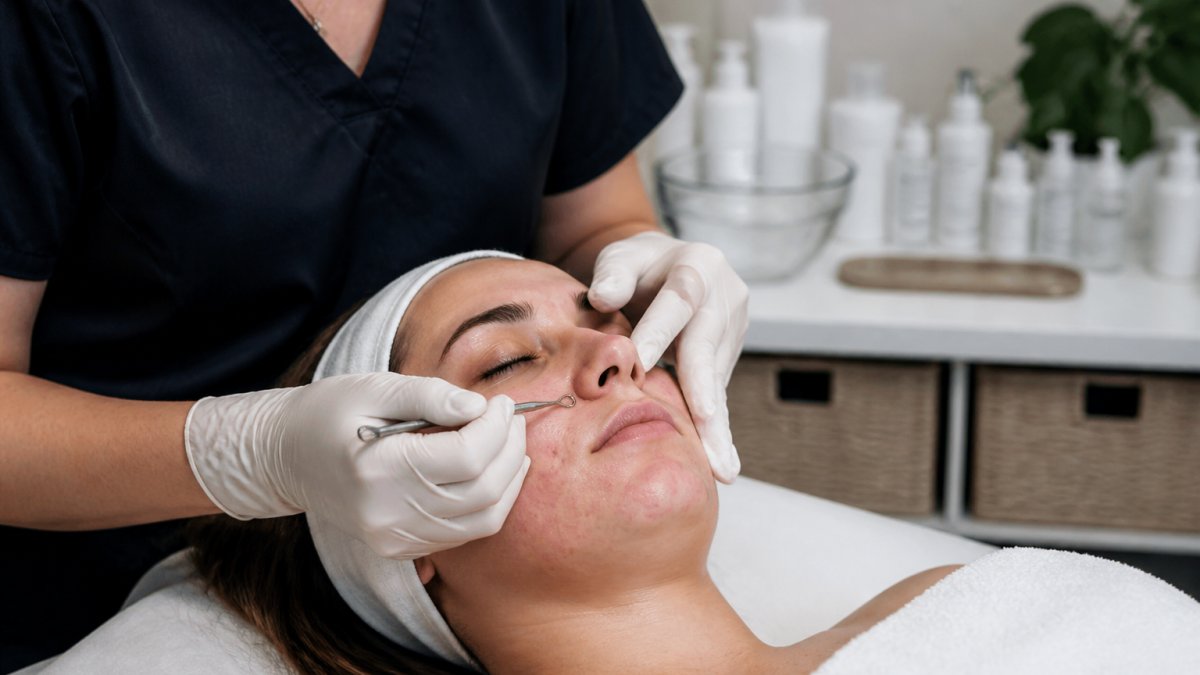
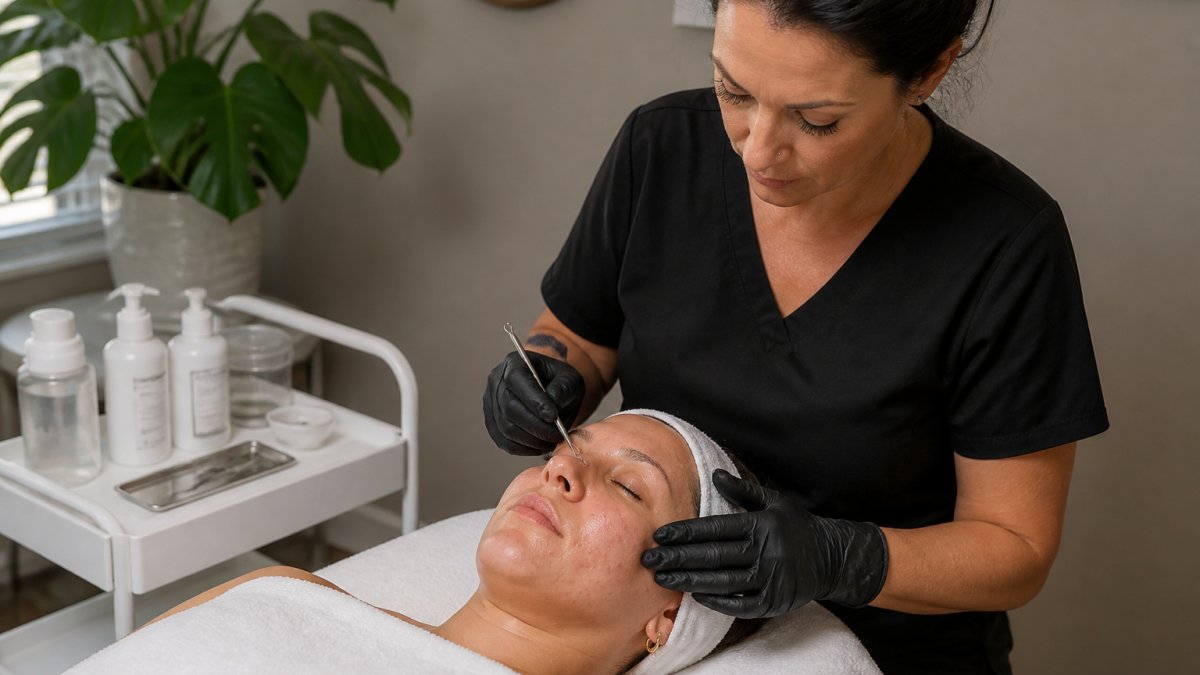
- Manual extraction with light, controlled pressure, working one pore at a time and stopping at the first sign of resistance
- Soothing finish with a calming mask or barrier cream, and no actives layered on top
What it should feel like
Pressure, not pain. Most clients describe a brief pinch or sting at each extraction, followed by relief. If you are gripping the table, tearing up, or feeling sharp pain, that is too much, say so. A skilled esthetician adjusts immediately rather than pushing through.
When a practitioner should stop
This is the judgment that separates safe care from risky care:
- The lesion will not release with gentle pressure, leave it and treat it topically
- The skin is turning red and warm beyond the immediate extraction site
- You are visibly uncomfortable or ask to stop
Red flags in a provider
- Skipping the assessment or health history
- Reusing tools without visible sterilization
- Promising to "get everything out" in one session
- Pressing hard on painful, deep lesions
If you see any of these, pause the appointment. Sensitive skin needs the slower version of this process, and a provider who rushes it is not the right fit.
If you want to understand how manual work compares to ultrasonic options, our guide on manual extraction vs ultrasonic facial breaks down the difference. You can also read how often to schedule extractions for clogged pores to plan your visits around your sensitive-skin routine.
Acne Extraction Aftercare for Reactive Skin
Aftercare decides whether your skin calms down or flares up. The first 24 hours matter most.
Keep it simple:
- Skip makeup for the rest of the day
- Cleanse with a gentle, fragrance-free wash
- Use a soothing moisturizer, not an active serum
- Avoid heat, saunas, and intense exercise for a day
Do not exfoliate or apply retinoids for at least 48 hours. Your barrier is rebuilding, and actives will slow that down.
If redness spreads, stings, or lasts beyond a couple of days, that is worth a call. Our guide on signs your skin is reacting badly to a facial walks through what to watch for.
How Long Extractions Take to Heal
Most people see redness fade within a day or two. Small marks at extraction sites can take three to five days to fully settle, and sensitive skin often sits at the longer end of that range.
Healing time depends on a few factors:
- How much was extracted in one session
- Your skin's baseline reactivity
- How well you followed aftercare
- Whether actives were paused long enough
Plan around it. If you have an event coming up, book at least a week ahead so your skin has time to settle. For sensitive skin, two weeks is safer.
Here is how long each stage of recovery typically takes, and what to plan for.
| Stage | Typical time | Note |
|---|---|---|
| Redness fades | Within a day or two | Minor redness typically subsides within 24 to 48 hours |
| Small marks at extraction sites | Three to five days | Sensitive skin often sits at the longer end |
| Pause exfoliants and retinoids | At least 48 hours | Barrier is rebuilding; actives slow it down |
| Buffer before an event | At least a week | Two weeks is safer for sensitive skin |
At-Home Acne Extraction Tools: Why They Backfire on Sensitive Skin
At-home extraction tools cause more harm than good on reactive skin.
The results are predictable: broken capillaries, scabs, and dark marks that outlast the original blemish. Bacteria on unsterilized tools adds infection risk on top of that.
A gentler path is to focus on keeping pores clear between visits. Our guide on how to exfoliate dry skin without irritation covers methods that support sensitive skin instead of stripping it.
Book a Sensitive-Skin Consultation at Skin Solutions by 2 Divas in Sebring, FL
Reactive skin does not have to mean living with congestion. It means working with someone who reads your skin before touching it.
At Skin Solutions by 2 Divas, every visit starts with a thorough skin analysis. We build custom corrective facials around your concerns, whether that is acne, aging, or hyperpigmentation. Our specialists create personalized treatment plans using high-quality ingredients, and we work by appointment only so each client gets focused, unhurried care.
If you are ready to stop guessing, book a skincare appointment at Skin Solutions by 2 Divas in Sebring, FL. We will assess your skin, explain what is safe to extract, and map out a plan that respects your barrier instead of fighting it.
Frequently Asked Questions
Can extractions make sensitive skin worse?
They can if the technique is too aggressive or the skin is not properly prepped. Sensitive skin has a thinner barrier, so rough pressure or over-extraction can trigger redness, swelling, and irritation. A skilled esthetician performs a skin assessment first, uses gentle manual pressure only on ready comedones, and avoids inflamed lesions. At Skin Solutions by 2 Divas in Sebring, FL, every facial starts with a thorough analysis so the treatment plan matches your skin's tolerance.
How long do face extractions take to heal?
Minor redness and sensitivity usually fade within 24 to 48 hours, according to facial-extraction guidance. Most people can return to normal activities the same day, though makeup and active ingredients should wait at least 24 hours. Sensitive skin may take a little longer to fully calm. If redness, swelling, or irritation persists beyond a few days, contact your provider. Proper acne extraction aftercare, including gentle cleansing and moisturizing, supports faster healing.
Should you extract inflamed acne?
No. Inflamed acne lesions, especially cystic bumps, should not be extracted. Curology notes that dermatologist extraction may help treatment-resistant acne but is not suitable in every case, and cystic acne requires caution. Healthline warns that squeezing some blemishes can cause inflammation or infection. A professional will assess whether a spot is a ready comedone or an inflamed lesion and will leave the latter alone to avoid scarring and post-inflammatory hyperpigmentation.
What should you avoid after a facial extraction?
Skip makeup for at least 24 hours, avoid harsh exfoliants and active ingredients like retinoids for a few days, and stay out of direct sun. Do not pick or touch the treated areas, and avoid heavy sweating or saunas for 24 to 48 hours. Gentle cleansing and a bland moisturizer help the skin barrier recover. Your esthetician at Skin Solutions by 2 Divas can give you a personalized aftercare plan based on your skin's sensitivity.