 how-to
Integrating Professional Facials Into Acne Skincare
Last Updated: October 23, 2026
Quick Summary
Professional facials acne treatment works alongside your daily routine to clear congestion, reduce inflammation, and prevent future breakouts by addressing deep clogged pores and oil production that topical products alone cannot reach. Results compound when facials become part of your ongoing acne management plan, scheduled 4-6 weeks apart.
- A licensed esthetician analyzes your skin type and customizes treatment to target your exact acne concerns.
- Chemical exfoliants like salicylic acid and glycolic acid dissolve dead skin cells and unclog pores more effectively than at-home products.
- Most people see real improvement after 2-3 consecutive facials spaced 4-6 weeks apart for moderate acne.
- Pause retinoids, benzoyl peroxide, and other active ingredients 3-5 days before and after your facial to prevent irritation.
- At Skin Solutions by 2 Divas in Sebring, FL, every client receives a full skin analysis and written treatment plan before their first facial.
Table of Contents
- Why Professional Facials Matter for Acne-Prone Skin
- Understanding Professional Facial with Active Acne
- Acne Skincare Routine Before and After a Facial
- How Often to Get a Facial for Acne
- Acne Facial Aftercare: What You Need to Know
- Choosing a Qualified Esthetician and Setting Realistic Goals
- Frequently Asked Questions
Why Professional Facials Matter for Acne-Prone Skin
Acne is frustrating: you wash your face, use the right products, and still break out. Integrating professional facials acne treatment into your skincare routine changes that.
At Skin Solutions by 2 Divas in Sebring, FL, the right facial works alongside your daily routine to clear congestion, reduce inflammation, and prevent future breakouts. A professional facial isn't a luxury, it's a clinical tool designed to do what at-home care alone cannot.
The research is clear: skin care plays an integral role in acne management, especially when combined with targeted treatments. Professional facials address deep clogged pores, stubborn blackheads, and oil production that topical products struggle to reach.
What makes professional facials different from your bathroom routine:
- A licensed esthetician analyzes your skin type and acne severity
- Customized treatments target your exact concerns
- Professional-grade ingredients penetrate deeper than over-the-counter products
dermatologists emphasize that facials should complement, not replace, an acne-management plan guided by appropriate skincare recommendations. This is the key insight: a facial works best when integrated into a routine, not used alone.
Understanding Professional Facial with Active Acne
What Happens During an Acne Facial
Professional facials acne treatment is a multi-step process designed for breakout-prone skin, with every step targeting acne, inflammation, and congestion:
- Skin analysis, Your esthetician examines your skin type, identifies active breakouts, and assesses sensitivity
- Gentle cleansing, A medical-grade cleanser removes surface oil and debris without stripping your skin
- Exfoliation, Chemical exfoliants like salicylic acid or glycolic acid dissolve dead skin cells and unclog pores
- Extractions, Congestion and blackheads are manually cleared using sterile techniques
- Targeted treatment, Serums and masks with acne-fighting ingredients soothe inflammation and prevent new breakouts
- Hydration and protection, A non-comedogenic moisturizer and SPF seal in results
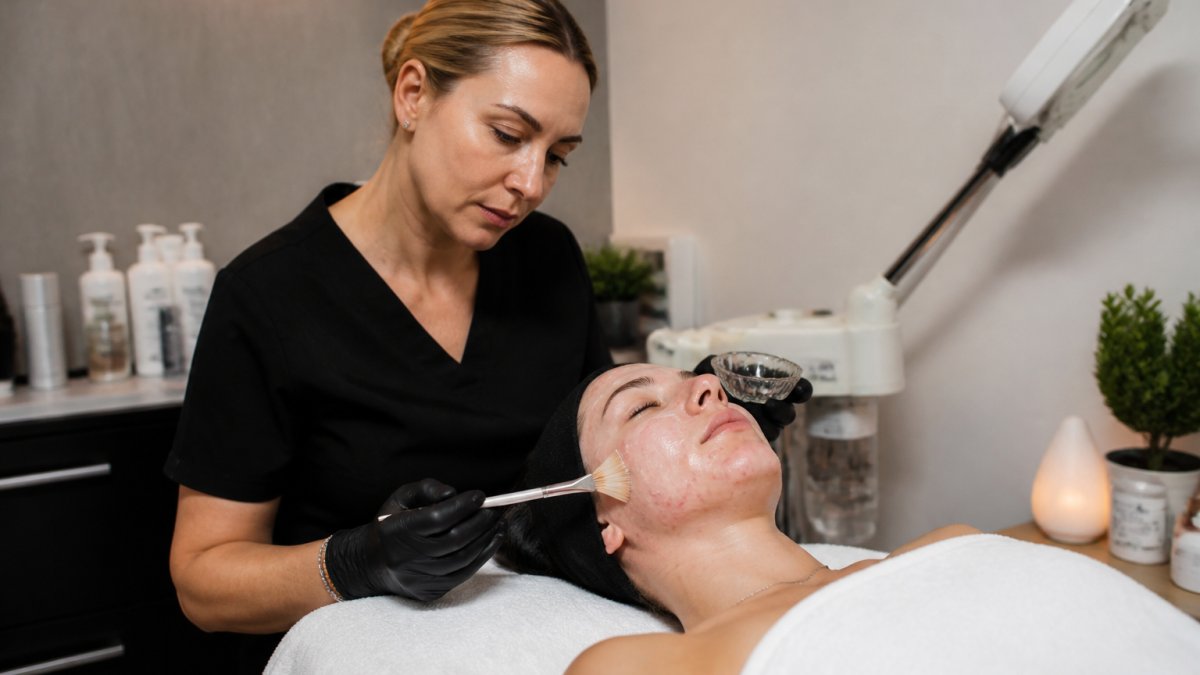
The process takes 45-60 minutes, and you leave with calmer, clearer skin.
Deep Cleansing, Exfoliation, and Extractions
Deep cleansing is the foundation of any acne facial: at-home cleansing removes surface oil, while professional deep cleansing removes oil trapped inside pores.
Chemical exfoliation is the game-changer: salicylic acid dissolves the sebum and dead skin cells that clog pores, and glycolic acid is gentler for sensitive skin.
Extractions are where acne facials truly shine: manual extraction of blackheads and congested pores prevents bacteria buildup, reducing breakouts and scarring.
Acne Skincare Routine Before and After a Facial
Pre-Facial Preparation Steps
What you do before your facial matters. Poor preparation reduces results and can cause irritation.
Three days before your appointment, stop using active ingredients:
- Pause retinoids (vitamin A derivatives)
- Skip benzoyl peroxide treatments
- Avoid additional chemical exfoliants
Active ingredients make skin more sensitive, and combining them with a professional facial causes unnecessary irritation and redness.
Two days before, simplify your routine:
- Use a gentle, non-irritating cleanser
- Apply a lightweight, non-comedogenic moisturizer
- Use SPF 30+ during the day
The night before, hydrate with a hydrating mask or rich moisturizer; well-hydrated skin responds better and heals faster. Arrive with clean skin, skipping makeup, sunscreen, and serums.
Post-Facial Care and Ingredient Timing
After your facial, your skin is more sensitive and more receptive to products. For the first 24 hours:
- Avoid makeup and heavy products
- Skip active ingredients (retinoids, acids, benzoyl peroxide)
- Use only a gentle cleanser and hydrating moisturizer
Slight redness or tightness is normal: redness fades within a few hours to a day, and tightness means your barrier needs hydration.
After 24 hours, ease back in:
- Days 2-3: Introduce one active ingredient at a time (start with your gentlest option)
- Days 4-7: Return to your full routine, but skip the strongest actives
- Day 8+: Full routine is safe
dermatologists have expressed concern about complex skincare routines causing complications and misinformation. This is why timing matters, adding too many products too quickly after a facial overwhelms your skin and causes breakouts instead of preventing them.
Explore best facial treatments for acne-prone skin in 2026 to understand the specific options available for your skin type.
How Often to Get a Facial for Acne
Frequency depends on your acne severity and skin type:
Mild acne (occasional breakouts):
- One facial every 6-8 weeks
- Maintains clear skin without over-treating
Moderate acne (regular breakouts):
- One facial every 4-6 weeks
- Prevents congestion buildup and keeps inflammation down
Severe acne (persistent, widespread breakouts):
- One facial every 3-4 weeks initially
- Taper to every 4-6 weeks as skin clears
Most people see real improvement after 2-3 consecutive facials. Spacing facials too close irritates skin; too far apart lets congestion rebuild. Your licensed esthetician will recommend the right frequency during your consultation.
Facial frequency depends on your acne severity and how your skin responds to treatment.
| Acne Severity | Recommended Frequency | Expected Timeline |
|---|---|---|
| Mild acne | Every 6-8 weeks | Maintains clear skin |
| Moderate acne | Every 4-6 weeks | Prevents congestion buildup |
| Severe acne | Every 3-4 weeks initially | Taper to 4-6 weeks as skin clears |
| All levels | 2-3 consecutive facials | Real improvement becomes visible |
Acne Facial Aftercare: What You Need to Know
Aftercare is where most acne facials succeed or fail: the seven to ten days after treatment determine whether your skin calms or flares. At Skin Solutions by 2 Divas in Sebring, FL, every client receives aftercare guidance because timing active ingredients correctly is important for results.
The First 24 Hours: Barrier Recovery Mode
Your skin barrier has just been exfoliated, extracted, and treated. Treat it like a healing wound, not a canvas for more actives.
- Cleanse with a gentle, fragrance-free, non-foaming cleanser. No scrubs, no cleansing brushes, no hot water.
- Moisturize with a ceramide-rich, non-comedogenic cream two to three times if skin feels tight.
- Protect with broad-spectrum SPF 30+ outside; sun exposure on freshly treated skin worsens post-inflammatory hyperpigmentation, especially in deeper skin tones.
Mild redness and tightness are normal and fade within a few hours to a day. Learn more about skin purging and how facials affect your skin during the healing process.
A Week-by-Week Restart Calendar
Adjust this schedule with your esthetician based on your skin's reactivity and treatment intensity.
Book your appointment today! →
Days 1-2: Gentle cleanser, moisturizer, SPF only. No actives.
Days 3-4: Reintroduce one active at a time, starting with the gentlest (for example, a low-strength salicylic acid toner before a retinoid).
Days 5-7: If skin is calm, return to your normal active frequency.
Day 8+: Full routine is usually safe. If you had extractions, wait a full 7 days before resuming retinoids over those areas.
The restart calendar matters more than the facial itself for people using prescription topicals. Rushing back to a retinoid on day 2 is the most common cause of post-facial irritation we see.
Coordinating With Prescription Acne Treatments
If you use prescription acne medication, your facial timing must account for it.
Topical retinoids (tretinoin, adapalene, tazarotene): Pause 3-5 days before and wait 3-5 days after before resuming. Retinoids thin the stratum corneum and increase sensitivity, raising the risk of chemical burn from exfoliants.
Benzoyl peroxide: Stop 2-3 days before. Resume 24-48 hours after, once redness settles; it can interact unpredictably with professional exfoliating acids.
Topical antibiotics (clindamycin, dapsone): Usually no need to pause, but tell your esthetician. Dapsone can increase sensitivity.
Oral antibiotics (doxycycline, minocycline, sarecycline): Continue as prescribed. Doxycycline increases photosensitivity, so post-facial sun protection is non-negotiable.
Hormonal treatments (spironolactone, oral contraceptives): No pause needed; these do not interact with facial treatments.
Recent procedures: If you have had a chemical peel, microneedling, or laser treatment within the past 2-4 weeks, postpone your facial. Layering professional treatments too closely is a leading cause of barrier damage.
When to Pause Other Treatments Entirely
Some situations call for postponing a facial rather than adjusting around it:
- Active, inflamed cystic acne covering a large area
- Open sores, weeping lesions, or suspected infection
- A sunburn or windburn within the past week
If unsure, call before you book. A reputable provider would rather reschedule than risk your barrier.
Managing Sensitivity and Irritation
If irritation appears after your facial:
- Return to a gentle cleanser and plain ceramide moisturizer
- Skip all actives until redness and tightness resolve
- Apply a cool compress for 10 minutes if skin feels hot
If irritation persists beyond 48-72 hours or worsens, contact your esthetician.
At Skin Solutions by 2 Divas in Sebring, FL, every facial includes aftercare guidance. Explore best facial treatments for acne-prone skin in 2026 to match your aftercare plan to the specific treatment you received.
Choosing a Qualified Esthetician and Setting Realistic Goals
Choosing the right provider is the biggest variable in whether a professional facial helps or hurts acne-prone skin. Two estheticians can perform the same-sounding treatment with very different outcomes depending on training, technique, and medical coordination.
Credentials and Training to Verify
- State licensure. Estheticians must be licensed in every state. Ask for the license number and verify it with your state's cosmetology or barbering board. A license is the floor, not the ceiling.
- Acne-specific continuing education. Look for training in acne treatment, chemical peeling, and professional skincare lines; general licensing covers very little acne-specific coursework.
- Certification in the treatments performed. If chemical peels are on the menu, ask which peel systems the provider is certified in and how many peels they perform weekly.
Questions to Ask Before You Book
Bring this list to your consultation. A confident, qualified provider will answer without hesitation.
- How many acne-focused facials do you perform in a typical week?
- What is your protocol for a client using tretinoin or isotretinoin?
- Do you perform extractions on inflamed lesions, or only on comedones?
- What acids and percentages do you use, and how do you decide?
- What is your sanitation protocol for extraction tools and treatment rooms?
- What does your aftercare plan include, and do you follow up after treatment?
- When would you refer me to a dermatologist instead of treating me yourself?
That last question matters most. A provider who never refers out is a red flag, because some acne requires medical management that facials cannot provide.
Sanitation and Safety Checks
- Extraction tools should be single-use or sterilized between clients (autoclave or hospital-grade disinfectant).
- Estheticians should wear gloves during extractions.
- Treatment beds should have fresh linens per client.
Communicating Your Goals
Be specific: "clearer skin" is not a treatment goal; "fewer closed comedones on my chin" is. Tell your esthetician:
- Your full current routine, including prescription products and supplements
- Your acne history and what has and has not worked
- Any recent procedures (peels, lasers, microneedling) in the past 4 weeks
At Skin Solutions by 2 Divas in Sebring, FL, every new client receives a full skin analysis and a written treatment plan before the first facial, and we coordinate with prescribing dermatologists when clients are on retinoids or isotretinoin. That coordination separates a clinical facial from a spa treatment.
Realistic Outcomes: What Facials Can and Cannot Do
Honesty matters here. Professional facials can:
- Reduce visible congestion and blackheads
- Temporarily calm inflammation and redness
- Improve skin texture and post-acne marks over a series of treatments
Professional facials cannot:
- Cure acne, which is a chronic condition
- Replace prescription treatment for moderate-to-severe or cystic acne
- Prevent hormonal breakouts driven by internal factors
Expect gradual improvement over 3-6 sessions spaced 4-6 weeks apart, with maintenance afterward. Anyone promising clear skin in one session is overselling. If your acne is moderate-to-severe, cystic, or leaving scars, start with a dermatologist, with facials as a supporting part of the plan, not the plan itself.
The specialists at Skin Solutions by 2 Divas in Sebring, FL, specialize in acne facials and coordinate care with your broader skincare and medical team.
Frequently Asked Questions
Can I get a professional facial if I have active acne?
Yes, but timing matters. A professional facial designed for acne-prone skin can help with congestion, oil production, and inflammation. However, avoid facials during severe breakouts or if you're using prescription acne medications like isotretinoin without consulting your dermatologist first. A licensed esthetician will assess your skin during a consultation to determine whether your acne is suitable for treatment. Skin Solutions by 2 Divas specializes in custom corrective facials tailored to acne-prone skin, conducting thorough skin analyses to ensure safe, effective treatment for your specific condition.
How long should I wait to use retinoids or exfoliating products after a professional facial?
Wait at least 3-5 days after a professional facial before resuming retinoids or chemical exfoliants. Your skin barrier needs time to recover after extractions, deep cleansing, and professional exfoliation. During this window, stick to gentle cleansing, hydration, and soothing products. After the recovery period, reintroduce active ingredients gradually, starting with lower concentrations or reduced frequency. Your esthetician will provide specific aftercare instructions based on the intensity of your facial and your skin's sensitivity.
How often should someone with acne-prone skin get a professional facial?
Most people with acne benefit from a professional facial every 4-6 weeks. This interval allows your skin to complete its natural renewal cycle while maintaining the benefits of deep cleansing and congestion management. However, frequency depends on your acne severity, skin sensitivity, and treatment goals. Some may need monthly facials initially, while others do better with every 6-8 weeks. Your esthetician will recommend a customized schedule during your initial consultation to address your specific skin concerns and support long-term skin health.
What should my skincare routine look like after a professional facial?
Immediately after a facial, use only gentle, non-comedogenic products for the first 24-48 hours. Focus on hydration with a lightweight moisturizer and broad-spectrum sunscreen. Avoid active ingredients, heavy oils, and fragrance during this period. After 3-5 days, gradually reintroduce your regular acne skincare routine, which may include salicylic acid, glycolic acid, or benzoyl peroxide. Avoid harsh scrubs or additional exfoliation for at least a week. Your esthetician will provide detailed aftercare guidance tailored to your skin type and the specific treatments used during your facial.
Acne doesn't have to control your skin. When you integrate professional facials into a thoughtful skincare routine, you address breakouts at the source. Skin Solutions by 2 Divas specializes in customized acne facials that target congestion, reduce inflammation, and clear your complexion. Our estheticians analyze your skin, create a personalized treatment plan, and guide you through every step of the process. Book your appointment today and start seeing the clear skin you deserve.