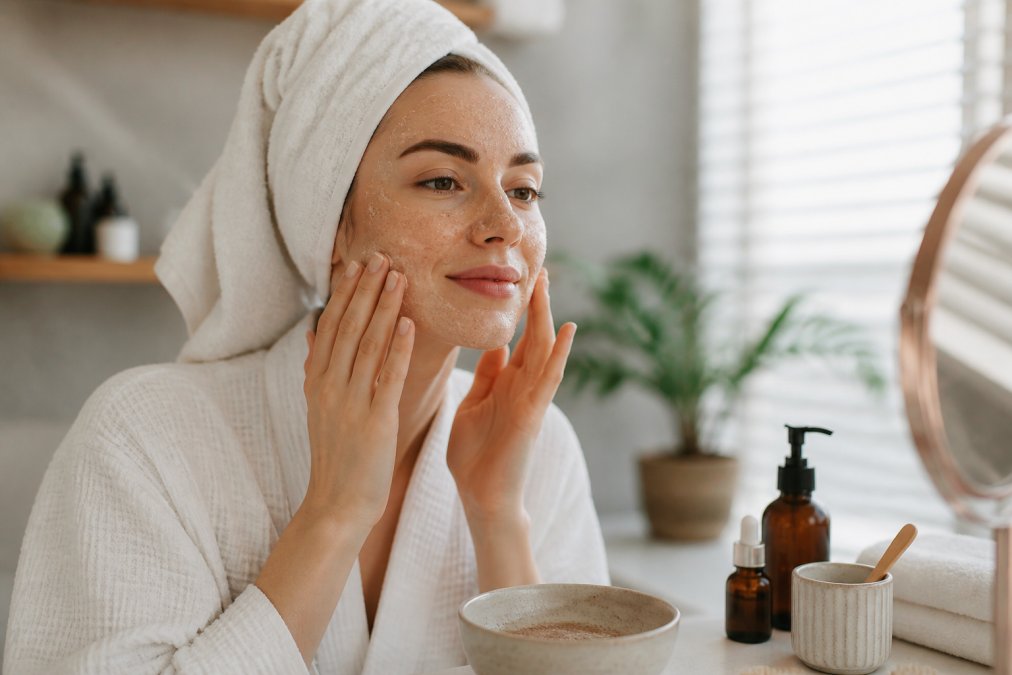
 how-to
How to Safely Exfoliate at Home: A 2026 Guide
Table of Contents
- What Does It Mean to Safely Exfoliate at Home?
- Physical vs Chemical Exfoliation: Which Is Right for Your Skin?
- Step-by-Step: How to Safely Exfoliate Your Face at Home
- How Often to Exfoliate Face Based on Your Skin Type
- Signs of Over-Exfoliation and How to Fix Your Skin Barrier
- Common Mistakes to Avoid When Exfoliating at Home
- Conclusion: Build a Routine That Respects Your Skin
- Frequently Asked Questions
Last Updated: September 5, 2026
What Does It Mean to Safely Exfoliate at Home?
Exfoliation removes dead skin cells to reveal a fresher layer underneath. To safely exfoliate at home means choosing the right method for your skin type, applying it with correct technique, and respecting your skin's natural barrier.
The goal is smoother texture and a radiant complexion, not a squeaky-clean feeling, which often signals stripped protective oils. Many people believe more exfoliation is better, but the opposite is true, the line between glowing and damaged skin is thin.
Your skin has a self-renewing cycle called cell turnover, which slows with age, causing dullness and flakiness (the NIH). Exfoliation speeds this process but must respect your skin barrier, the microscopic shield that keeps moisture in and irritants out.
Physical vs Chemical Exfoliation: Which Is Right for Your Skin?
The two main approaches are physical and chemical. Physical exfoliation uses friction and granular ingredients like granulated sugar, ground coffee, or a washcloth to manually buff away dead skin cells. Chemical exfoliation uses acids, specifically alpha hydroxy acids and beta hydroxy acids, to dissolve the bonds holding dead cells to your skin's surface (PubMed). Enzymatic exfoliation, often derived from fruits like papaya or pineapple, offers a gentler middle ground that digests dead skin without any scrubbing.
"Chemical" sounds harsh, but it is often safer for at-home use. Physical scrubs depend on you judging gentle pressure correctly; press too hard and you create micro-tears, leading to inflammation and breakouts. Chemical exfoliants work evenly without requiring you to gauge friction.
| Method | How It Works | Best For | Key Caution |
|---|---|---|---|
| Physical Scrub | Manual friction removes surface cells | Oily, resilient skin | Easy to over-scrub |
| AHA (Alpha Hydroxy Acid) | Dissolves surface cell bonds | Dry, sun-damaged skin | Increases sun sensitivity |
| BHA (Beta Hydroxy Acid) | Penetrates pores to clear oil | Oily, acne-prone skin | Can dry if overused |
| Enzymatic | Digests dead protein cells | Sensitive, reactive skin | Slowest visible results |
If your skin is sensitive or reactive, lean toward chemical or enzymatic options. If you have oily skin and enjoy a scrub's immediate smoothness, choose a fine-grained product and keep pressure light.
Step-by-Step: How to Safely Exfoliate Your Face at Home
Wash your face with a gentle cleanser to remove makeup, sweat, and surface oil before exfoliating, because scrubbing a dirty face pushes debris deeper into pores. Pat skin dry, leaving it slightly damp.
Apply your exfoliant to damp skin and use your ring or middle finger, which apply the least pressure, in small, circular motions for no more than 30 seconds. Prolonged scrubbing offers no benefit and sharply increases irritation risk. Rinse with lukewarm water and pat dry.
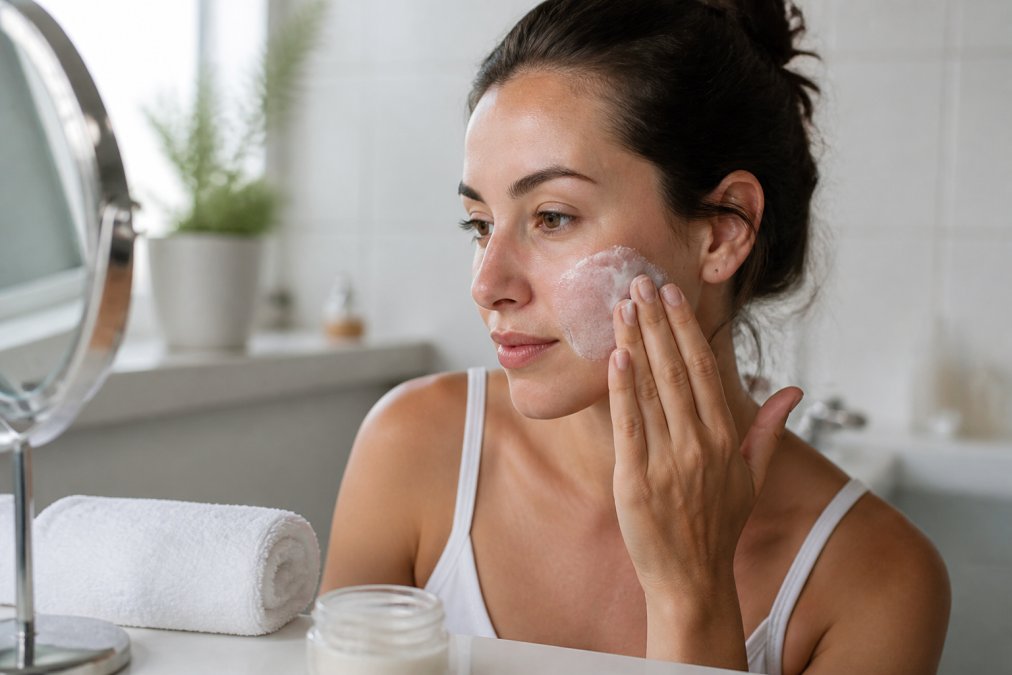
Follow immediately with moisturizer while skin is still damp. If exfoliating in the morning, apply SPF afterward, as fresh skin is more vulnerable to UV damage.
How Often to Exfoliate Face Based on Your Skin Type
A safe starting rhythm is one to two times per week for most skin types (the American Academy of Dermatology). Oily skin can tolerate two to three sessions weekly, while dry or sensitive skin should stay at once per week or less.
Dermatologists consistently recommend a "less is more" approach. Your cell turnover cycle takes roughly 28 days, you are helping it along, not forcing it. If you also use retinoids, prescription acne treatments, or active acids on other days, reduce exfoliation frequency.
| Skin Type | Recommended Frequency | Best Exfoliant Type | Watch For |
|---|---|---|---|
| Oily / Acne-prone | 2-3 times per week | BHA | Dry patches from overuse |
| Dry / Dehydrated | 1 time per week | AHA or Enzyme | Increased tightness |
| Sensitive / Reactive | 1 time every 1-2 weeks | Enzyme only | Redness or stinging |
| Combination | 1-2 times per week | AHA on cheeks, BHA on T-zone | Uneven tolerance |
The T-zone (forehead, nose, chin) can usually handle more frequent exfoliation than the thinner skin on your cheeks and jawline. Treat your face as multiple zones rather than one uniform surface. Adjust frequency seasonally, skin often becomes drier and more reactive in winter.
Signs of Over-Exfoliation and How to Fix Your Skin Barrier
Common signs of over-exfoliation include persistent redness, burning or stinging when applying products, flakiness that does not resolve with moisturizer, and breakouts in normally clear areas. Skin may also feel tight and look unnaturally shiny.
If you recognize these symptoms, stop all exfoliation immediately. Switch to a minimal routine of a gentle cleanser and a rich, barrier-repairing moisturizer, and give your skin two to four weeks to recover.
During recovery, avoid all active ingredients including acids, retinoids, and vitamin C. Wear sun protection daily. When your skin feels calm, reintroduce exfoliation at half your previous frequency and monitor your skin's response.
The 4-Week Barrier Repair Protocol
Dermatologists recommend a structured recovery timeline rather than a vague "wait until it feels better." Here is a practical week-by-week approach:
Week 1: The Stop-and-Stabilize Phase
- Stop all exfoliants, retinoids, and vitamin C immediately.
- Wash twice daily with a sulfate-free, fragrance-free cleanser (look for ceramides or glycerin as the second or third ingredient).
- Apply a barrier-repair moisturizer containing ceramides, cholesterol, and fatty acids, these three lipids in a 3:1:1 ratio mimic your skin's natural barrier composition. Products like CeraVe Moisturizing Cream or Vanicream Daily Facial Moisturizer are formulated around this principle.
- Apply a thin layer of plain petrolatum (Vaseline) over your moisturizer at night to create an occlusive seal that prevents transepidermal water loss. This is the single most effective step for barrier recovery.
- Expect increased flakiness in days 3-5 as damaged cells shed. Do not pick or scrub them.
Week 2: The Calm-Down Phase
- Continue the same routine. You should notice less stinging and redness by day 10.
- Add a mineral-based sunscreen (zinc oxide or titanium dioxide) with SPF 30 or higher every morning. Chemical sunscreens can sting a compromised barrier.
- If your skin feels tight even after moisturizing, add a hydrating toner with hyaluronic acid or panthenol before your moisturizer.
Week 3: The Test Phase
- Your barrier is likely 70-80% recovered by now. Introduce a single gentle exfoliant, preferably a PHA (polyhydroxy acid) like gluconolactone or lactobionic acid, which have larger molecular sizes that penetrate more slowly and are less irritating than AHAs.
- Use it once, then wait 72 hours to assess. If no redness or stinging appears, you can use it once weekly.
Week 4: The Reintroduction Phase
Book your appointment today! →
- If your skin remains calm, you can reintroduce your regular exfoliant at half your previous frequency. For example, if you were exfoliating three times weekly, drop to once weekly for two weeks before increasing.
- Do not reintroduce retinoids and acids in the same week. Alternate them on different days with at least one rest day in between.
Age-Specific Over-Exfoliation Risks
Your skin's recovery capacity changes with age, so the same mistake has different consequences at different life stages.
Teenage Skin (13-19): Cell turnover is at its fastest, around 14-21 days. Over-exfoliation often manifests as increased oil production because the skin tries to compensate for lost moisture. Teens are also more likely to use physical scrubs with harsh particles like crushed walnut shells. Recovery is usually faster, often within one week, but the habit can trigger long-term sensitivity that persists into adulthood.
Adult Skin (20-40): Turnover slows to the standard 28-day cycle. Over-exfoliation here typically appears as perioral dermatitis (small red bumps around the mouth) or increased breakouts along the cheeks and jawline. Recovery takes the full two to four weeks. This is also the age range where people stack the most active ingredients, retinol, vitamin C, and acids, which compounds the risk.
Mature Skin (50+): Turnover can slow to 40-60 days, and the barrier naturally thins. Over-exfoliation in this group often presents as severe dryness and a crepey texture rather than obvious redness. Recovery can take six to eight weeks. For mature skin, the safest exfoliation frequency is once every 10-14 days, using only enzymes or low-concentration PHAs. If over-exfoliation occurs, add a peptide-based moisturizer to support collagen production during the repair window.
If you still struggle with acne, hyperpigmentation, or uneven texture after following this recovery protocol, a professional assessment can identify what your routine is missing. A board-certified dermatologist can perform a barrier function test to measure transepidermal water loss.
Common Mistakes to Avoid When Exfoliating at Home
The most damaging mistake is applying too much pressure with physical scrubs, creating invisible micro-tears. Many also exfoliate immediately before or after other aggressive treatments, stacking too many actives. If using a cleansing brush, the brush itself provides exfoliation, do not combine it with a granular scrub.
Another frequent error is neglecting the microbiome, the beneficial bacteria on your skin that keeps harmful strains in check. Harsh, frequent exfoliation disrupts this ecosystem, paradoxically leading to more breakouts and sensitivity.
Patch testing takes less than two minutes. Apply a small amount of any new exfoliant behind your ear or along your jawline and wait 24 hours to check for a reaction before using it on your full face.
The Interaction Trap: What Never to Mix with Exfoliants
Most guides tell you what to use, but few tell you what not to combine. The FDA regulates active ingredients but not how you layer them. Exfoliating acids work best at a pH of 3.0 to 4.0, more acidic than your skin's natural pH of about 4.5 to 5.5. Applying an acid temporarily lowers your skin's pH; applying a product that raises it back too quickly can neutralize the exfoliant or cause irritation.
Here are the critical interactions to avoid:
- Retinoids (Retinol, Tretinoin, Adapalene): These vitamin A derivatives accelerate cell turnover by a different mechanism than acids. Combining them on the same night can strip the stratum corneum faster than it can rebuild, leading to severe peeling, redness, and a compromised barrier. If you use a retinoid, exfoliate on alternate nights or skip exfoliation entirely on nights you apply retinol.
- Benzoyl Peroxide: This common acne treatment is an oxidizer. When combined with an AHA or BHA, it can cause free radical damage and increase irritation. Use benzoyl peroxide in the morning and exfoliating acids at night, or on separate days.
- High-Concentration Vitamin C (L-Ascorbic Acid): Vitamin C is itself an acid with a low pH. Layering it immediately after an AHA/BHA can over-acidify the skin, causing stinging and redness. If your vitamin C serum is 10% or higher, use it in the morning and exfoliate at night.
- Multiple Exfoliants at Once: Using a physical scrub and a chemical exfoliant in the same session is redundant and doubles the irritation risk. Choose one method per session.
If a product makes your skin tingle or sting, do not layer another active on top. Wait at least 20 minutes after cleansing before applying an acid exfoliant, and another 20 minutes before moisturizer. This "buffer time" allows your skin's pH to stabilize.
The Microbiome Angle: Why Gentler Is Smarter
Your skin hosts roughly 1,000 species of bacteria, fungi, and viruses that regulate inflammation, fend off pathogens, and support the barrier. Harsh exfoliation, especially daily physical scrubbing or high-strength acids, can wipe out beneficial strains, allowing opportunistic species to overgrow. The result is often paradoxical: more breakouts, increased sensitivity, and duller skin.
To protect your microbiome while exfoliating, choose products with a pH between 4.0 and 5.5. Avoid antibacterial soaps before exfoliating, as they kill beneficial bacteria. Never exfoliate more than three times per week, the microbiome takes about two weeks to repopulate after significant disruption.
Age also changes your exfoliation needs. In your teens and twenties, turnover is fast, so minimal exfoliation is needed. By your forties and fifties, turnover slows, making gentler but more consistent exfoliation more valuable. Many physical scrubs contain plastic microbeads that pollute waterways, so opt for biodegradable options like sugar or salt-based scrubs.
Conclusion: Build a Routine That Respects Your Skin
Safe at-home exfoliation requires restraint and attention to how your skin responds. Start with the gentlest method that addresses your concerns, exfoliate less often than you think you need, and always follow with moisturizer and sun protection.
If you have tried exfoliating at home and still struggle with acne, hyperpigmentation, or uneven texture, a professional assessment can identify what your routine is missing. At SKIN SOLUTIONS BY 2 DIVAS, our specialists begin every visit with a thorough skin analysis to understand your unique needs before recommending any treatment. Our custom corrective facials are designed to address specific concerns like aging, acne, and hyperpigmentation with a results-driven approach that respects your skin's limits.
Get started with SKIN SOLUTIONS BY 2 DIVAS and book your appointment today for a personalized plan that takes the guesswork out of your skincare routine.
Frequently Asked Questions
What is the safest way to exfoliate sensitive skin?
For sensitive skin, the safest method is a gentle chemical exfoliant, like a low-percentage polyhydroxy acid (PHA) or a mild enzyme wash, rather than a physical scrub. Always do a patch test on your jawline 24 hours before use. Apply the product with clean fingertips using light pressure, leave it on for the exact time directed, and rinse with lukewarm water. Stick to once a week initially and follow with a fragrance-free moisturizer to protect your skin barrier.
How do I know if I am over-exfoliating my skin?
Signs of over-exfoliation include persistent redness, a burning or stinging sensation when applying moisturizer, increased flakiness, and a tight, shiny feeling that doesn't go away. You might also notice new breakouts or bumps, which are signs of a compromised skin barrier. If you experience these symptoms, stop all exfoliation immediately. Focus only on gentle cleansing, moisturizing, and sun protection for at least two weeks until your skin feels calm and hydrated again.
Is it better to exfoliate wet or dry?
For physical scrubs, apply them to damp, not soaking wet, skin. Water activates the granules, helping them glide smoothly and reducing friction that can cause micro-tears. For chemical exfoliants like alpha hydroxy acids (AHAs), apply them to clean, dry skin. Moisture can dilute the acid, making it less effective and potentially uneven. Enzymatic exfoliators are the exception and often work well on slightly damp skin. Always read the product label for the manufacturer's specific instructions.
Should I exfoliate before or after cleansing?
You should always exfoliate after cleansing. Cleansing removes surface dirt, oil, and makeup, allowing the exfoliant to work directly on the skin cells you want to remove. If you apply an exfoliant to dirty skin, the product may just push debris around or struggle to penetrate. Rinse your face with lukewarm water, pat it dry, and then apply your chosen chemical or physical exfoliant according to the specific directions for that product.