 how-to
How to Reduce Cortisol Levels for Acne: A 2026 Guide
Table of Contents
- Understanding Cortisol and Acne: The Connection
- How to Lower Cortisol Naturally Through Stress Management
- Sleep and Acne: Why Rest Matters for Cortisol Control
- Stress Acne Treatment: Diet and Nutrition Strategies
- How Long Does Stress Acne Take to Clear: Realistic Expectations
- Skincare Routines for Stress-Related Breakouts
- When to Consult a Specialist for Persistent Acne
- Frequently Asked Questions
Last Updated: October 10, 2026
Understanding Cortisol and Acne: The Connection
What research shows: Stress can worsen acne in people who are already prone to breakouts.
What research does not show: Routine cortisol testing for acne is not standard practice and is not supported by dermatological guidelines.
At Skin Solutions by 2 Divas in Sebring, FL, we help clients distinguish stress-related breakouts from other acne causes through a thorough skin analysis.
The practical takeaway: Managing stress is a valuable health habit and may improve your skin. If your acne is mild and clearly linked to stressful periods, stress reduction combined with a solid skincare routine often helps.
How to Lower Cortisol Naturally Through Stress Management
Stress-reduction techniques are most effective when practiced consistently and measured. A scattered approach, meditating one day, skipping three days, then trying yoga, produces minimal results. A structured daily or weekly plan, combined with simple tracking, dramatically improves adherence and outcomes.

Building your stress-reduction protocol:
Start by choosing one primary technique and one backup. Consistency beats variety. Most people succeed with a plan they can sustain for at least 4 weeks.
Daily Stress-Reduction Plan (30 minutes total)
Morning (10 minutes):
- Box breathing or guided meditation upon waking, before checking your phone
- Use a free app (Insight Timer, Calm, or Headspace) or follow a YouTube video
- Set a phone reminder for the same time each day
Midday (5 minutes):
- Three deep-breathing breaks during work or school
- Set phone alarms at 11 AM, 2 PM, and 4 PM
- At each alarm, pause and do 10 box-breathing cycles (in for 4, hold for 4, out for 4, hold for 4)
- This interrupts cortisol spikes before they compound
Evening (15 minutes):
- Gentle yoga, walking, or stretching
- Choose one activity and do it at the same time each evening
- Gentle yoga: YouTube videos labeled "beginner" or "stress relief" (15 minutes)
- Walking: 15 minutes at a comfortable pace, ideally outdoors
- Stretching: Follow a guided routine (YouTube or app) focusing on neck, shoulders, and lower back
Tracking adherence: Use a simple calendar or habit-tracking app (Habitica, Done, or even a paper checklist). Mark each day you complete your 30-minute protocol. Aim for 5-6 days per week. Missing one day is normal; missing three in a row signals you need to simplify or adjust the timing.
Weekly Stress-Reduction Plan (if daily feels overwhelming)
If 30 minutes daily is unrealistic, commit to a weekly structure instead:
- Monday, Wednesday, Friday: 20-minute walk or gentle yoga in the evening
- Tuesday, Thursday: 10 minutes of meditation or box breathing in the morning
- Saturday or Sunday: 30-minute yoga class, hike, or swim
This totals about 90 minutes per week, spread across the week. Research shows that even this modest, consistent practice lowers cortisol and improves skin over 4-8 weeks.
Meditation and Deep Breathing Techniques
Box breathing is the fastest cortisol-reduction tool. It activates your parasympathetic nervous system, the "rest and digest" branch that counteracts stress.
How to do it:
- Breathe in slowly through your nose for a count of 4
- Hold your breath for a count of 4
- Exhale slowly through your mouth for a count of 4
- Hold empty for a count of 4
- Repeat 5-10 cycles
Your heart rate will visibly drop. Do this when you feel tension building, before meetings, or when you notice stress rising. Even 2 minutes works.
Guided meditation is more effective than trying to meditate alone, especially if your mind races. Use an app or YouTube video:
- Insight Timer (free, thousands of guided meditations)
- Calm or Headspace (paid, but often have free trials)
- YouTube: search "10-minute guided meditation for stress" and pick one you like
Commit to the same meditation at the same time for one week. Consistency matters more than variety.
Body scan meditation helps you notice where you hold stress and release it:
- Lie down or sit comfortably
- Close your eyes
- Starting at the top of your head, mentally scan down your body
- Notice tension in your neck, shoulders, jaw, chest, stomach, or lower back
- Breathe into that area and consciously relax it
- Continue to your toes
This takes 10-15 minutes and is especially useful before bed.
Yoga and Physical Activity
Yoga combines movement, breathing, and mindfulness, a triple effect that lowers cortisol faster than exercise alone.
Beginner yoga for stress (20-30 minutes, 3 times per week):
- Child's pose, cat-cow stretch, downward dog, warrior pose, and savasana (final relaxation)
- YouTube channels: Yoga with Adriene, Fightmaster Yoga, or Yoga with Tim
- Start with "beginner" or "stress relief" videos; ignore advanced poses
Other effective activities:
- Walking: 30 minutes daily at a comfortable pace reduces cortisol significantly. Outdoor walking in natural light is more effective than treadmill walking.
- Swimming: Low-impact, full-body, and meditative. 20-30 minutes, 2-3 times per week.
- Dancing: Fun, mood-boosting, and effective. Put on music you love and move for 15-20 minutes.
- Strength training: Builds resilience and confidence. 20-30 minutes, 2-3 times per week. The key is consistency, not intensity.
Exercise burns off excess cortisol and triggers endorphin release. You feel calmer within days. Over weeks, your skin shows less oiliness and inflammation. The effect compounds.
Measuring progress: Beyond tracking adherence, notice these markers of lower cortisol:
- Calmer mood, especially in situations that normally trigger stress
- Better sleep quality
- Less jaw clenching or muscle tension
- Reduced appetite for sugary foods
- Fewer new breakouts
- Less oiliness on your face by midday
Keep a simple log: each evening, rate your stress level 1-10 and note any skin changes. After 2-3 weeks, you'll see a pattern. Most people report lower stress ratings and fewer breakouts by week 4.
Sleep and Acne: Why Rest Matters for Cortisol Control
Sleep is where your body repairs itself and resets cortisol. Poor sleep keeps cortisol elevated all day. This directly worsens acne.
Most adults need 7-9 hours nightly. During sleep, your body:
- Repairs skin damage
- Balances hormones
- Clears inflammatory chemicals
- Resets cortisol to baseline
When you sleep poorly, cortisol stays high. Your skin stays inflamed. Breakouts persist or worsen.
Book your appointment today! →
Create a sleep routine that works:
- Go to bed at the same time each night
- Keep your bedroom cool and dark
- Stop screens 30 minutes before sleep
- Avoid caffeine after 2 PM
- Wash your pillowcase twice weekly to prevent bacterial transfer to your face
Sleep quality affects acne more than most people realize. If you fix nothing else, fix your sleep first.
Stress Acne Treatment: Diet and Nutrition Strategies
What you eat directly impacts cortisol and skin health. Certain foods calm your nervous system. Others spike stress hormones and inflammation.
Focus on nutrient-dense foods that support skin health:
- Lean proteins: Fish, chicken, eggs stabilize blood sugar
- Omega-3 fatty acids: Salmon, sardines, walnuts reduce inflammation
- Fruits and vegetables: Antioxidants protect skin cells
- Whole grains: Steady energy without blood sugar spikes
- Zinc-rich foods: Oysters, beef, pumpkin seeds support skin repair
Avoid or limit foods that worsen acne:
- Refined sugars: Spike cortisol and blood sugar
- Fried foods: Increase inflammation
- Excess dairy: May trigger breakouts in sensitive people
- Highly processed foods: Lack nutrients your skin needs
Hydration matters too. Drink half your body weight in ounces of water daily. Proper hydration flushes toxins and keeps skin clear.
A simple rule: if it's whole, unprocessed, and nutrient-dense, it supports clear skin. If it's packaged and refined, it likely triggers breakouts.
How Long Does Stress Acne Take to Clear: Realistic Expectations
This is the question everyone asks. The honest answer: it depends on how consistently you manage stress and how severe your acne is.
Deeper breakouts and cystic acne take longer, typically 6-8 weeks of consistent effort.
Timeline expectations:
- Week 1-2: Less oiliness, calmer mind
- Week 3-4: Fewer new breakouts, reduced inflammation
- Week 5-8: Noticeable improvement in active acne
- Week 9-12: Significant clearing, assuming consistency
The catch: if you return to high stress, acne returns. This isn't a one-time fix. It's a lifestyle shift.
Skin Solutions by 2 Divas recommends combining stress management with a professional skincare routine. Our custom corrective facials address acne while you work on cortisol reduction.
Skincare Routines for Stress-Related Breakouts
While you're managing stress, your skin needs targeted care. A solid routine prevents new breakouts and clears existing ones.
A basic routine for acne-prone skin:
- Cleanse: Twice daily with a gentle, non-stripping cleanser
- Treat: Use salicylic acid or benzoyl peroxide on active breakouts
- Moisturize: Even acne-prone skin needs hydration
- Protect: Daily sunscreen prevents post-acne marks
Keep it simple. More products don't mean better results. Consistency beats complexity.
For stress-related acne specifically:
- Use salicylic acid to unclog pores clogged by excess oil
- Apply benzoyl peroxide to kill acne bacteria
- Moisturize to prevent irritation from active treatments
- Avoid touching your face, hands transfer stress and bacteria
Change towels and pillowcases frequently. Bacteria buildup on fabric directly causes breakouts.
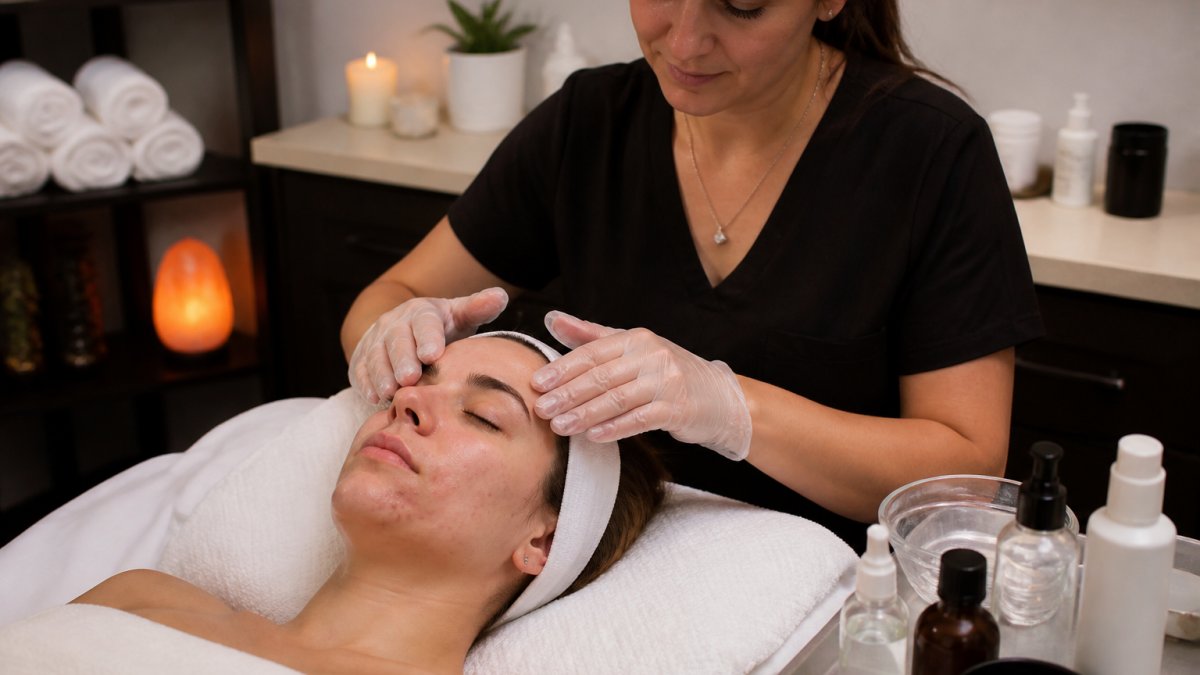
Professional facials accelerate results. At Skin Solutions by 2 Divas in Sebring, FL, our specialists conduct a thorough skin analysis and create a personalized treatment plan. Custom corrective facials target acne, inflammation, and scarring using high-quality ingredients.
When to Consult a Specialist for Persistent Acne
If acne persists after 8-12 weeks of consistent stress management and skincare, see a dermatologist. Some acne requires medical treatment.
Signs you need professional help:
- Severe cystic or nodular acne
- Acne that doesn't improve with home care
- Acne causing significant scarring
- Acne accompanied by other hormonal symptoms
- Acne that worsens despite stress reduction
A dermatologist can prescribe medications like retinoids or oral antibiotics. They can also identify whether your acne is truly stress-related or caused by other factors like hormonal imbalance or bacterial overgrowth.
Estheticians like those at Skin Solutions by 2 Divas in Sebring, FL also play a role.
The combination of professional skincare, stress management, and medical care (if needed) gives you the best chance of clearing acne permanently.
Stress and cortisol directly trigger acne. Managing stress hormones through meditation, exercise, sleep, and nutrition is foundational. But addressing the skin surface matters too.
Frequently Asked Questions
Is high cortisol bad for acne?
Yes, elevated cortisol can trigger or worsen acne. When stress hormones spike, they stimulate sebaceous glands to produce more oil and increase inflammation in the skin. This combination creates an environment where acne-causing bacteria thrive. However, cortisol alone doesn't cause acne, it works alongside other factors like genetics, diet, and skincare habits. If you're struggling with persistent stress-related breakouts, addressing both cortisol levels and a consistent skincare routine yields better results.
How does sleep affect acne and cortisol?
Poor sleep elevates cortisol and disrupts hormonal balance, both of which trigger breakouts. During quality sleep, your body repairs skin, regulates sebum production, and lowers stress hormones. Most adults need 7-9 hours nightly for optimal skin health. Consistent sleep schedules help regulate cortisol rhythms, your body naturally lowers cortisol in the evening, signaling rest. If acne worsens after nights of poor sleep, that's cortisol and inflammation at work. Prioritizing sleep is one of the fastest ways to reduce stress acne.
How long does stress acne take to clear?
Stress acne typically begins improving within 2-4 weeks of consistent stress reduction and proper skincare, though individual timelines vary. Some people see results faster if they address sleep, diet, and exercise simultaneously. Deeper cystic breakouts may take 6-8 weeks or longer to fully resolve. The key is consistency, sporadic stress management won't create lasting change. If stress acne persists beyond 8 weeks despite lifestyle changes, a dermatologist can recommend targeted treatments to accelerate healing.
Can I lower cortisol and clear acne without professional help?
Many people see improvement through lifestyle changes alone: better sleep, stress management, balanced nutrition, and a solid skincare routine. However, if acne is severe, cystic, or resistant to home care, professional treatment accelerates results. Skin Solutions by 2 Divas in Sebring, FL offers custom corrective facials designed to address stress-related breakouts alongside your personal cortisol-reduction efforts. A thorough skin analysis from a specialist can identify whether your acne is purely stress-driven or involves other factors requiring targeted professional treatment.