 how-to
How to Exfoliate Dry Skin Without Irritation: 2026 Guide
Table of Contents
- Why Dry Skin Needs a Different Approach to Exfoliation
- Physical vs. Chemical Exfoliation: Which Is Safer for Dry Skin?
- Step-by-Step: How to Exfoliate Dry Skin Without Irritation
- How Often to Exfoliate Dry Skin (and When to Stop)
- Choosing the Best Exfoliator for Dry Skin
- Why Moisturizer After Exfoliating Matters
- Common Mistakes That Cause Irritation
- Conclusion: Building a Routine That Lasts
- Frequently Asked Questions
Last Updated: October 14, 2026
Why Dry Skin Needs a Different Approach to Exfoliation
If you have dry skin, the standard advice to "scrub away dead cells" can backfire fast.
At SKIN SOLUTIONS BY 2 DIVAS in Sebring, FL, we see this pattern often.
Learning how to exfoliate dry skin without irritation comes down to three things: gentler methods, less friction, and more moisture.
So why does dry skin react so badly to the usual approach? It starts with what's happening beneath the surface.
How Dryness, Sensitivity, and a Damaged Barrier Differ
These three problems look similar but need different solutions. Mixing them up is why so many routines fail.
- Dry skin lacks oil. It feels tight, rough, and flaky. It usually isn't reactive to products.
- Sensitive skin reacts easily. It stings, turns red, or breaks out from things others tolerate fine.
- A damaged skin barrier is a temporary state. The outer layer has been worn down by over-scrubbing, harsh acids, or cold weather. It burns, peels, and feels raw.
You can have dry skin without sensitivity. You can have sensitive skin that isn't dry. And you can damage your barrier no matter your skin type.
Physical vs. Chemical Exfoliation: Which Is Safer for Dry Skin?
Chemical exfoliation is generally safer for dry skin than physical scrubbing. It dissolves dead cells without the friction that tears at a fragile surface.
Physical exfoliation uses grit or tools: scrubs, brushes, washcloths. It works, but it relies on rubbing and pressure.
Chemical exfoliation uses acids or enzymes to loosen dead cells. The gentlest options for dry skin include:
- PHAs (polyhydroxy acids): Large molecules that sit on the surface. They exfoliate slowly and add hydration.
- AHAs (alpha hydroxy acids): Effective but stronger. Lactic acid is the mildest choice for dry skin.
- Enzymatic exfoliation: Uses fruit enzymes to digest dead cells. Very gentle, good for sensitive skin.
The trade-off is real. Physical scrubs give instant smoothness but risk irritation. Chemical exfoliants take longer to show results but respect your barrier.
For most dry skin, a mild chemical exfoliant used once or twice a week beats a daily scrub.
Step-by-Step: How to Exfoliate Dry Skin Without Irritation
Here is the routine we walk clients through. It takes about five minutes and works with products you likely already own.
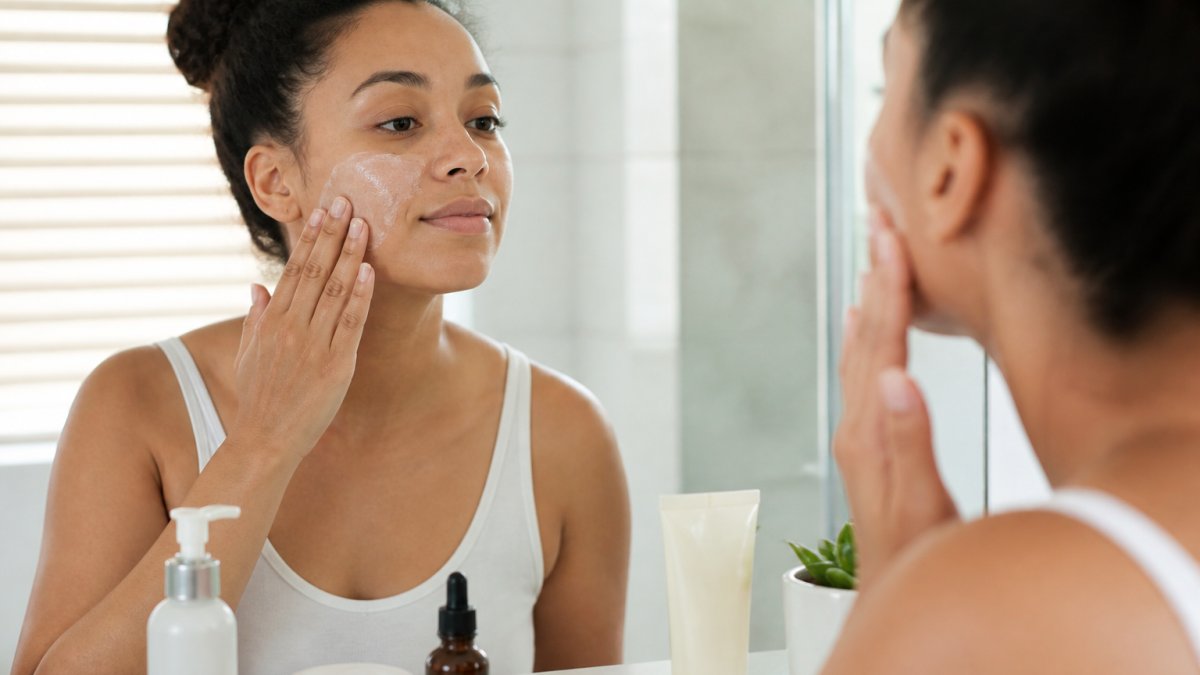
- Start with damp skin. Exfoliate in the shower or right after washing. Water softens dead cells so they lift off easily.
- Apply a small amount of product. A pea-sized dot of a mild exfoliant is enough for your whole face. More isn't better.
- Use light pressure. Let the product do the work. Never press hard or scrub in circles.
- Move in short strokes. Glide across your skin in one direction. Avoid rubbing back and forth.
- Rinse with lukewarm water. Hot water strips oils and undoes your work.
- Pat dry, don't rub. Use a soft towel and press it against your skin.
- Moisturize within one minute. Lock in hydration while skin is still damp.
Patch Testing and Gradual Introduction
Never start a new exfoliant on your whole face. Test it first.
Apply a small amount behind your ear or along your jawline. Wait 24 hours. If you see redness, itching, or burning, don't use it.
If your skin tolerates it, start with one use per week. Add a second weekly use only after two weeks with no reaction. This slow ramp gives your barrier time to adjust.
How Often to Exfoliate Dry Skin (and When to Stop)
Once or twice a week is enough for most dry skin. More frequent use wears down the barrier and causes the irritation you're trying to avoid.
Signs you're exfoliating too much:
- Skin feels tight or burns after washing
- Redness that lingers for hours
- Flaking that gets worse, not better
- New stinging when you apply moisturizer
- Shiny, thin-looking patches
If any of these show up, pause for one to two weeks. Let your barrier rebuild. Then restart at once a week with a gentler product.
The American Academy of Dermatology's skincare guidance notes that over-exfoliation is a common cause of irritation, and that gentler is usually better for dry and sensitive skin.
Book your appointment today! →
Choosing the Best Exfoliator for Dry Skin
The best exfoliator for dry skin is a mild chemical formula that also hydrates. Skip anything that promises a deep scrub or instant polish, and read the ingredient list before you buy.
Here is how the main options compare for dry skin:
- PHAs (polyhydroxy acids) such as gluconolactone and lactobionic acid. Large molecules that stay near the surface, exfoliate slowly, and attract water. Often formulated around 4-10%. The gentlest starting point for most dry skin.
- Lactic acid (an AHA). The mildest of the common AHAs and a humectant, so it draws in moisture as it exfoliates. Look for 5-10% in a leave-on product; higher strengths belong in professional settings.
- Mandelic acid (an AHA). A larger molecule than glycolic acid, so it penetrates more slowly and tends to sting less. Common at 5-10%.
- Enzymes such as papain and bromelain. They digest dead cells on the surface without acid. Very gentle, good for reactive skin, but results build slowly.
- Physical exfoliants. A soft washcloth or a fine jojoba-ester scrub used with feather-light pressure. Avoid walnut shell, apricot kernel, salt, and sugar scrubs on dry skin.
What to look for on the label:
- Hyaluronic acid, glycerin, or panthenol for hydration
- Ceramides, cholesterol, or fatty acids to support the barrier
- No fragrance, no drying alcohol (denatured alcohol, SD alcohol), no essential oils
- No gritty beads, ground seeds, or nut shells
What to avoid or use with caution:
- Glycolic acid at high strength. Small molecule, fast penetration, high irritation risk on dry skin.
- Salicylic acid at 2% or higher. Useful for oily, acne-prone skin but drying for many dry-skin users.
- Retinol or retinoids in the same routine. Layering an exfoliant with a retinoid multiplies irritation.
- Benzoyl peroxide, high-strength vitamin C (L-ascorbic acid), and AHA/BHA toners stacked together.
Format matters too. A rinse-off cleanser with a mild acid is gentler than a leave-on serum at the same percentage, because contact time is shorter. If your skin is very dry or reactive, start with a rinse-off PHA or enzyme cleanser before moving to a leave-on formula.
If you're unsure what your skin needs, a professional skin analysis takes the guesswork out. At SKIN SOLUTIONS BY 2 DIVAS in Sebring, FL, every client starts with a close look at their skin before we recommend anything.
Why Moisturizer After Exfoliating Matters
Moisturizer after exfoliating is not optional for dry skin. It's the step that makes the whole routine work.
Exfoliation removes dead cells and, with them, some of the lipids and natural moisturizing factors that hold water in. If you stop there, your skin loses moisture and feels tighter than before.
Apply it within one minute of patting your skin dry, while skin is still slightly damp. Look for:
- Ceramides, cholesterol, and fatty acids in roughly a 3:1:1 ratio to rebuild the barrier
- Hyaluronic acid or glycerin to pull water into the upper layers
- Shea butter, squalane, or petrolatum to lock moisture down
- Panthenol or colloidal oatmeal to calm redness
At night, a thicker cream helps skin recover while you sleep. In the morning, a lighter lotion under sunscreen is usually enough.
What Not to Layer With Your Exfoliant
This is where most dry-skin routines go wrong. Exfoliating and then applying a stack of actives turns a gentle session into an irritation event.
- Retinoids. Don't use a retinoid on the same night as an exfoliant. Alternate nights, or use the retinoid in the morning and the exfoliant at night, never back-to-back on the same skin.
- Vitamin C serums. L-ascorbic acid at 10% or higher is acidic on its own. Pairing it with an AHA or BHA in the same routine raises sting and redness risk. Use vitamin C in the morning and exfoliate at night.
- Benzoyl peroxide. Drying and irritating on its own. Keep it off exfoliation days.
- Other acids. Don't stack an AHA toner, a BHA serum, and a PHA moisturizer in one routine. One exfoliant per session.
- Alcohol-based toners and astringents. They strip the oils your dry skin is already short on.
A Simple Aftercare Sequence
- Rinse the exfoliant off with lukewarm water (or leave on, if the label says so).
- Pat dry with a soft towel.
- Apply a hydrating serum with hyaluronic acid or glycerin to damp skin.
- Seal with a ceramide cream within one minute.
- In the morning, follow with broad-spectrum sunscreen. Freshly exfoliated skin is more vulnerable to UV.
If irritation keeps returning no matter how you adjust your at-home routine, the issue may be deeper than product choice. At SKIN SOLUTIONS BY 2 DIVAS in Sebring, FL, a professional skin analysis can tell whether you're dealing with dryness, sensitivity, or a damaged barrier, and we can build an aftercare plan around your skin instead of a generic template.
Common Mistakes That Cause Irritation
Most irritation comes from a handful of habits. Fix these and your skin calms down.
- Scrubbing too hard. Pressure tears skin. Light strokes do the job.
- Exfoliating every day. Dry skin can't handle it. Once or twice a week is plenty.
- Using hot water. It strips oils. Lukewarm is gentler.
- Skipping moisturizer. Exfoliation without moisture leaves skin drier.
- Mixing acids. Layering several exfoliants in one routine overloads the barrier.
- Ignoring reactions. If it stings, stop. Don't push through.
Conclusion: Building a Routine That Lasts
Exfoliating dry skin without irritation is a matter of patience, not force. Use a mild chemical exfoliant, keep pressure light, limit sessions to once or twice a week, and always follow with moisturizer.
If your skin stays irritated no matter what you try, the issue may be deeper than your at-home routine.
Book your appointment today and let our team help you find a routine that works for your skin.
Frequently Asked Questions
Should you exfoliate dry skin before or after cleansing?
Always cleanse first. A gentle, fragrance-free cleanser removes surface dirt and makeup so your exfoliant works on clean skin. If you exfoliate before cleansing, you risk pushing debris deeper into pores and causing irritation. Pat your face dry, then apply your exfoliant. For dry skin, lukewarm water is important because hot water strips natural oils and makes irritation more likely.
What ingredients should you avoid when exfoliating dry skin?
Skip high-concentration alpha hydroxy acids (AHAs), coarse sugar or salt scrubs, and products with added fragrance or alcohol. These can strip moisture and trigger redness. Instead, look for polyhydroxy acids (PHAs) like gluconolactone, lactic acid at low concentration, or enzymatic exfoliants. A mild exfoliator with hydrating ingredients such as glycerin or hyaluronic acid supports the skin barrier while removing dead skin cells.
How often should you exfoliate dry skin?
Start once every 7 to 10 days. If your skin tolerates it without redness, flaking, or tightness, you can increase to once or twice a week. More frequent exfoliation can damage the skin barrier and lead to over-exfoliation. Pay attention to how your skin feels after each session. If it stings or looks irritated, wait at least two weeks before trying again. A professional at Skin Solutions by 2 Divas can help you set a safe frequency.
Is a washcloth a good exfoliator for dry skin?
A soft washcloth can work as a very mild physical exfoliant if you use light pressure and short strokes. Avoid rough scrubbing, which causes friction and redness. For dry skin, a microfiber cloth or a soft cotton pad is gentler than a textured scrub mitt. If your skin is sensitive, chemical or enzymatic exfoliation may be safer because it does not rely on rubbing. Always moisturize after using a washcloth to restore hydration.