 how-to
How to Choose the Right Facial for Your Skin Concerns
Table of Contents
- Start With Your Skin Type, Not the Menu
- Identify Your Primary Skin Concerns Before You Book
- What to Expect During a Professional Skin Analysis
- The Benefits of Custom Corrective Facials Over One-Size-Fits-All Treatments
- How Often to Get a Facial for Real, Lasting Results
- How to Choose the Right Facial for Your Skin Concerns in Sebring, FL
- Conclusion
- Frequently Asked Questions
Last Updated: September 16, 2026
Start With Your Skin Type, Not the Menu
Most people book a facial the way they order at a restaurant: they scan the menu, pick the name that sounds nicest, and hope for the best. That approach is why so many treatments disappoint. Learning how to choose the right facial for your skin concerns starts with one question the menu can't answer for you: what is your skin actually doing right now?
This guide from SKIN SOLUTIONS BY 2 DIVAS walks through the diagnostic process we use before any treatment begins. Skin type is the foundation. Concerns come second. The treatment name comes last, and it should be chosen for you, not by you from a list.
Oily and acne-prone skin produces excess sebum, which mixes with dead cells and clogs pores. Look for deep cleansing, gentle exfoliation, and extractions performed by a licensed esthetician. Avoid heavy creams and occlusive masks that trap oil.
Dry and dehydrated skin lacks water, oil, or both. Dehydrated skin can feel tight even when it looks oily, which is why a proper skin analysis matters more than guesswork. Hydrating serums and barrier-supporting treatments help here.
Sensitive and reactive skin flushes, stings, or breaks out easily. Gentle enzyme exfoliation and calming ingredients beat aggressive scrubs every time.
Identify Your Primary Skin Concerns Before You Book
Skin type tells you how your skin behaves. Concerns tell you what you want to change. Separating the two prevents the most common booking mistake: choosing a treatment for a concern your skin isn't ready to handle.
Acne and pore congestion respond to consistent deep cleansing and professional extractions. Popping at home inflames the follicle and often leaves marks that outlast the original breakout.
Hyperpigmentation and sun damage need a different strategy. Exfoliation alone won't fade pigment; you need treatments that address melanin production over a series of sessions. Daily sunscreen is not optional if you want results to hold.
Fine lines and loss of elasticity call for collagen-stimulating approaches. Microneedling and LED light therapy are common options, and results build gradually rather than overnight.
What to Expect During a Professional Skin Analysis
A professional skin analysis is a structured assessment of your skin's hydration, oil production, texture, sensitivity, and sun damage, performed before any treatment is chosen. It typically takes 15 to 30 minutes and determines what your skin can safely tolerate that day. At SKIN SOLUTIONS BY 2 DIVAS in Sebring, FL, this step comes before the treatment menu is even discussed.
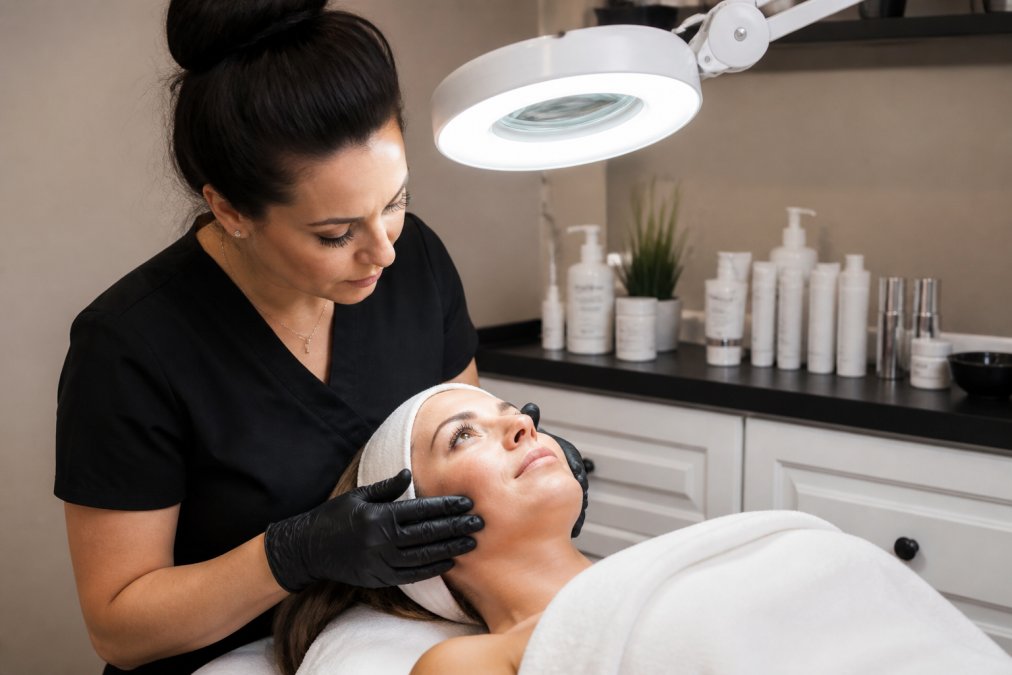
Most guides stop at "your esthetician will look at your skin." The part that actually protects you is the medical and medication review, and it is the step clients most often rush through.
Medications and topicals that change the plan:
- Isotretinoin (Accutane). Skin stays fragile and slow to heal for months after the last dose. Most practitioners avoid waxing, aggressive exfoliation, and many resurfacing treatments during that window and for a period afterward, because the skin can tear or scar rather than simply flake.
- Tretinoin, adapalene, and prescription retinoids. These thin the outer skin layer and increase sensitivity. A peel or strong enzyme treatment on top of nightly retinoid use is a common cause of over-exfoliation, so you may be asked to pause the retinoid for several days before your appointment.
- Antibiotics in the tetracycline family, plus certain diuretics and acne medications. These can make skin react more strongly to light-based treatments. If a service uses a laser or intense pulsed light, this history matters.
- Blood thinners and daily aspirin. These raise the chance of bruising or prolonged bleeding during extractions, so pressure and technique get adjusted.
- Hormonal medications and some antidepressants. These can shift oil production and pigmentation, which changes which concern is treated first.
Health conditions that call for a postponement or a modified plan:
Book your appointment today! →
- Active cold sores, impetigo, or any open or weeping lesion. Working over broken skin spreads infection.
- A current sunburn, windburn, or fresh shaving irritation. The barrier is already compromised.
- Recent cosmetic procedures. Injectables, threads, and laser work each carry their own waiting period before facials resume.
- Pregnancy or nursing. This is not an automatic no, but it narrows the ingredient list. High-percentage salicylic acid, certain essential oils, and some light-based services are typically avoided, and a pregnancy-safe hydrating or calming facial is usually the better fit.
- Eczema, rosacea, or psoriasis in an active flare. The goal shifts from correction to calming until the flare settles.
- Autoimmune conditions and a history of keloid scarring. These affect healing and how aggressively the skin can be treated.
A consultation is also your chance to ask what credentials your specialist holds and how they decide between a chemical peel, an enzyme peel, and gentler options. A few questions worth asking out loud:
- What did you see in my analysis, and what does that mean for today's treatment?
- Which products and acids will you use, and at what strength?
- Is there anything in my history that makes a service off-limits right now?
- What should my skin look like tomorrow, and what would count as a reaction worth calling about?
- How many sessions do you expect before I see a change?
If the answers are vague, that is useful information. A practitioner who can explain the why behind each choice is the one you want handling your barrier.
The Benefits of Custom Corrective Facials Over One-Size-Fits-All Treatments
Custom corrective facials outperform standard menu treatments because they respond to your skin's condition on the day you arrive, not a generic category on a price list. The same face can need hydration in January and oil control in July. At SKIN SOLUTIONS BY 2 DIVAS in Sebring, FL, the treatment is built after the analysis, not before it.
Here is what actually changes when the plan is built for you:
- Targeted ingredient selection. Serum infusion is matched to your concern, whether that's inflammation, pigment, or dehydration. A calming formula and a brightening formula may share a base, but the active ingredients and their concentrations are not interchangeable.
- Adjustable intensity. Exfoliation depth and extraction pressure are dialed to your skin barrier's tolerance. The same acid can be a gentle resurfacer or an aggressive one depending on how long it stays on and how it's neutralized.
- Progress tracking. Because your esthetician records what was used and how your skin responded, each session builds on the last instead of starting over.
- Fewer wasted sessions. You stop paying for treatments aimed at someone else's skin.
The mechanism behind "custom"
A corrective facial works in stages: cleanse, analyze, exfoliate, extract, infuse, and protect. Customization happens at each stage, not just one. The exfoliant is chosen for your barrier that day.
The budget question nobody answers
Where at-home care wins on value:
Where professional treatment earns its place:
That last point matters most. Many people cycle through facials for years without improvement because nobody ever adjusted the plan.
How Often to Get a Facial for Real, Lasting Results
| Concern | Typical Starting Frequency | Maintenance Frequency |
|---|---|---|
| Acne and congestion | Every 2-4 weeks | Every 4-6 weeks |
| Hyperpigmentation | Every 3-4 weeks | Every 6-8 weeks |
| Fine lines and elasticity | Every 4 weeks | Every 6-8 weeks |
| Dehydrated, sensitive skin | Every 4-6 weeks | Every 6-8 weeks |
How to Choose the Right Facial for Your Skin Concerns in Sebring, FL
Conclusion
Picking a facial from a menu is guessing.
Frequently Asked Questions
How do I know which facial is right for my specific skin concerns?
Start with a professional skin analysis. A trained esthetician examines your skin type, concerns, and barrier health before recommending anything. At Skin Solutions by 2 Divas in Sebring, FL, every facial begins with this step so the treatment targets what your skin actually needs, whether that is acne, hyperpigmentation, or fine lines. Choosing based on a menu alone often leads to disappointing results.
Can a custom corrective facial help with persistent acne or hyperpigmentation?
Yes, when the treatment is matched to your specific concern. Corrective facials may include extractions, chemical peels, LED light therapy, or serum infusion to address pore congestion, inflammation, and excess sebum production. For hyperpigmentation and sun damage, ingredients like vitamin C and exfoliating acids are often used. Results depend on consistency and your home routine, which is why a personalized plan matters.
How often should I get a facial to see real improvements in my skin?
Most people see meaningful changes with a facial every four to six weeks, which aligns with the skin's natural renewal cycle. If you are targeting active acne or hyperpigmentation, your esthetician may suggest more frequent sessions at first, then space them out as your skin improves. Your treatment plan should be adjusted based on how your skin responds over time.
What should I look for in a professional skincare specialist?
Look for a licensed esthetician with training in corrective skincare, not just relaxation facials. Ask about their skin analysis process, the products they use, and whether they build ongoing treatment plans. Credentials matter, but so does whether they listen to your concerns and explain the reasoning behind each step. A thorough consultation before your first treatment is a good sign.