 how-to
How Do You Choose the Right Sunscreen for Anti-Aging?
Last Updated: October 29, 2026
Quick Summary
Choose an anti-aging sunscreen by prioritizing UVA protection over SPF alone, since UVA rays drive most visible aging. Look for broad-spectrum SPF 30 or higher with a graded UVA claim like PA++++, or zinc oxide and avobenzone in U.S. formulas. Pick a texture you will wear daily.
- SPF 30 filters about 97% of UVB rays, while SPF 50 filters about 98%.
- The PA rating runs from PA+ to PA++++, with more plus signs meaning stronger UVA defense.
- Tinted formulas with iron oxides help block visible light linked to photoaging.
- Apply about a nickel-sized amount for face and neck each morning as your last skincare step.
- Reapply every two hours at the beach or pool, and after swimming or heavy sweating.
Table of Contents
- Why Sunscreen Is the Most Effective Anti-Aging Step You Can Take
- Reading the Label: SPF, Broad-Spectrum, and UVA Ratings Explained
- Best Sunscreen for Wrinkles: What to Look For Beyond SPF
- Mineral vs. Chemical Sunscreen: Which Fits Your Skin and Routine
- Sunscreen for Sensitive Skin: Avoiding Irritation While Staying Protected
- How Often to Reapply Sunscreen for Real Anti-Aging Results
- Layering Sunscreen With Retinoids, Vitamin C, and Moisturizer
- Book a Skin Analysis at Skin Solutions by 2 Divas in Sebring, FL
- Frequently Asked Questions
Why Sunscreen Is the Most Effective Anti-Aging Step You Can Take
If you want fewer wrinkles, anti-aging sunscreen beats almost every cream in your cabinet. That is the short answer. The longer answer explains why, and it changes how you shop.
The research backs this up. A 2019 review on anti-aging and sunscreens describes a clear rise in products that combine anti-aging ingredients with real sun protection. The logic is simple: you cannot repair damage you keep adding to.
At Skin Solutions by 2 Divas in Sebring, FL, we help clients build a sun protection routine that fits their skin.
So how do you choose the right sunscreen for anti-aging? You start by understanding what sun exposure actually does to skin.
How UV Exposure Drives Premature Skin Aging
Photoaging is the term for skin aging caused by repeated sun exposure. It shows up as dark spots, broken capillaries, leathery texture, and deep lines.
Ultraviolet radiation breaks down collagen and elastin, the fibers that keep skin firm. UVB rays cause sunburn. UVA rays go deeper and drive most of the visible aging.
The damage builds quietly. You may not see it for years. Then one day the mirror catches up.
That is why daily use matters more than occasional heavy application. Small, consistent protection wins.
If sun damage has already started, our guide on treating sun damage walks through how existing spots and texture can be addressed.
Reading the Label: SPF, Broad-Spectrum, and UVA Ratings Explained
SPF tells you how well a product blocks UVB rays, not UVA. That single fact explains most sunscreen mistakes. UVB is the burn ray. UVA is the aging ray, and it reaches you through clouds and window glass.
SPF 30 filters about 97% of UVB rays. SPF 50 filters about 98%, according to The Skin Cancer Foundation. The jump from 30 to 50 is small. The jump from nothing to 30 is enormous.
The American Academy of Dermatology's sunscreen guidance recommends three things: broad-spectrum protection, SPF 30 or higher, and water resistance.
How to Compare UVA Protection When SPF Won't Tell You
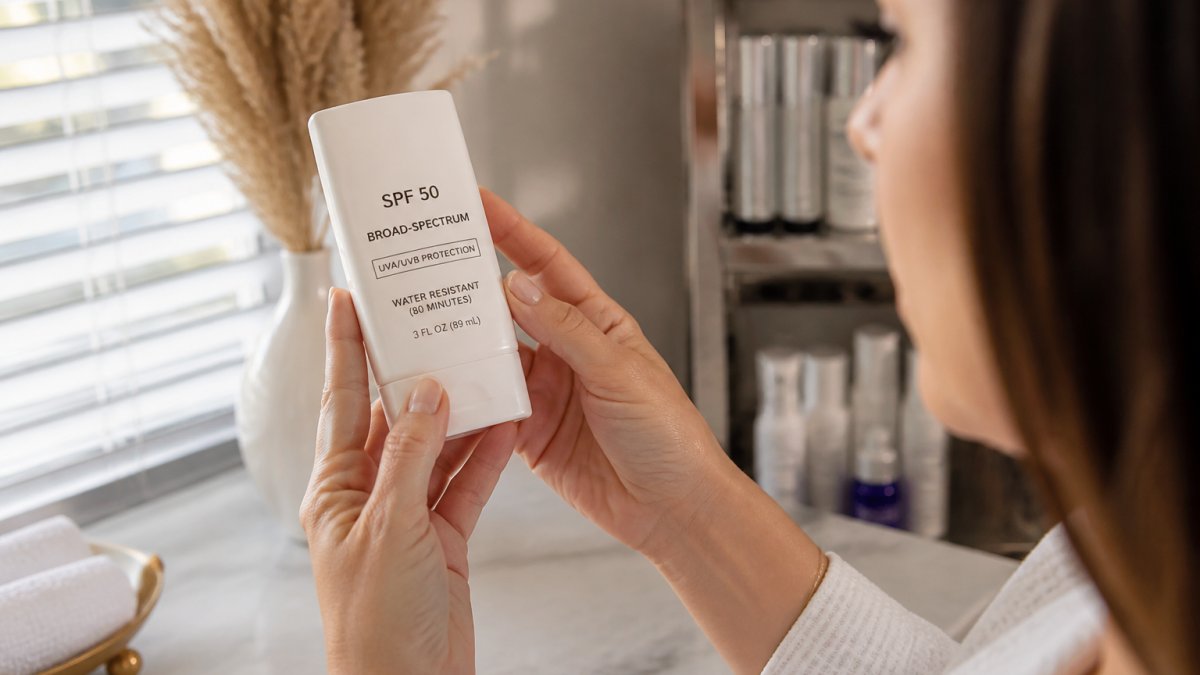
Here is the gap most shoppers fall into: two bottles can both say SPF 50 and broad-spectrum, yet deliver very different UVA defense. SPF says nothing about UVA strength. So you need a second number or symbol to compare products.
The PA rating is a UVA protection scale, usually shown as PA+ through PA++++. More plus signs mean stronger UVA defense.
You may also see a circled "UVA" symbol on European or Asian formulas. It signals that UVA protection meets a set ratio to the SPF, so the UVA defense scales with the UVB number.
In the U.S., labels rely on the words "broad-spectrum" rather than PA ratings. That phrase is a pass or fail test, not a graded scale. It confirms a minimum UVA-to-UVB ratio but does not tell you how strong the UVA protection is.
A practical way to compare when PA ratings are missing:
-
Look for the active ingredients. Zinc oxide and avobenzone are the two filters that deliver strong UVA coverage in U.S. formulas. A product with neither is weaker on UVA, even at SPF 50.
-
Prefer a graded UVA claim when you can find one. PA++++ or the UVA circle gives you a real comparison point that "broad-spectrum" alone does not.
-
Do not assume a higher SPF means better UVA protection. The two scales move independently.
At Skin Solutions by 2 Divas in Sebring, FL, we help clients read past the front of the bottle and match UVA strength to their skin and daily exposure.
Best Sunscreen for Wrinkles: What to Look For Beyond SPF
The best sunscreen for wrinkles does three jobs at once. It blocks UV, defends against other light, and supports the skin barrier.
A 2021 review of sunscreens and photoaging notes that visible light and infrared light may also contribute to photoaging. That makes them worth considering when you pick a formula.
Here is what we tell clients to scan for:
Book your appointment today! →
- Broad-spectrum SPF 30 or higher as the baseline
- Tinted formulas with iron oxides, which help block visible light
- Antioxidants like vitamin C to support defense
- Hydrating ingredients such as hyaluronic acid and squalane
- A wearable finish you will actually use daily
Texture matters more than people admit. An anti-aging sunscreen you dread wearing gets skipped. A lightweight one gets used.
Mineral vs. Chemical Sunscreen: Which Fits Your Skin and Routine
Mineral sunscreen uses zinc oxide or titanium dioxide to sit on the skin and deflect UV. Chemical sunscreen uses filters that absorb UV and convert it to heat.
Neither is automatically better. The right pick depends on your skin type and habits.
| Factor | Mineral Sunscreen | Chemical Sunscreen |
|---|---|---|
| Active ingredients | Zinc oxide, titanium dioxide | Filters like avobenzone |
| Best for | Sensitive skin, reactive skin | Everyday wear, easy blending |
| Texture | Thicker, can leave white cast | Lighter, spreads easily |
| Onset | Works right away | Needs time to absorb |
| Reapplication | Easier over makeup | Can pill when layered |
A common mistake is choosing based on the label alone. In practice, the formula you enjoy wearing is the one that protects you.
Sunscreen for Sensitive Skin: Avoiding Irritation While Staying Protected
Sunscreen for sensitive skin should be simple. Fewer ingredients means fewer chances for irritation.
Some people with reactive skin find mineral or fragrance-free formulas easier to tolerate.
Watch out: layering strong actives and a new sunscreen at the same time makes it hard to tell what caused a reaction. Add one new product at a time.
If your skin is easily irritated, professional guidance helps. Our guide on choosing the right facial for your skin concerns can help you find a treatment suited to sensitive skin.
How Often to Reapply Sunscreen for Real Anti-Aging Results
Reapplication is generally recommended during extended sun exposure, and sooner after swimming or heavy sweating. For a normal workday indoors, one morning application usually covers you, as long as you applied enough to begin with.
Most people underapply. A thin smear does not deliver the SPF on the label. Most people apply less sunscreen than the amount used in testing, which means the protection they get can be lower than the label suggests.
A realistic daily plan looks like this:
- Apply a generous layer each morning as your last skincare step, using about a nickel-sized amount for face and neck
- Let it set for a few minutes before makeup so it does not pill
- Reapply before lunch if you are outdoors or near windows for long stretches
- Reapply every two hours at the beach or pool, and after swimming or heavy sweating
- Use a water-resistant formula for swimming and sport
- Keep a stick or spray in your bag for easy touch-ups
Reapplying Over Makeup Without Ruining Your Look
This is where most routines fall apart. Reapplying a cream over foundation smears it. The workaround is to match the format to the situation:
- Sunscreen sticks glide over makeup and are the easiest touch-up for the face. Swipe several passes over each area rather than one thin streak.
- Setting sprays with SPF add light protection over makeup, though they are best as a supplement, not your only application.
- Tinted mineral powders with SPF help with shine and add a little protection, but the amount you would need for full SPF is more than most people apply.
- A cushion or mist works for a quick refresh at midday indoors.
Consistency beats perfection. Daily use at SPF 30 with a full application protects more than occasional use at SPF 50 applied thinly. If you want a routine built around your skin, the team at Skin Solutions by 2 Divas in Sebring, FL can map application and reapplication to your day.
Layering Sunscreen With Retinoids, Vitamin C, and Moisturizer
Order matters when you layer sunscreen with actives. Get it wrong and you dilute your protection or irritate your skin.
Here is the order we recommend:
- Cleanser
- Vitamin C serum in the morning
- Moisturizer to support the skin barrier
- Sunscreen as the final step
- Retinoids at night, never in the morning
Retinoids can make skin more sun-sensitive, so daily sun protection is important when you use them.
For a full walkthrough, read our step-by-step guide on layering skincare products effectively.
Book a Skin Analysis at Skin Solutions by 2 Divas in Sebring, FL
Choosing sunscreen is easier when you know your own skin. That is where a professional skin analysis helps.
At Skin Solutions by 2 Divas, our services begin with a thorough skin analysis. From there, we build a custom corrective facial plan around your concerns, whether that is aging, acne, or hyperpigmentation. Appointments are by appointment only.
If you want to know when prevention should start, read our guide on when to start preventative wrinkle treatments. Then book an appointment and let us match your routine to your skin.
Frequently Asked Questions
What type of sunscreen is best for preventing signs of aging?
The best anti-aging sunscreen is one with broad-spectrum protection, which covers both UVA and UVB rays, plus SPF 30 or higher. The American Academy of Dermatology recommends broad-spectrum, SPF 30+, and water resistance as the baseline. UVA rays drive much of the photoaging you see as wrinkles and dark spots, so a formula with a strong UVA rating (look for PA+++ or the UVA circle symbol) matters as much as the SPF number. Pair it with antioxidants and consistent reapplication for the best results.
Should I choose mineral or chemical sunscreen for aging skin?
Both work. Mineral sunscreens use zinc oxide or titanium dioxide and tend to suit sensitive or reactive skin, though they can leave a white cast on deeper skin tones. Chemical sunscreens feel lighter and layer well under makeup, which helps with daily consistency. For aging skin, the deciding factor is usually texture and how willing you are to reapply. A formula you actually enjoy wearing every day protects you better than a theoretically superior one you skip.
How often should I reapply sunscreen to help prevent skin aging?
Reapply every two hours during sun exposure, and sooner after swimming, sweating, or toweling off. For everyday indoor work, a morning application plus one midday reapplication covers most people. If you sit near a window, remember that UVA passes through glass, so reapplication still matters. A tinted SPF powder or stick makes midday reapplication realistic without disturbing makeup.
Can sunscreen reverse existing wrinkles or sun damage?
Sunscreen prevents further damage rather than reversing what is already there. Once UV exposure stops compounding, skin has a chance to repair, and topical retinoids or in-office treatments can then address existing fine lines and pigmentation. A custom corrective facial at Skin Solutions by 2 Divas in Sebring, FL can assess your sun damage and build a plan that pairs daily sun protection with treatments targeting texture and tone.
Your skin faces the same sun tomorrow that it faced today. The question is whether your routine is ready for it. Skin Solutions by 2 Divas offers custom corrective facials, thorough skin analysis, and a results-driven plan built around your skin. Get started with Skin Solutions by 2 Divas and give your skin the protection and care it deserves.