 how-to
How to Calm Irritated Skin Before a Wedding: 2026 Guide
Table of Contents
- Why Wedding Stress Shows Up on Your Skin
- How to Calm Irritated Skin on Face: The First 48 Hours
- What to Stop Using During a Flare-Up
- A Gentle Skincare Routine for Irritated Skin
- Your Wedding Skincare Timeline by Time Remaining
- What to Avoid Before a Wedding Facial
- When to Seek Medical Care for Irritated Skin
- Makeup and Concealment on Sensitized Skin
- Frequently Asked Questions
Last Updated: October 20, 2026
Why Wedding Stress Shows Up on Your Skin
Wedding planning is a stress test for your skin.
The timing is brutal.
There's a second cause most brides miss: the "prep" itself. A new exfoliant, a strong retinol, a last-minute peel.
At SKIN SOLUTIONS BY 2 DIVAS in Sebring, FL, we see this every wedding season.
So here's our rule: treat irritation like a wound, not a blemish. You don't attack it. You quiet it.
How to Calm Irritated Skin on Face: The First 48 Hours
Calming irritated skin on the face starts with stripping your routine to three steps: cool water, a plain moisturizer, and nothing else.
First, identify the likely cause
Most pre-wedding flare-ups fall into one of five buckets.
- Contact irritation from a new product, fragrance, or harsh cleanser. Redness, stinging, and tightness appear within hours to a day. Most common, and most responsive to a full product pause.
- Over-exfoliation from acids, retinoids, scrubs, or a strong professional treatment. Skin feels raw, stings when water touches it, and may flake. The barrier is thinned, so the fix is moisture and time, not more product.
- Allergic contact dermatitis from a specific ingredient, often fragrance, preservatives, or metal in jewelry. Itching, small bumps, or a rash spreading beyond where you applied it. Often needs a doctor if it doesn't settle in a few days.
If you can't tell which bucket you're in, assume contact irritation or over-exfoliation and follow the 48-hour protocol below.
The 48-hour reset protocol
- Stop everything active. Retinol, acids, scrubs, vitamin C serums, clay masks, and anything that tingles, all of it, for at least 48 hours. Tingling isn't a sign it's working; it's a sign the barrier is compromised.
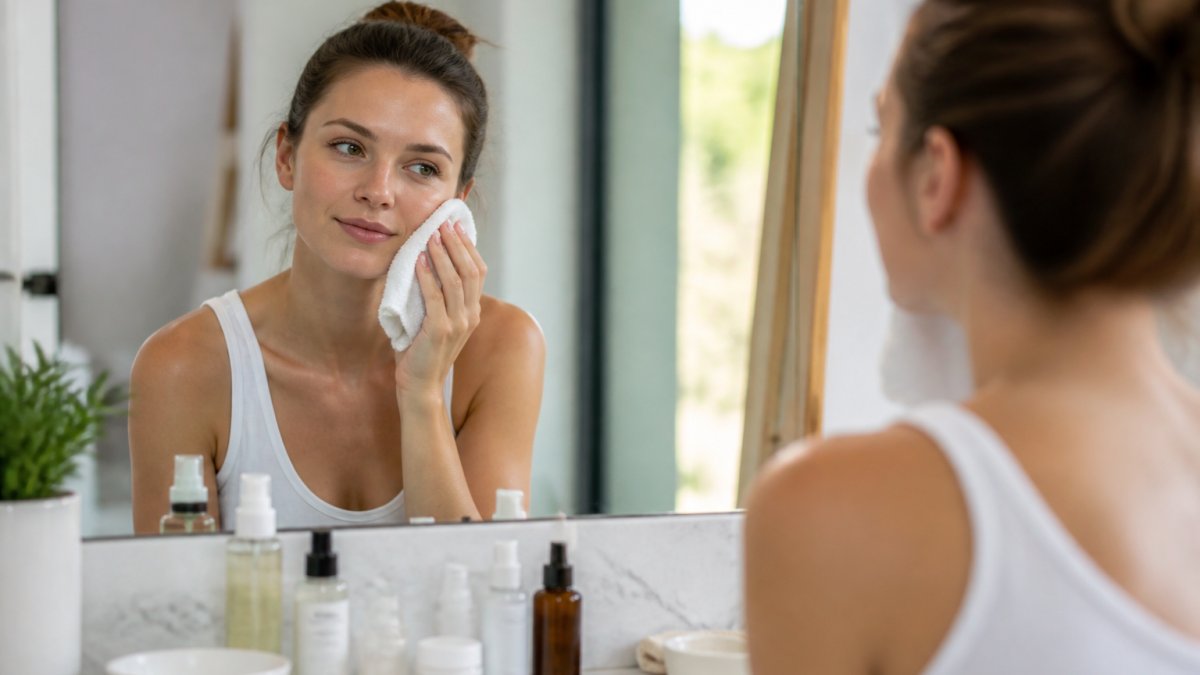
- Rinse with lukewarm water only. No foaming cleanser, no scrubbing. Pat dry with a clean towel. If you must cleanse, use a creamy, fragrance-free cleanser, only at night.
- Apply a fragrance-free moisturizer while skin is still damp. Look for ceramides, glycerin, or squalane. Skip essential oils, fragrance, and alcohol.
- Cool, don't freeze. A damp room-temperature cloth is enough. Direct ice can worsen redness by constricting vessels, then causing rebound flushing.
- Skip makeup if you can. If not, keep it minimal and remove it gently with a creamy cleanser.
- Keep hands off. Touching and picking prolongs irritation and invites infection. Change your pillowcase and clean your phone screen.
- Stay out of the sun and heat. UV and heat deepen redness. If you must be outside, wear mineral sunscreen and a hat.
Most irritation from a product or rough facial settles in two to three days. The 48-hour mark is your checkpoint: calmer skin means you're on track and can slowly reintroduce a plain cleanser; same or worse means move to the medical section below.
What not to do in the first 48 hours
- Don't apply hydrocortisone without asking a pharmacist or doctor. It can thin skin and mask a worsening condition.
- Don't use a "soothing" mask with fragrance or essential oils. Peppermint, eucalyptus, and lavender are common triggers.
- Don't exfoliate the flakes. Flaking is dead skin lifting off a healing barrier; scrubbing restarts the injury.
At SKIN SOLUTIONS BY 2 DIVAS in Sebring, FL, we walk brides through this exact triage before any treatment. Knowing your bucket is the difference between a two-day recovery and a two-week one.
What to Stop Using During a Flare-Up
Stop every product that exfoliates, resurfaces, or "stimulates" until the redness fades, acids, retinoids, scrubs, enzyme powders, and any serum that tingles on contact.
Here's what to pause, and what to keep:
| Product | Action During Flare-Up | Why |
|---|---|---|
| Retinol / retinoids | Pause completely | Increases cell turnover and irritation |
| AHA / BHA acids | Pause completely | Exfoliation thins an already fragile barrier |
| Physical scrubs, brushes | Pause completely | Friction worsens redness |
| Vitamin C serum | Pause | Can sting on compromised skin |
| Clay or peel-off masks | Pause | Drying and stripping |
| Foaming cleansers | Swap for creamy cleanser | Surfactants strip oils |
| Fragranced products | Swap for fragrance-free | Fragrance is a common trigger |
| Gentle moisturizer | Keep | Barrier support |
| Sunscreen (mineral) | Keep | UV worsens inflammation |
Patch testing is the step almost everyone skips. Before any new product goes on your face, apply a small amount to your inner forearm and wait 24 to 48 hours. It's the cheapest insurance in skincare.
A Gentle Skincare Routine for Irritated Skin
A gentle skincare routine for irritated skin has four steps and no more: cleanse, hydrate, moisturize, protect.
Cleanse with a creamy, fragrance-free cleanser and lukewarm water. Once at night is enough.
Hydrate with a simple hydrating serum. Hyaluronic acid holds water in the skin without stinging.
Moisturize with a barrier-supporting cream. Look for ceramides, glycerin, or squalane.
Protect with a mineral sunscreen every morning. Sun protection matters more during a flare, not less.
Consistency beats intensity.
Your Wedding Skincare Timeline by Time Remaining
How you handle irritated skin depends entirely on how many weeks you have. The biggest mistake brides make is treating every stage the same, experimenting at week two the way they would at month three. Here's the countdown plan we use at our Sebring studio.
Book your appointment today! →
| Time Until Wedding | What to Do | What to Skip |
|---|---|---|
| 3+ months | Build a consistent routine; book a professional facial and skin analysis; patch test anything new | Nothing, this is your window for experiments |
| 6-8 weeks | Settle on products; patch test anything new; address any active irritation | New actives, new brands, experiments |
| 4 weeks | Last professional facial; lock your routine; treat any flare with the 48-hour reset | Chemical peels, microneedling, new treatments |
| 2 weeks | Gentle routine only; hydrate and sleep; calm any flare | All new products, exfoliation, extractions |
| 1 week | Cleanse, moisturize, protect; calm any flare; patch test makeup | Facials, masks, extractions, new makeup |
| Day before | Nothing new; light hydration; early night | Alcohol, salty food, new anything |
The decision rule for each stage
The two-week mark is the hard cutoff. After that, your job is protection, not improvement. Every professional would rather see a bride with a boring routine and calm skin than an ambitious one with a red, angry face on the morning of.
- Weeks 3+ out: You have room to treat. A custom corrective facial can address texture and tone with enough recovery time built in.
- Two weeks out: Stop treating and start protecting. If skin is irritated, run the 48-hour reset. Don't book a facial to fix it, start a new active, or try a new makeup brand without a patch test.
- One week out: Your only job is to keep the barrier calm. Cleanse, moisturize, protect. If a flare appears, run the reset protocol and resist the urge to "do something." The most common week-of mistake is a last-minute mask or scrub.
What not to experiment with at each stage
The stage-specific "don'ts" matter more than the "dos," because most wedding skin disasters come from a well-intentioned experiment too close to the date.
- Don't start a new active (retinol, acid, vitamin C) inside 8 weeks. Purge and irritation can take 4-6 weeks to settle, which puts you past the wedding.
- Don't book a first-time facial inside 4 weeks. First appointments are experiments. Redness and breakouts can follow even a gentle facial.
- Don't get extractions inside 2 weeks. Extractions leave marks that need time to fade.
If you're further out, a custom corrective facial can address texture and tone with enough recovery time built in. If you're two weeks out, leave your skin alone. At SKIN SOLUTIONS BY 2 DIVAS in Sebring, FL, we build the timeline around your actual date, so you're never guessing whether a treatment is safe.
What to Avoid Before a Wedding Facial
Avoid booking a wedding facial in the final two weeks, and avoid anything new in the week before the wedding. A facial is a treatment, and treatments cause temporary reactions.
Here's what to avoid before a wedding facial:
- Don't book it close to the date. Four weeks out is the safe window.
- Don't combine it with other treatments. No peel plus facial in the same week.
- Don't try a new provider right before the wedding. First appointments are experiments.
If you've never had a corrective facial, ask what the treatment involves and what recovery looks like.
At SKIN SOLUTIONS BY 2 DIVAS, every appointment starts with a full skin analysis. That's not a sales step.
When to Seek Medical Care for Irritated Skin
See a doctor or dermatologist if irritation spreads, blisters, oozes, or comes with fever, or if it hasn't improved after a week of gentle care.
Watch for these red flags:
- Spreading redness that moves beyond the original area
- Swelling around the eyes, lips, or throat (seek care immediately)
- Blisters, crusting, or oozing
Persistent redness with flushing, visible vessels, or acne-like bumps may point to rosacea. According to the American Academy of Dermatology, early treatment of inflammatory skin conditions leads to better long-term control.
We're estheticians, not doctors. When a client's skin looks like it needs a medical opinion, we say so. A good provider knows the line between a facial and a prescription.
Makeup and Concealment on Sensitized Skin
Here's how to keep makeup from making things worse:
- Patch test every product on your jawline or forearm a week out.
- Skip primer if your skin is reactive. Fewer layers means fewer triggers.
- Use a green-tinted corrector on redness, then a light mineral foundation over it.
If your skin is flaring on the day, less is more.
The best makeup artist in the world can't hide a barrier that's on fire. The work happens in the weeks before.
Wedding skin rarely fails because of one bad product.
If you're preparing for a wedding and want a routine that fits your skin instead of a generic checklist, we can help.
Frequently Asked Questions
How long does irritated skin take to calm down before a wedding?
Mild irritation from a new product or a stressful week often settles within 3 to 7 days once you stop the trigger and stick to a gentle routine. Redness from a facial or peel can take 5 to 10 days. If your skin is still stinging, burning, or peeling after two weeks, or if the reaction is spreading, book a visit with a dermatologist. Skin Solutions by 2 Divas in Sebring, FL can assess your skin and adjust your routine around your wedding date.
Should you stop using active skincare ingredients when your skin is irritated?
Yes. Pause retinoids, AHAs, BHAs, vitamin C serums, and any exfoliating scrubs until redness and stinging fade. These ingredients are useful long-term but they thin the skin barrier and make irritation worse during a flare. Swap to a gentle cleanser, a fragrance-free moisturizer, and sunscreen. Once your skin has been calm for at least a week, reintroduce one active at a time, every other night, so you can spot a reaction early.
Can a facial help calm irritated skin before a wedding?
A corrective facial can help if it is matched to your skin's current state, not a generic package. Calming treatments with hydrating masks, LED light, and gentle facial massage can reduce redness and support the skin barrier. Aggressive extractions, chemical peels, and microneedling should wait until your skin is stable. Book a consultation first so a specialist can analyze your skin and time the treatment at least two weeks before the wedding.
What should you avoid before a wedding facial?
Skip at-home exfoliation, retinoids, and new products for at least five days before your appointment. Avoid alcohol, waxing, and intense sun exposure for 48 hours, and do not shave your face the morning of. Tell your esthetician about any irritation, recent treatments, or products you are using. If you have a history of cold sores, mention it so they can plan around it. These steps lower the chance of a reaction that could throw off your wedding skincare timeline.