 how-to
How Long Does It Take to Clear Acne? Real Timelines
Table of Contents
- The Acne Treatment Timeline: What to Expect Week by Week
- Why Is My Acne Not Clearing Up? Common Reasons
- Signs Acne Is Healing: What Real Progress Looks Like
- How Long Does It Take to Clear Acne on Different Treatment Types?
- How to Get Rid of Acne Scars Fast: What Actually Works
- Tracking Progress and Managing the Wait
- Frequently Asked Questions
Last Updated: September 12, 2026
The Acne Treatment Timeline: What to Expect Week by Week
Most people who start a new acne routine quit before it has a chance to work. That single pattern explains more failed treatments than any ingredient ever will. If you want to know how long does it take to clear acne, the honest answer is that meaningful clearing usually takes 8 to 12 weeks, and the first month often looks worse before it looks better. At SKIN SOLUTIONS BY 2 DIVAS, we understand this frustration in clients who have cycled through product after product without ever giving one a real chance.
Acne is a condition of the hair follicle, where excess sebum production, dead skin cells, and inflammation interact. Because that cycle runs on the skin's own renewal schedule, no treatment can shortcut it. The American Academy of Dermatology's acne resource center notes that improvement typically becomes visible after four to eight weeks of consistent use, with continued gains over several months.
Here is the week-by-week shape of a realistic acne treatment timeline:
| Phase | Timeframe | What You'll Typically See |
|---|---|---|
| Adjustment | Weeks 1-4 | Dryness, purging, possible irritation |
| Early change | Weeks 4-8 | Fewer new lesions, calmer inflammation |
| Meaningful clearing | Weeks 8-12 | Visible reduction in active breakouts |
| Maintenance | Month 3+ | Stabilized skin, focus shifts to marks |
Weeks 1-4: The Adjustment Phase
The first month is the hardest and the least rewarding. Topical treatments speed up skin cell turnover, which pushes existing comedones to the surface faster than they would have appeared on their own. This is skin purging, and it is normal. A common mistake is abandoning a product in week three, right before it would have started working.
Weeks 4-8: Early Signs of Change
By week six, most people notice fewer new breakouts even if old ones are still healing. Inflammation settles first. If you are tracking progress, count new lesions per week rather than judging your skin in the mirror each morning, because day-to-day fluctuation is meaningless.
Weeks 8-12: Meaningful Clearing
This is where the effort pays off. By the three-month mark, consistent users typically see a clear reduction in active acne. What remains is often post-inflammatory marks, which follow their own slower timeline.
Why Is My Acne Not Clearing Up? Common Reasons
The most common reason acne does not clear is inconsistency, not the wrong product. Skipping nights, switching routines every few weeks, and layering too many actives at once all stall progress. Treatment adherence matters more than which specific active you choose.
Purging vs. Breaking Out: How to Tell the Difference
Purging happens in areas where you normally break out, resolves within about six to eight weeks, and fades as the skin adjusts. A true breakout from irritation appears in new areas, comes with redness, stinging, or flaking, and does not improve with time. If your skin is reactive, patch testing a new product on a small area first prevents a lot of unnecessary setbacks.
Treatment Adherence and Consistency
Prescription medication and over-the-counter options both depend on steady use. Gaps of several days give the follicle time to re-clog, and you effectively restart the clock. Set a simple routine you can actually follow rather than an elaborate one you abandon by week two.
Signs Acne Is Healing: What Real Progress Looks Like
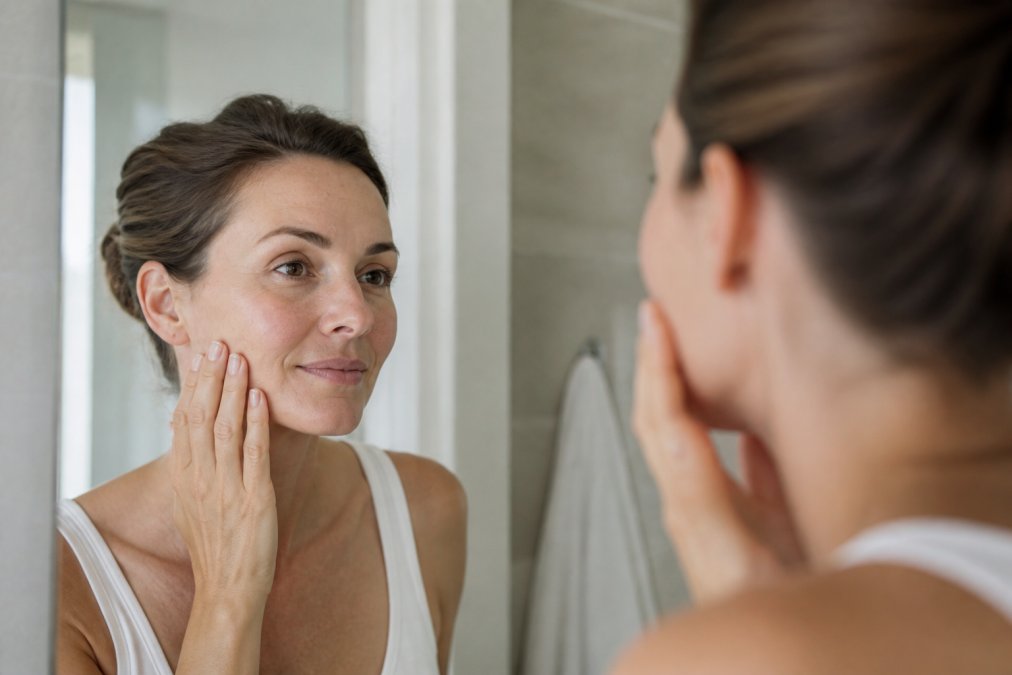
Real progress looks boring. Fewer new pimples each week, less tenderness under the skin, and a gradual fading of redness are the signals that matter. A shrinking cyst that no longer hurts is progress even if it is still visible.
The mistake most people make is judging healing by how their skin looks today versus yesterday. Judge it by this week versus two weeks ago. That longer lens is the only one that shows the trend.
How Long Does It Take to Clear Acne on Different Treatment Types?
Different treatment types move at different speeds, and knowing which one you are on sets realistic expectations. The U.S. Food and Drug Administration's guidance on acne product claims is clear that even approved treatments are evaluated over weeks, not days. The reason comes down to mechanism: every acne treatment has to interrupt the same follicle cycle, excess sebum, retained dead skin cells, and inflammation, and each category enters that cycle at a different point.
| Treatment Type | Typical First Results | Full Effect | Best For | How It Works |
|---|---|---|---|---|
| Topical retinoids | 4-8 weeks | 12 weeks | Comedones, mild acne | Normalizes how follicle cells shed |
| Benzoyl peroxide | 2-4 weeks | 8-12 weeks | Inflammatory papules | Kills C. acnes bacteria, reduces inflammation |
| Salicylic acid | 2-4 weeks | 6-8 weeks | Congestion, blackheads | Dissolves oil and loosens plugs inside the pore |
| Oral antibiotics | 4-6 weeks | 12 weeks | Moderate inflammatory acne | Reduces bacterial load and inflammation systemically |
| Hormonal therapy | 8-12 weeks | 3-6 months | Hormonal acne in adults | Lowers the androgen-driven sebum signal |
Topical Treatments and Retinoids
Retinoids remain the backbone of topical treatment because they normalize how the follicle sheds cells. That is also why they cause purging: speeding up turnover pushes existing comedones to the surface faster than they would have appeared on their own. Expect irritation in the first few weeks, then real improvement. Start two to three nights per week and build up. Adapalene is available over the counter, while tretinoin and tazarotene require a prescription, the prescription versions are generally stronger but not necessarily faster, and the difference in speed is usually smaller than the difference in irritation.
Benzoyl peroxide and salicylic acid work on a shorter curve because they act on bacteria and pore congestion directly rather than on the turnover cycle. That makes them useful early while a retinoid is still ramping up, but they are not substitutes for one. A common pattern is to pair a benzoyl peroxide wash in the morning with a retinoid at night, which spreads the irritation load across the day.
Oral Medications and Prescription Options
Prescription medication works faster for moderate to severe acne, but it still follows the same 8-to-12-week curve. Oral antibiotics are typically paired with a topical to prevent resistance and are not meant as a long-term solo solution, most practitioners limit them to roughly three to four months and taper once improvement holds. Hormonal therapy, including combined oral contraceptives and spironolactone, works on a slower clock because it changes the sebum signal itself rather than the follicle surface; expect the first real change around the three-month mark and full effect closer to six.
Isotretinoin is the outlier. It is the closest thing to a definitive course, but it is reserved for severe or treatment-resistant cases, requires monitoring, and still takes months before clearing is complete. If you are weighing options, the honest trade-off is usually speed versus tolerability versus long-term control, not one treatment that wins on all three.
How to Get Rid of Acne Scars Fast: What Actually Works
Post-acne marks are not the same as scars, and they do not respond to acne treatments. Red and brown marks fade on their own over several months as inflammation resolves. True indentations require in-office procedures and a longer commitment.
What actually helps marks fade faster is sun protection, gentle exfoliation, and professional treatments that support skin cell turnover. A review of post-inflammatory hyperpigmentation research supports what we see in practice: marks fade on a timeline measured in months, not weeks, and sun exposure slows that process considerably. If you want to get rid of acne scars fast, plan for a series of sessions rather than a single appointment.
Tracking Progress and Managing the Wait
The psychological weight of waiting is the part most guides ignore. Watching your skin daily makes a normal 12-week process feel like failure, and that frustration is the single biggest driver of abandoned routines. A common pattern is that people quit in week three or four, right at the low point of purging, and conclude the product did not work, when the timeline simply had not played out yet.
A Tracking Method That Actually Shows the Trend
Photograph your face in the same lighting once a week, note new breakouts, and review monthly. The goal is not a daily scorecard; it is a trend line. Here is a simple system that takes about two minutes a week:
- Same day, same time, same spot, same light. Morning versus evening light will convince you nothing is working when it is.
- Count new lesions per week, not total pimples. Total count includes old ones still healing, which makes progress invisible.
- Rate tenderness, not just appearance. A cyst that no longer hurts is progress even if it is still visible.
- Note what changed. New product, missed nights, a stressful week, context explains the noise.
Lifestyle Factors Beyond Medication
Most guides stop at the prescription. Sleep, stress, and diet all influence inflammation and sebum production, and they are the levers you control while a treatment is still ramping up. Chronic stress raises cortisol, which can drive oil production and slow healing. Short sleep does the same. On diet, the most consistent finding is that high-glycemic eating patterns are associated with more breakouts in some people, the evidence for dairy is weaker and more individual. None of this replaces treatment, but it changes how fast the same treatment appears to work.
When the Wait Becomes a Mental Health Issue
Acne has a well-documented association with anxiety, low mood, and social withdrawal, and a 12-week timeline is long enough for that to build. If the waiting period is affecting how you sleep, work, or leave the house, that is a reason to see a dermatologist sooner rather than later, not because the treatment is failing, but because the emotional load is a legitimate part of the condition. Ask about prescription options, and ask about support. Treating the skin and treating the frustration are not separate projects.
For clients who want professional guidance rather than guesswork, a thorough skin analysis removes the trial-and-error phase entirely. That is where a targeted corrective facial plan can be highly beneficial.
Frequently Asked Questions
How do I know if my acne is clearing up?
Look for fewer new breakouts, reduced redness around existing spots, and flattening of raised bumps. Comedones may shrink or disappear. Inflammation decreases, and your skin feels less tender. Take photos in consistent lighting every two weeks to track changes you might miss in the mirror. Improvement is gradual, so visual progress tracking helps confirm that your skin is responding to treatment even when day-to-day changes feel invisible.
Why is my acne not going away after weeks of treatment?
Several factors can slow progress. Skin cell turnover takes roughly four to six weeks, so topical treatments need that long to show meaningful results. If you are using prescription medication, follow-up with your dermatologist matters because your dose or formula may need adjustment. Hormonal acne and cystic acne often require a combination approach. Poor treatment adherence, irritating products, or a compromised skin barrier can also stall improvement. Patch testing new products helps identify triggers.
Does acne get worse before it gets better?
Yes, skin purging is common when starting retinoids, benzoyl peroxide, or salicylic acid. Purging pushes existing comedones to the surface faster, which can look like a breakout. This typically lasts two to six weeks and happens in areas where you already break out. If new breakouts appear in unusual areas or last beyond eight weeks, that is irritation rather than purging, and you should adjust your routine or consult a dermatologist.
What is the typical timeline for seeing results from acne medication?
Topical treatments like retinoids and benzoyl peroxide usually show improvement in eight to twelve weeks. Oral antibiotics may reduce inflammation within four to six weeks, but they are typically used short-term alongside topicals. Hormonal treatments can take three to six months. Clinical trial data and dermatologist guidance consistently point to a twelve-week benchmark for judging whether a treatment is working. After clearing, a maintenance phase keeps results stable.
Waiting for acne to clear tests patience more than it tests products. If you are tired of guessing which routine will finally work, SKIN SOLUTIONS BY 2 DIVAS offers custom corrective facials built on a thorough skin analysis, so your plan targets your acne, marks, and skin texture together. Our results-driven approach and personalized care mean you are not cycling through products alone. Book your appointment today and get a plan built around your skin.