 how-to
Fix Skin Texture Issues: A Step-by-Step Guide
Table of Contents
- Understanding What Causes Uneven Skin Texture
- Step 1: Start With Double Cleansing to Remove Buildup
- Step 2: Choose the Right Exfoliation Method for Your Skin
- Step 3: Incorporate Retinoids for Cell Turnover
- Step 4: Repair Your Skin Barrier With Hydration
- Best Chemical Peels for Skin Texture Improvement
- Is Professional Microneedling Worth It for Texture
- Step 5: Add Sun Protection and Antioxidants Daily
- Frequently Asked Questions
Last Updated: August 31, 2026
Understanding What Causes Uneven Skin Texture
Uneven skin texture results from pore congestion, reduced cell turnover, collagen loss, and accumulated sun damage. The most common culprits are sebum buildup, dead skin cells that aren't shedding properly, and age-related collagen loss. Sun exposure accelerates this significantly by breaking down structural proteins in your dermis.
Most people make the mistake of reaching for the strongest exfoliant or most expensive serum without addressing underlying barrier function and cell turnover. At Skin Solutions by 2 Divas, we analyze your skin's actual condition before recommending anything, because texture issues look different depending on whether they're caused by dehydration, congestion, or damage.
The good news: fixing skin texture effectively doesn't require invasive procedures or complicated routines. It requires understanding the sequence: cleanse properly, exfoliate strategically, support cell turnover, repair your barrier, and protect from future damage. Follow this progression and you'll see measurable improvement within 4-6 weeks.
Step 1: Start With Double Cleansing to Remove Buildup
Double cleansing removes oil, makeup, and environmental debris that prevents other products from working. This creates a clean canvas so treatments actually penetrate.
The first cleanse dissolves oil-based impurities. Use an oil cleanser, micellar water, or balm that breaks down sebum, sunscreen, and makeup. Massage gently for 30-60 seconds, emulsify with water, and rinse thoroughly.
The second cleanse removes water-soluble debris. Use a gentle cream, gel, or milk cleanser without sulfates. Massage for 30-45 seconds and rinse with lukewarm water.
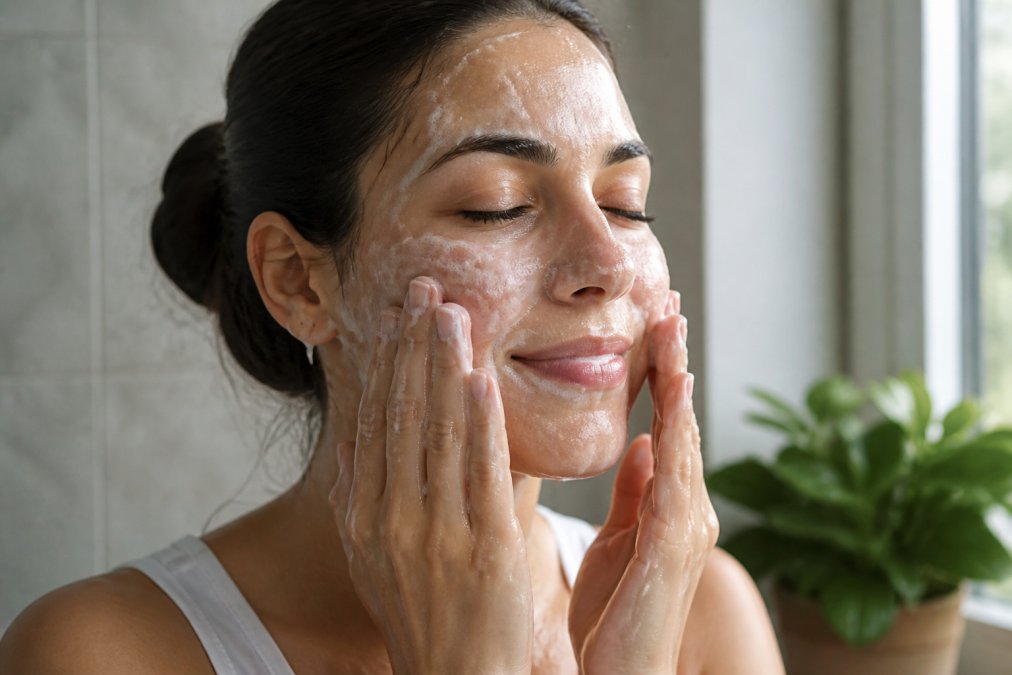
Cleanse morning and night, but don't over-cleanse. Twice daily is standard. If you wore sunscreen or makeup, both steps are necessary. If you're just rinsing off nighttime sebum, a single gentle cleanser may suffice.
A clean, properly prepared skin surface is where every texture-fixing routine begins.
Step 2: Choose the Right Exfoliation Method for Your Skin
Exfoliation accelerates cell turnover and prevents pore congestion, two critical drivers of uneven texture. Chemical exfoliation is generally more effective and gentler than physical exfoliation because it dissolves bonds between dead skin cells rather than abrading them.
Chemical Exfoliation With AHAs and BHAs
Alpha hydroxy acids (AHAs), primarily glycolic and lactic acid, work on the skin's surface and are ideal for dry, dehydrated, or sun-damaged skin. Glycolic acid is the smallest AHA molecule and penetrates most effectively. Lactic acid is gentler and more hydrating, better for sensitive skin.
Beta hydroxy acids (BHAs), primarily salicylic acid, are oil-soluble and penetrate into pores to dissolve sebum buildup. Choose BHA if your texture stems from congestion; choose AHA for overall texture and sun damage.
A 5-10% glycolic acid serum at pH 3.5-4.0 exfoliates effectively without irritation (peer-reviewed research). Start with one exfoliant, not both simultaneously. Layering AHAs and BHAs damages your skin barrier and makes texture worse.
How Often Should You Exfoliate for Smooth Skin
Exfoliating too often damages your skin barrier and paradoxically worsens texture. For most people, 2-3 times per week is the baseline. Mild products like lactic acid may tolerate 4 times weekly; stronger glycolic or salicylic acid should stay at 2-3 times weekly. Sensitive skin should start at once weekly.
Never exfoliate on consecutive days. Your skin needs 24-48 hours to recover between treatments.
Watch for over-exfoliation signs: persistent redness, tightness, flaking, increased sensitivity, or new breakouts. Scale back immediately. Most people see noticeable improvement after 4-6 weeks of consistent, properly-spaced exfoliation. Pushing harder doesn't speed this up; it damages your skin.
Step 3: Incorporate Retinoids for Cell Turnover
Retinoids accelerate cell turnover and stimulate collagen production, addressing structural loss that causes sagging texture and fine lines. Retinol is the effective over-the-counter form. Look for stabilized retinol in concentrations between 0.3% and 1%.
Start slowly: use retinol once or twice weekly for 2-3 weeks, then increase to 3-4 times weekly as your skin adapts. Apply to clean, completely dry skin, then follow with a hydrating serum and moisturizer. Retinoids are drying, so barrier support is non-negotiable.
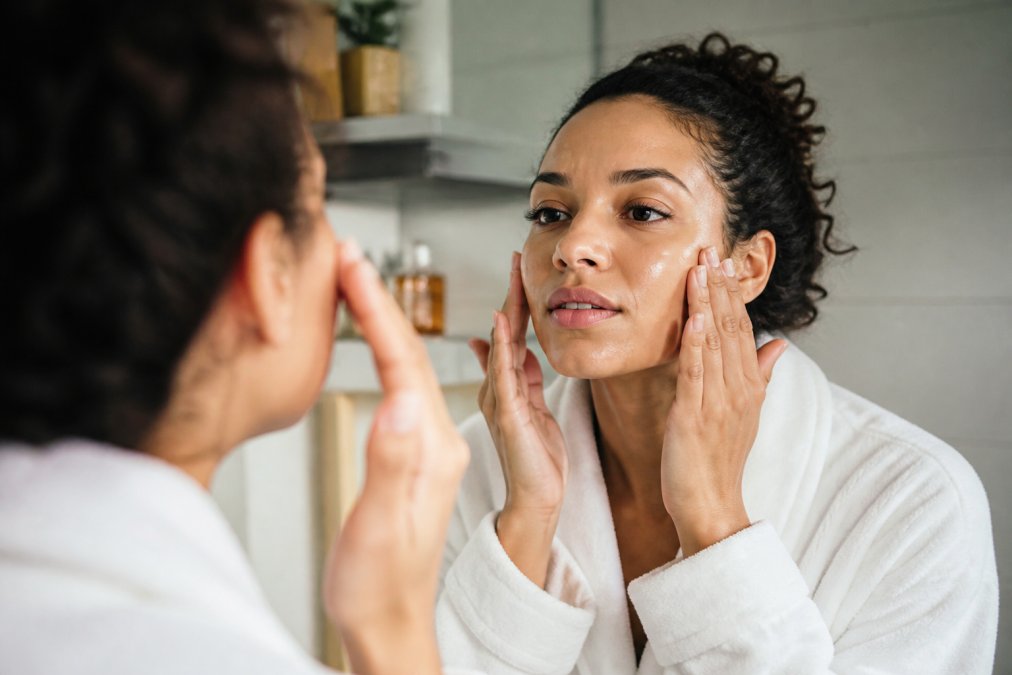
Expect a retinization period of 4-8 weeks with mild redness, flaking, or temporary texture changes. This is normal. Most people see meaningful improvement after 8-12 weeks of consistent use.
Use retinol on non-exfoliation nights to prevent over-irritation. Never use retinoids during the day without serious sun protection; retinoids increase sun sensitivity, so SPF 30 minimum is essential.
Step 4: Repair Your Skin Barrier With Hydration
Your skin barrier is your first line of defense against irritation and water loss. When exfoliating and using actives like retinoids, you create barrier stress. Supporting that barrier with proper hydration prevents inflammation and allows treatments to work effectively.
Start with a hydrating toner or essence containing humectants like hyaluronic acid, glycerin, or propylene glycol. Apply to damp skin immediately after cleansing. Follow with a hydrating serum containing hyaluronic acid, niacinamide, or peptides. Seal everything with a moisturizer appropriate to your skin type.
Book your appointment today! →
Many people with texture issues actually have a compromised moisture barrier, not inherently textured skin. Once the barrier is repaired through consistent hydration, texture often improves dramatically.
Apply your full hydration routine both morning and night. If exfoliating or using retinoids, you may need extra hydration on those nights.
Best Chemical Peels for Skin Texture Improvement
Professional chemical peels use higher concentrations and lower pH to create controlled damage that triggers healing and collagen remodeling. The most effective peels for texture are glycolic acid (30-70%), lactic acid (40-60%), and combination peels.
Glycolic acid peels penetrate most effectively and deliver fastest results, typically requiring 4-6 treatments spaced 2-3 weeks apart. Lactic acid peels are gentler and better for sensitive skin. Salicylic acid peels (20-30%) are ideal if texture stems from congestion and acne.
Most people see noticeable improvement in smoothness, clarity, and radiance after a single treatment. After 4-6 peels, texture improvement is often dramatic.
At Skin Solutions by 2 Divas, we customize peel strength and type based on your skin analysis. During recovery, avoid sun exposure, exfoliants, and active ingredients.
Is Professional Microneedling Worth It for Texture
Microneedling creates controlled micro-injuries that trigger collagen production and remodel the dermis. For texture caused by scarring, deep texture loss, or significant photoaging, microneedling is often more effective than chemical treatments alone.
Results take time. Collagen remodeling is a 12-week process, so peak results appear 8-12 weeks after treatment. A typical protocol is 3-4 treatments spaced 4-6 weeks apart. Results last significantly longer than chemical peels, with sustained improvement for 12+ months.
Recovery requires avoiding sun exposure, exfoliants, and active ingredients for at least a week. For mild texture irregularities, a series of chemical peels or consistent at-home treatment with retinoids and exfoliants often delivers comparable results at lower cost and with less downtime.
Step 5: Add Sun Protection and Antioxidants Daily
Sun damage is the primary driver of texture issues, photoaging, and collagen loss. Use SPF 30 minimum, but SPF 50 is practical standard. Reapply every 2 hours if outdoors, or once in the morning if mostly indoors.
Mineral sunscreens (zinc oxide, titanium dioxide) are gentler on sensitive skin. Chemical sunscreens are more cosmetically elegant but require 15 minutes to activate.
Antioxidants extend sun protection and support skin repair. Vitamin C neutralizes free radicals and supports collagen production. Use a stabilized vitamin C serum in the morning under sunscreen, with L-ascorbic acid concentrations between 10-20% (peer-reviewed research).
Other powerful antioxidants include resveratrol, ferulic acid, and green tea extract. Apply your antioxidant serum before moisturizer and sunscreen: cleanser → hydrating toner → antioxidant serum → moisturizer → sunscreen.
Consistency is everything. Daily protection prevents future deterioration and ensures your texture-fixing efforts compound over time.
Uneven skin texture is one of the most responsive skin concerns when addressed systematically. The steps outlined here work because they address the actual mechanisms driving texture problems.
If at-home routines haven't delivered meaningful results, professional treatment is worth considering. Dermatological research on chemical peels confirms that professional-grade treatments accelerate results beyond what over-the-counter products achieve. At Skin Solutions by 2 Divas, we start with thorough skin analysis to identify whether your texture issues stem from congestion, dehydration, sun damage, or scarring, then design a personalized treatment plan.
Book your appointment today to discover what's driving your texture concerns and get a realistic timeline for improvement.
| Step | Primary Goal | Frequency | Timeline to Results |
|---|---|---|---|
| Double Cleansing | Remove buildup and prepare skin | Twice daily | Immediate (cleaner skin surface) |
| Chemical Exfoliation | Accelerate cell turnover | 2-4 times weekly | 2-4 weeks |
| Retinoids | Stimulate collagen and cell turnover | 2-4 times weekly | 8-12 weeks |
| Hydration & Barrier Repair | Support skin barrier function | Twice daily | 2-3 weeks |
| Sun Protection & Antioxidants | Prevent future damage | Daily | Ongoing prevention |
| Professional Treatments | Deeper collagen remodeling | Monthly or as needed | 4-12 weeks per series |
Frequently Asked Questions
Q: How long does it take to see improvements in skin texture?
A: Most people notice initial improvements in skin smoothness within 4-6 weeks of consistent exfoliation and hydration. Significant texture changes from cell turnover and collagen production typically appear after 8-12 weeks. Professional treatments like chemical peels or microneedling can show visible results, though full benefits develop over several sessions. Results depend on your starting point, skin sensitivity, and treatment consistency.
Q: Can skin texture be repaired with at-home routines alone?
A: Yes, mild to moderate texture issues respond well to consistent at-home care using chemical exfoliation, retinoids, and hydration. However, severe scarring, deep pitting, or stubborn texture caused by sun damage often requires professional treatments like microneedling or chemical peels for faster, more dramatic results. A combination of professional treatments with a solid at-home routine typically delivers the best outcomes.
Q: What do dermatologists recommend for textured skin?
A: Dermatologists recommend a multi-step approach: gentle double cleansing, chemical exfoliation with AHAs or BHAs to increase cell turnover, retinoids for collagen synthesis, and consistent hydration with hyaluronic acid to support the skin barrier. For resistant texture issues, they often suggest professional treatments like laser resurfacing or microneedling combined with a maintenance routine. Sun protection is essential to prevent further photoaging and texture damage.
Q: Is it safe to use retinoids and chemical exfoliants together?
A: You can use both, but not on the same night initially. Start by using chemical exfoliants (AHAs or BHAs) 2-3 times weekly, then introduce retinoids on separate nights. Once your skin barrier is strong and you're accustomed to both ingredients, some people alternate them or use them on different areas. Always monitor for sensitivity and reduce frequency if you experience redness or irritation. If unsure, consult a skincare specialist about your specific combination.
This article was written using GrandRanker